 Monaróir Faucet VIGA
De réir tuairiscí sna meáin Vítneaimis, the value of Vietnam’s imports of ceramic tiles and bathroom products from China has increased by 60-70% go bliantúil. Many local enterprises have reduced their production scale. The Vietnamese authorities have instructed the Ministry of Construction of the country to formulate countermeasures. Vietnam had tightened the import of sanitary ware products made in China last year due to the same problem, but it seems that the effect is not obvious.
Chinese made bathrooms are growing rapidly.
Some Vietnamese companies cut production by 20%
According to a recent report from the Vietnam Youth Daily, a reporter from the newspaper visited furniture stores and retail stores in Hanoi, Ho Chi Minh City and other cities and found that the store sells a large number of ceramic tiles and bathroom products imported from China. brands including Korest, Ranganna, Teas, Kobesi , Sa fhearsaid, srl.
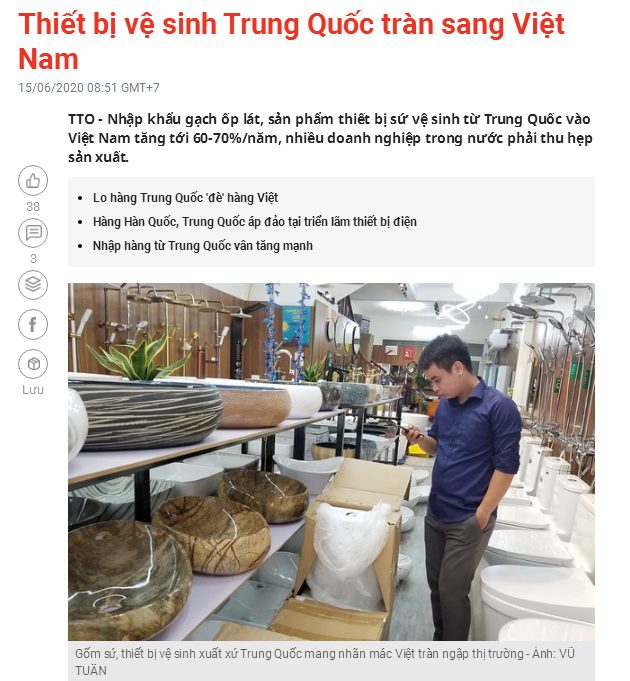
Most of these products are claimed to be produced in accordance with the process standards of South Korea and Japan, ach tá an praghas an-saor, such as Chinese-made “combo” bathroom products sold for less than VND 4 milliún ceann (Maidir le RMB 1,200). While the price of similar products to other common brands such as INAX, Toto, Viglacera, is VND 6-8 milliún ceann (Maidir le RMB 1800-2500).
It is reported that many bathroom brands in Vietnam are imported from China by local distributors and then sold with locally registered trademarks. Mar shampla, the staff of a ceramic tile and sanitary products distributor in Hanoi’s Ha Dong County said that all the products sold in the store have the company’s trademark, but all the products are imported from China,” you can understand that it’s a locally produced product in China and we paid for the trademark “.
Pham Van Be, Director of the Department of Materials Construction of the Ministry of Construction of Vietnam , dúirt sé sin le cúpla bliain anuas, Tá méadú tagtha ar allmhairí tíleanna ceirmeacha agus táirgí sláintíochta ón tSín ó Vítneam 60-70% every year. Some local distributors believe that the continuous increase in China’s imports of ceramic tiles and bathroom products is related to the Sino-US trade war. Because the United States raised China’s Tariffs on imported ceramic tiles and bathroom products to 250%, Chinese sanitary enterprises turned to Southeast Asia to export products.
Some Vietnamese companies have had to take the initiative to cut production due to the continuous increase in imports of Chinese tiles and sanitary products. Relevant person in charge of Viglacera Company in Binh Duong, Dúirt Vítneam sin i bhfianaise brú ó tháirgí na Síne, laghdaigh an chuideachta a cumas táirgthe thart ar 20% isteach 2019. Mar fhreagra ar an gcás seo, the Vietnamese authorities are bringing the matter to the attention of the Ministry of Construction of the country, which is currently gathering and proposing measures to address the situation.
Not the first “tightening” of imports of Chinese sanitary products
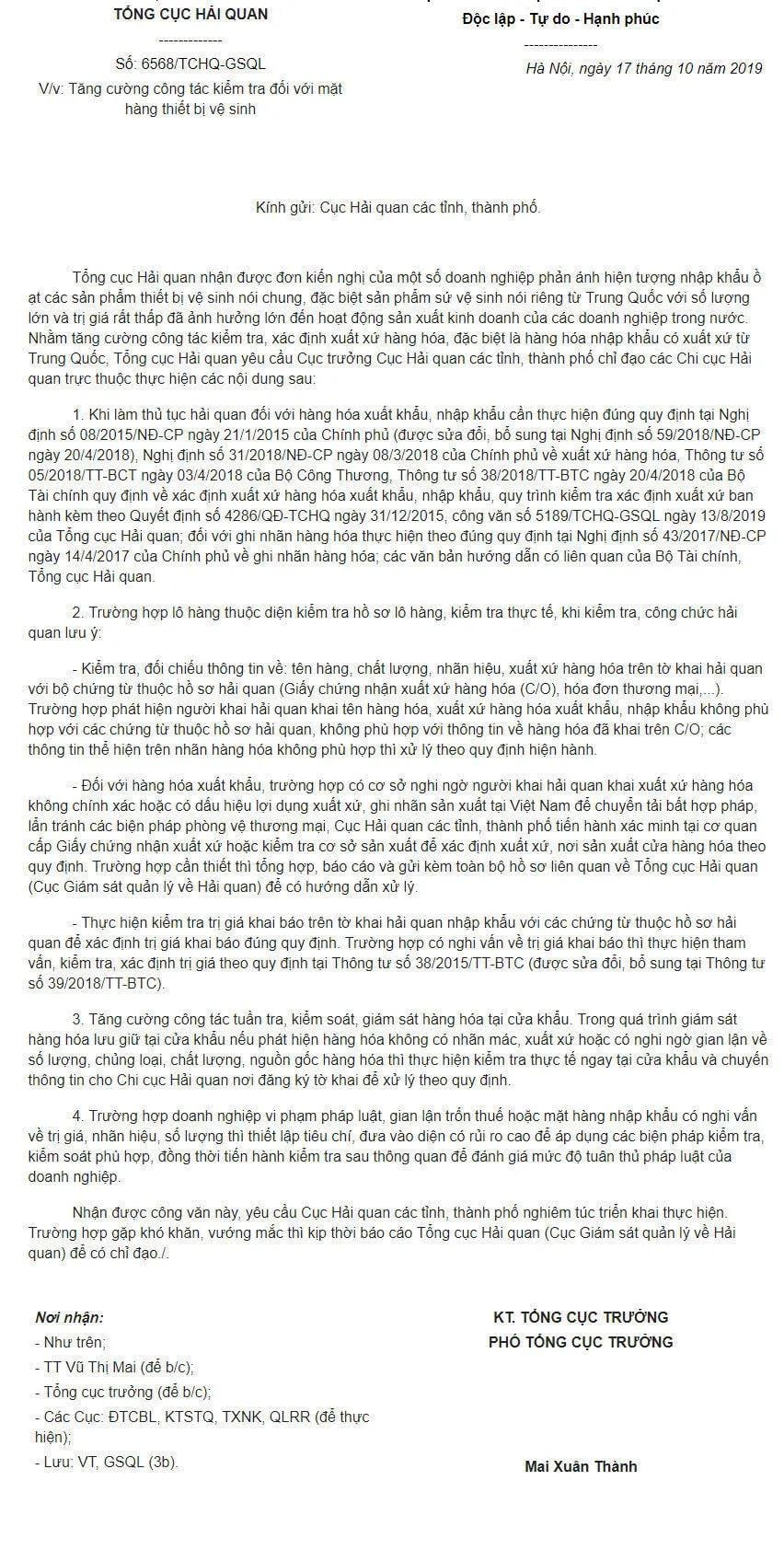
Go deimhin, Vietnam had taken precautions against imports of sanitary products from China before the threat was reported in Vietnamese media. I mí Dheireadh Fómhair 2019, the Vietnam General Administration of Vietnam Customs issued a document instructing the customs of all provinces and cities to strengthen the inspection of sanitary products, especially those originating in China, and requested all units to strengthen patrol, control and supervision of construction materials at border crossings. The document pointed out that Vietnam Customs has received letters from many enterprises, rud a léiríonn go bhfuil líon mór de tháirgí sláintíochta allmhairithe, especially those imported from China, chuir siad isteach ar ghníomhaíochtaí táirgthe agus gnó na bhfiontar áitiúil Vítneamach.
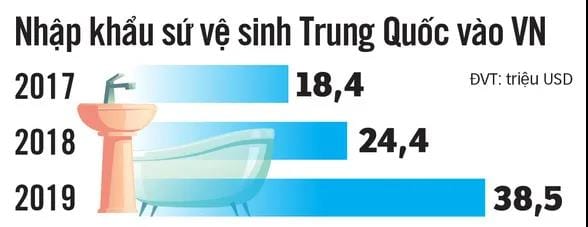
De réir staitisticí ó Chustaim Vítneam, Vietnam imported ceramic tiles worth US$100 million and bathroom products worth US$52 million from China in 2019. ach, d'fhéadfadh go mbeadh diallais sna sonraí seo, as the Vietnam Building Ceramics Association revealed that the value of tile products imported from China in 2019 bhí 200-$250 milliún ceann, and bathroom products are valued at $110-$120 milliún ceann.
Vietnam’s attractiveness to sanitary ware companies is manifested in many aspects. Over the past decade, Tá méadú tagtha ar OTI Vítneam 145.3%. I mbliana, affected by the COVID-19, meastar go dtiocfaidh moilliú ar an ráta fáis OTI 2.7%, but this is still likely to be the world’s first growth rate. Ina theannta sin, Vietnam’s urbanization process is also proceeding at a high speed. Dar leis na húdaráis, de réir mar a mhéadaíonn an daonra, Ní mór Vítneam a thógáil faoi 100 milliún méadar cearnach de thithíocht nua gach mí, which is a rare opportunity for the bathroom or other building materials companies.
Faoi láthair, a large number of domestic sanitary enterprises have set up the Vietnamese market, mar shampla, Jomú, Turas eitilte, SEAGULL, CRW, LOTA International, and Primy have business in Vietnam and neighboring countries. There are also many enterprises that enter the Vietnamese market as OEM. Mar shampla, as reported in the “Youth Daily”, these companies produce products in China and sell them to Vietnamese distributors who labeled it and sold it in the local market.
Competition intensifies as international brands increase investment
According to a report from the Joint Market Research, Vietnam’s bathroom and bathroom accessories market is expected to reach $690 million by 2025. Faoi láthair, Dhírigh Vítneam roinnt brandaí aitheanta lena n-áirítear TOTO, Lixil, GESSI and CAESAR, and many of them are increasing their market share in the Vietnamese market in recent years.
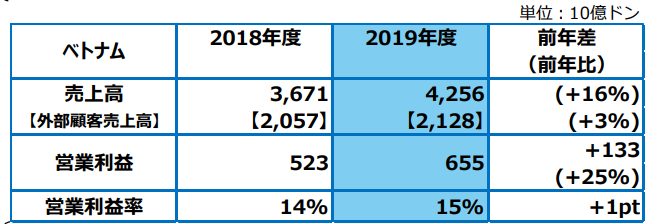
In the part of the TOTO financial report involving the Southeast Asian market, only Vietnam is mentioned separately. I fioscach 2019, TOTO’s sales in the Vietnamese market reached VND 425.6 billiún (Thart ar RMB 1.3 billiún), méadú ar 16% bliain i ndiaidh bliana, agus tháinig méadú ar bhrabús oibriúcháin 25% to VND 655 billiún (Thart ar RMB 200 milliún ceann). Ina theannta sin, TOTO announced last year that it will invest JPY 14.6 billiún (Thart ar RMB 970 milliún ceann) in Vietnam to build its fourth local factory, which will promote local product sales after it is put into production.
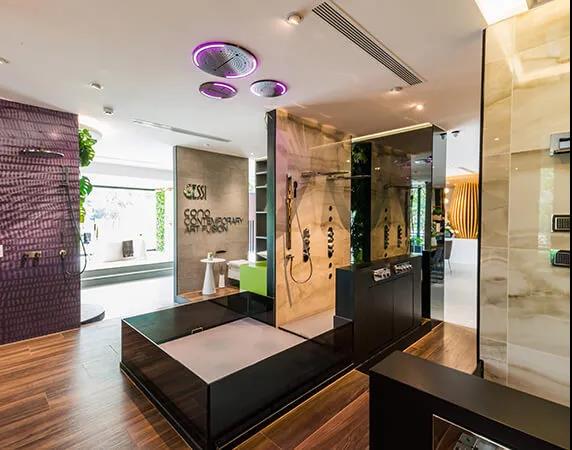
GESSI is an Italian sanitary ware company that pioneered the Vietnamese market earlier, agus díoltar a chuid táirgí i Vítneam mar Vietceramics. I 2018, Gian Luca Gessi, CEO of GESSI and Italy’s Ambassador to Vietnam Cecilia Piccioni attended the opening ceremony of Vietceramics’ 1200 square meters new exhibition hall, showing the importance of the Vietnamese market and reflecting the demand for mid-to-high-end sanitary products in the Vietnamese market are keeping growing.
Chomh maith le brandaí eachtracha, as the largest producer of ceramic and sanitary ware products in ASEAN countries,, a number of Vietnamese local brands such as Viglacera, Thien Thanh, Hao Canh, JSC Ceravi, srl. also occupy a significant market share, agus de réir a chéile chuaigh siad isteach i dtíortha ASEAN eile. Bíonn na cuideachtaí áitiúla seo in iomaíocht le cuideachtaí ón tSín, An tSeapáin, Italy and other countries to form the sanitary industry structure in Vietnam and even Southeast Asia. It is believed that as local residents continue to increase demand for mid-to-high-end products, low-end products will continue to decrease and be replaced by high-spec. competitions among international brands.