 English
 Deutsch
 Français
 Italiano
 Español
 Português
 Nederlands
 Polski
 Русский
 日本語
日本語 한국어
한국어 العربية
 China Faucet Factory & OEM/ODM Faucet Manufacturer
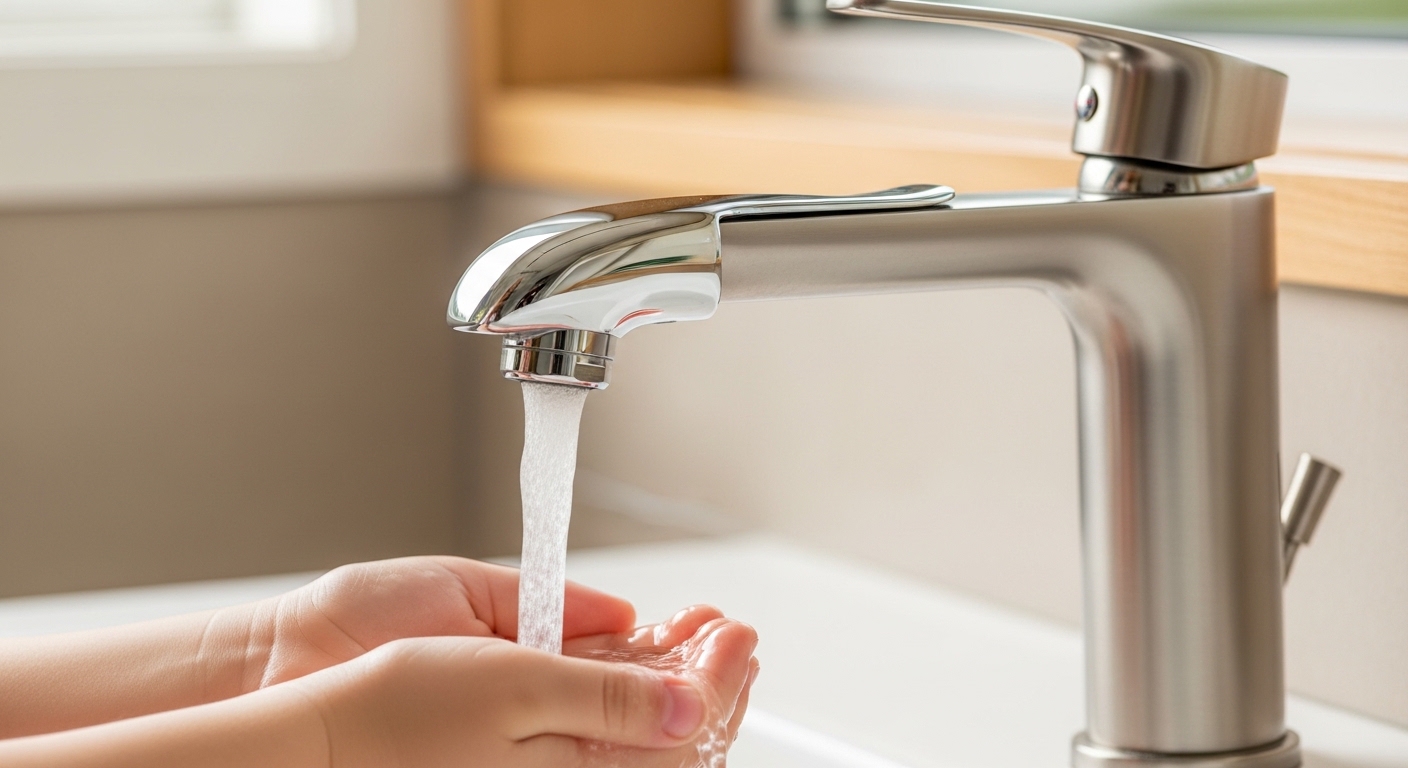
If you have been searching for a reliable faucet extender NZ shoppers can actually trust, you have probably noticed the market is flooded with cheap, ill-fitting plastic clip-ons that crack within weeks. New Zealand’s water pressure, mineral content, and metric thread sizing all influence which extenders actually work — and which ones leak the moment you turn the handle. As a faucet manufacturer that has supplied bathroom and kitchen fixtures to homes across Auckland, Wellington, Christchurch, and Queenstown for over 18 years, we wrote this guide to help Kiwi homeowners, parents, landlords, and aged-care facilities choose a faucet extender that lasts longer than a single school term.
Whether you are trying to help a toddler wash their hands without a stepstool wobble, retrofit a bathroom for an elderly parent, or simply redirect an awkwardly angled laundry tap, the right extender turns a frustrating fixture into one that finally suits the user. Below, we cover the seven main extender styles, NZ-specific compliance markers, installation tips, and a head-to-head comparison table you can screenshot before you buy.
What Is a Faucet Extender and Why Kiwi Households Love Them
A faucet extender — sometimes called a tap extender, faucet spout extension, or sink spout extender — is an accessory that attaches to the existing aerator threading of your tap and either pushes the water stream further out, lowers it down toward the basin, or redirects it sideways. The body is typically made from brass, food-grade ABS, or flexible silicone, and the most useful versions add 50 mm to 120 mm of reach without requiring any plumbing work.
In New Zealand, demand for a quality faucet extender NZ-wide has grown noticeably alongside the country’s ageing population and rising number of multi-generational homes. Real-estate listings increasingly highlight “child-friendly” and “accessibility-ready” bathrooms, and a $20 extender is one of the cheapest accessibility upgrades a homeowner can make. Landlords use them in rental properties to reduce splash damage around vanity benches, while early-childhood centres rely on them to meet handwashing reach guidelines for under-fives.
Key Use Cases Across NZ
- Family bathrooms: Toddlers and pre-schoolers can reach the stream without climbing on slippery porcelain.
- Aged-care and accessibility: Users with limited reach or shoulder mobility benefit from a lower, forward-projecting stream.
- Deep or wide vanities: Many modern NZ vanities use vessel-style basins where the standard tap spout falls short of the bowl centre.
- Laundry and utility tubs: Filling buckets, mop sinks, or pet bowls becomes easier with a 90 mm extender.
- Caravan and bach kitchens: Compact spouts on holiday-home taps often need redirecting to clear cookware.
Types of Faucet Extender NZ Shoppers Should Know
Not every faucet extender NZ retailers sell is suitable for every tap. Choosing the wrong style is the number-one reason buyers leave one-star reviews. Below are the seven extender families we see most often in the New Zealand market.
1. Rigid Forward-Reach Extenders
A short, solid brass tube — usually 50 to 80 mm long — that screws into the existing aerator thread and pushes the stream forward. Best for shallow basins where the tap mounts close to the wall. Look for a chrome or brushed-nickel finish that matches your existing fixtures.
2. Swivel / Articulating Extenders
These have a ball joint or accordion section that allows the user to rotate the stream in almost any direction. They are popular for kitchen taps where you need to fill a tall stockpot in one corner of the sink and a shallow tray in the other.
3. Silicone “Bridge” or “Frog” Extenders
The most common faucet extender for kids in NZ — a rubbery moulded character (frog, whale, dinosaur) that clips around the spout and channels water further forward. Cheap and easy to remove, but they degrade in chlorinated municipal water within 12-18 months.
4. Pull-Down / Hose Extenders
A flexible braided hose with an inline spray head, replacing your aerator entirely. Effectively turns a fixed bathroom tap into a mini pull-down sprayer. Excellent for hair-washing or rinsing the basin clean.
5. Aerator-Replacement Extenders
These combine the function of an aerator with the geometry of an extender. Many of them also include a flow restrictor — useful if your home is on tank water and you are watching every litre.
6. 360° Rotating Splash-Saver Extenders
A short, dual-mode head that spins to switch between a soft bubble flow and a wide spray. Common in modern NZ apartments where developers spec budget mixers and homeowners want more functionality.
7. Elderly-Care Lever Extenders
Strictly speaking, these extend the handle rather than the spout — they clip over the tap lever to give arthritic users more leverage. Many buyers searching “faucet extender NZ” actually want this product, so it is worth knowing the difference.
NZ Thread Sizes, Standards, and Compliance
Here is where most overseas purchases go wrong. Faucet threading in New Zealand follows ISO metric standards rather than the US imperial sizes you will see on Amazon. If you buy a 15/16″-27 male extender intended for the American market and try to fit it to your Methven, Felton, or Greens mixer, it will either cross-thread or sit slightly loose and weep water for the rest of its life.
Common NZ Aerator Threads
- M22 × 1 male: The most common bathroom and kitchen tap thread sold in NZ.
- M24 × 1 female: Common on slightly larger commercial-style spouts.
- M18 × 1 male: Used on compact basin mixers and some European imports.
- M28 × 1: Found on a handful of designer fixtures.
WaterMark and AS/NZS 3718
Any plumbing product that contacts potable water in New Zealand should ideally carry the WaterMark certification and comply with AS/NZS 3718 (water supply – tap ware). Reputable manufacturers publish their test certificates on request. Avoid extenders that do not state material composition — unbranded plastic extenders sold on global marketplaces sometimes contain lead-tainted alloys that are illegal under NZ drinking-water rules.
Material Considerations
For longevity, solid brass with a chrome-electroplated finish is still the gold standard. We cover the manufacturing differences in our deep-dive on why brass faucets are the best choice for your home, which explains how brass resists the high mineral content found in parts of Canterbury and Hawke’s Bay better than zinc-alloy alternatives.
Comparison Table: Top Faucet Extender Styles for NZ Buyers
| Extender Type | Best Use Case | Material | Typical Reach Added | NZ Price Range (NZD) | Lifespan |
|---|---|---|---|---|---|
| Rigid Brass Forward-Reach | Shallow vanities, kids’ bathrooms | Solid brass + chrome | 50–80 mm | $22–$45 | 8–12 years |
| Swivel / Articulating | Kitchen sinks, deep basins | Brass + stainless ball joint | 60–110 mm + 360° | $35–$75 | 6–10 years |
| Silicone Animal Extender | Toddler handwashing | Food-grade silicone | 40–60 mm | $8–$18 | 1–2 years |
| Pull-Down Hose Extender | Hair washing, basin rinsing | Braided stainless hose | Up to 600 mm flexible | $45–$90 | 5–8 years |
| Aerator-Replacement Extender | Tank-water homes, water saving | Brass + ABS internals | 30–50 mm | $15–$35 | 5–7 years |
| 360° Splash-Saver | Renters, multi-mode flow | Zinc alloy + ABS | 40 mm + dual spray | $18–$30 | 3–5 years |
| Elderly Lever Extender | Arthritis, limited grip | ABS or rubber | N/A (handle extension) | $10–$20 | 3–5 years |
How to Measure Your Tap Before Buying a Faucet Extender
Before you click “add to cart,” spend three minutes confirming your existing fixture. A correctly sized faucet extender NZ households install today should still be water-tight in a decade — but only if the threads match precisely.
- Unscrew the existing aerator. Use a soft cloth and a pair of pliers, or a coin slot if your aerator has a key. Most aerators turn anti-clockwise when viewed from below.
- Identify male vs. female threading. If the threads are on the outside of the spout, you need a female-threaded extender. If they are inside the spout, you need a male-threaded extender.
- Measure the outer (or inner) diameter. A digital caliper is ideal, but you can use a printed thread-size template. The vast majority of NZ taps are M22 or M24.
- Check the spout height clearance. Measure from the base of the spout to the basin floor. Adding an 80 mm extender to a low-clearance vanity can leave less than 60 mm for handwashing — too tight for adult use.
- Confirm flow rate. Modern NZ aerators are typically 6 L/min or 4 L/min. If your council requires a 4 L/min restrictor, make sure the extender keeps that flow class.
If you are unsure how to remove the existing piece, our walkthrough on how to remove a kitchen faucet includes the same dismantling techniques for the aerator section. And if your aerator looks crusted with limescale, replace rather than reuse — our guide on how to clean a faucet head with vinegar and baking soda shows when cleaning is enough and when full replacement is the better call.
Installation: A 5-Minute DIY Job
One of the genuine joys of a faucet extender is that you do not need a plumber. The entire job uses one tool — your hand — and possibly a strip of plumber’s tape if your threads are worn.
Step-by-Step Installation
- Turn off the tap. Place a small towel in the sink to catch any drops or, more importantly, any small washers that decide to escape.
- Unscrew the existing aerator. Anti-clockwise from below.
- Inspect the rubber O-ring. If it is brittle, replace it. The new extender will usually come with a fresh seal.
- Wrap two layers of PTFE (plumber’s) tape around any external threads — this is optional but eliminates seepage on older taps.
- Hand-tighten the new faucet extender. Do not use pliers; brass-on-brass threads only need firm finger pressure.
- Run the tap for 30 seconds. Check for drips at the joint. If you see water beading, tighten a quarter-turn more.
Total time: about five minutes. If the extender leaks after a firm hand-tighten, the thread size is wrong — return it rather than over-torquing, which strips the brass.
Best Brands and Where to Buy in New Zealand
The faucet extender NZ market is split between three retail tiers: big-box hardware (Bunnings, Mitre 10), specialist bathroom showrooms (Plumbing World, Tile Warehouse), and online direct-to-consumer brands shipping from Auckland or Christchurch warehouses. Online prices are typically 25–40% lower, but warranty service is faster from local retailers.
When evaluating brands, look beyond marketing claims and dig into the manufacturing pedigree. Our explainer on how to identify the quality of a faucet applies equally to extenders — the same casting, polishing, and plating standards that separate a premium mixer from a budget one show up at this small scale too. A well-cast extender feels heavy in the hand, has crisp thread peaks, and shows no visible weld lines.
Red Flags to Avoid
- Listings that do not state thread size (M22, M24, etc.).
- Photos that show the product fitted to an obviously American tap.
- “100% brass” claims with a price under NZ$10 — physically impossible at current brass prices.
- No mention of WaterMark, AS/NZS 3718, or even basic material disclosure.
- Listings with reviews that mention “leaks,” “wrong thread,” or “broke within a month.”
Caring for Your Faucet Extender
An extender lives in the wettest part of your tap, which means it is the first component to scale up in hard-water regions like Christchurch suburbs or rural bore-water properties. With minimal care it should last 8 to 12 years; without care, perhaps two.
- Wipe dry after each use to prevent water spotting on chrome.
- Every three months, unscrew and soak the extender in a 50/50 white vinegar and warm water bath for 20 minutes.
- Never clean with bleach or abrasive scrubbing pads — both destroy the chrome layer.
- If flow drops, check the internal strainer for grit before assuming the extender has failed.
- Replace the rubber washer every 24 months even if it looks fine — it is the cheapest insurance against a slow drip.
Sustainability and Water Efficiency in NZ
Auckland’s seasonal water restrictions, Wellington’s leaky reticulation network, and a general national push toward water sensitivity all make flow control a feature worth paying attention to. Many modern extenders bundle a 4 L/min or 6 L/min flow regulator, cutting bathroom basin consumption by up to 50% versus an unrestricted tap. Over a year, that adds up to roughly 8,000–12,000 litres saved per household — a meaningful figure on a tank-water property where every litre is harvested or trucked in.
If you are renovating more broadly, our piece on selecting the perfect faucet for your bathroom vanity covers complementary upgrades that pair beautifully with a quality extender.
Faucet Extender vs. Full Tap Replacement: Which Is Worth It?
Sometimes the smartest move is to skip the extender entirely and replace the whole mixer. If your tap is older than 15 years, leaks at the base, or has visibly corroded finishes, no extender will give you the experience you want. A new mid-range mixer is typically NZ$120–$280, professionally installed for another $150 or so. For another perspective on long-term value, our guide on how to choose a durable bathroom faucet explains the five manufacturing processes that separate a 25-year fixture from a 5-year one.
A faucet extender is the right call when: the existing tap is structurally fine, you need temporary accessibility (children outgrow the need within 4–5 years), or you rent and cannot modify the fixture. Replacement is the right call when the tap itself is failing or you want a long-term aesthetic upgrade.
About the Author and Brand Credibility
About the author: This guide was written by the vigafaucet product education team, with technical review by our senior plumbing engineer (15+ years of experience in WaterMark-certified tapware manufacturing for the ANZ market). All thread-size data has been cross-referenced with AS/NZS 3718 and IAPMO test reports from our QC laboratory.
About vigafaucet: Founded in 2007 in the Kaiping plumbing industry belt, vigafaucet manufactures over 1.2 million faucets and bathroom fixtures annually for export to more than 40 countries, including Australia and New Zealand. Every product is salt-spray tested to 24+ hours and backed by a 5-year manufacturer warranty on cartridges and a 10-year warranty on finish. Our extenders are CNC-machined from C3604 lead-low brass and meet drinking-water contact standards.
FAQ
What thread size is a standard NZ bathroom tap?
The vast majority of bathroom basin mixers sold in New Zealand use an M22 × 1 male aerator thread. Some larger spouts use M24 × 1 female. Always unscrew the existing aerator and measure before ordering an extender.
Can a faucet extender reduce my water pressure?
A quality extender with a matched aerator will not noticeably reduce pressure — it only redirects the stream. However, models that bundle a low-flow regulator (4 L/min) intentionally reduce flow to save water. Check the product specifications before buying if pressure matters to you.
Are silicone child extenders safe for drinking water?
Food-grade silicone (typically marked LFGB or FDA) is safe for short water contact. However, cheap unbranded silicone extenders can leach plasticisers when exposed to warm water. Buy from a reputable seller and replace annually for peace of mind.
Will a faucet extender fit my Methven or Felton tap?
Most Methven, Felton, Greens, and Plumbline taps use M22 or M24 metric threads, so a properly specified extender will fit. Avoid US-imported extenders with imperial (15/16″ or 55/64″) threading — those are designed for North American taps and will not seal correctly on NZ fixtures.
How long does a brass faucet extender last in NZ water?
A solid-brass, chrome-plated extender typically lasts 8–12 years in NZ municipal water. In hard-water areas (Canterbury, parts of Hawke’s Bay), expect closer to 8 years unless you descale every quarter. Plastic and zinc-alloy extenders typically fail within 2–4 years.
Do I need a plumber to install a faucet extender?
No. A faucet extender is a hand-tightened accessory that screws onto your existing aerator thread. The job takes about five minutes and requires no tools beyond perhaps a strip of PTFE tape. New Zealand plumbing regulations classify aerator-thread accessories as user-installable.
Can I use a faucet extender on a kitchen sink with a pull-out sprayer?
Generally no — pull-out and pull-down kitchen sprayers use a proprietary quick-connect at the spout tip rather than a standard aerator thread. Adding an extender can interfere with the sprayer’s docking mechanism. For kitchen sinks with a fixed spout, however, extenders work well.
Where can I buy a quality faucet extender NZ-wide?
Look for specialist tapware retailers, accessibility-equipment suppliers, or direct-from-manufacturer e-commerce stores that ship locally. Avoid generic marketplace listings that do not state thread size, material composition, or compliance with AS/NZS 3718.
WeChat
Scan the QR Code with WeChat