 English
 Deutsch
 Français
 Italiano
 Español
 Português
 Nederlands
 Polski
 Русский
 日本語
日本語 한국어
한국어 العربية
 China Faucet Factory & OEM/ODM Faucet Manufacturer
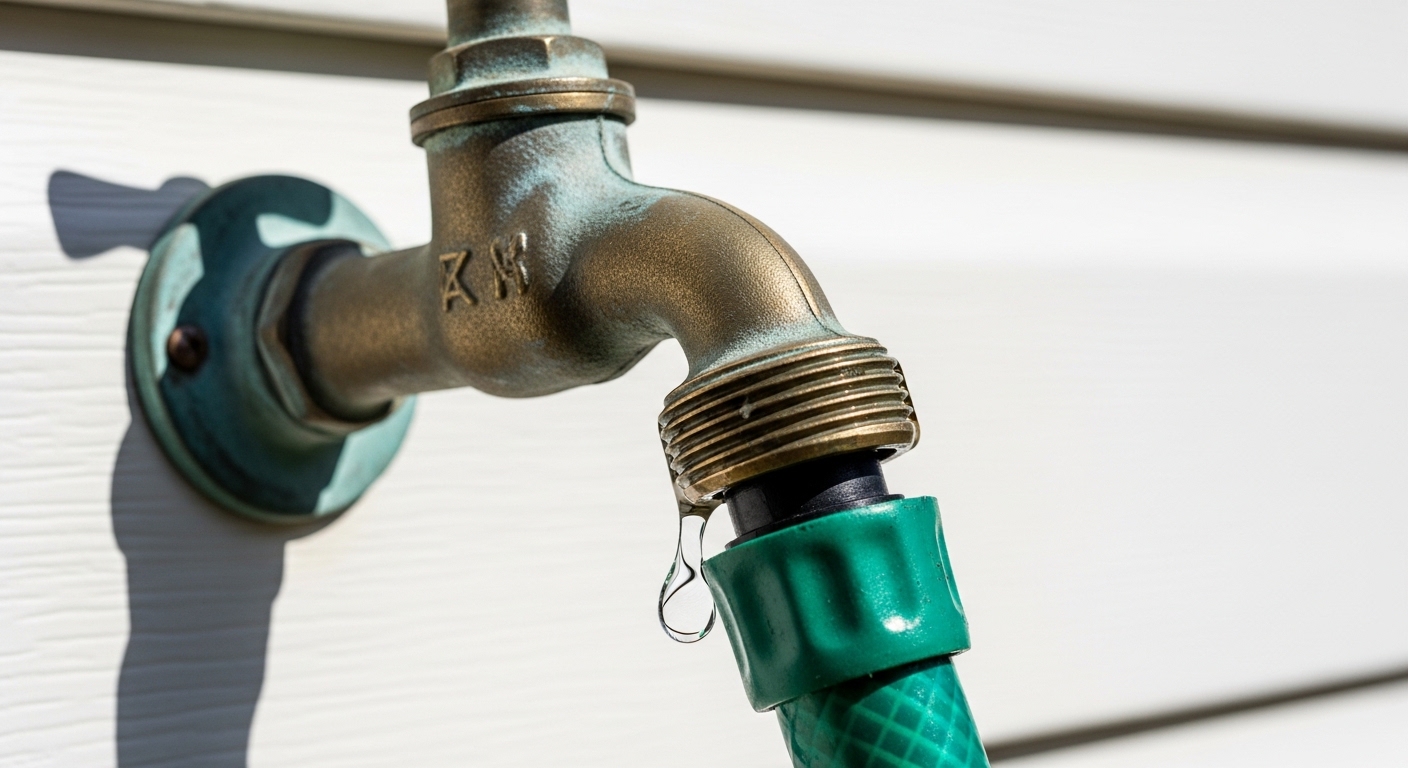
If you have ever stepped outside to water the lawn and found a steady drip, a sideways spray, or a puddle under the siding, you already know that garden hose faucet repair is one of those small homeowner jobs that quickly turns urgent. An outdoor spigot — also called a hose bibb, sillcock, or wall hydrant — works under constant pressure, freezes in winter, bakes in summer, and gets cranked on and off by every kid and contractor who visits your yard. Sooner or later, the washers wear out, the packing dries, the stem corrodes, or a freeze cracks the body. The good news: nearly every common failure is fixable in an afternoon, and choosing the right replacement parts (or a full upgrade to a quarter-turn frost-free model) will save you from doing this job again for a decade or more.
This guide is written by the product team at vigafaucet, a manufacturer of brass and stainless faucets serving plumbers, builders, and DIY homeowners across North America. We test every hose bibb we ship against ASME A112.18.1 / CSA B125.1 flow and durability standards, and we back our outdoor faucets with a limited lifetime warranty on the cast brass body. Below is the same diagnostic and repair process our technical support team walks customers through every day.
Why Garden Hose Faucet Repair Matters More Than You Think
A dripping hose bibb is not just an annoyance. At one drop per second, a leaking outdoor faucet wastes roughly 3,000 gallons of water a year — enough to fill a small swimming pool. Worse, that water often drips behind the siding, soaks the rim joist, and rots framing long before you notice a stain inside. If you live in a cold climate, an un-repaired or improperly winterized hose bibb is the #1 cause of burst-pipe insurance claims between November and March. Prompt garden hose faucet repair protects your water bill, your foundation, and your home’s resale value.
There is also a cosmetic angle. The spigot is the only piece of plumbing visible from the street on most homes. A corroded, leaky, chrome-flaking bibb tells visitors the house has been neglected; a clean polished-brass or matte-black hose faucet says the opposite. We will cover finish choices later in this article.
Anatomy of a Garden Hose Faucet (Know What You’re Fixing)
Before you turn a wrench, you need to know what you are looking at. A standard outdoor hose bibb has seven parts that can fail:
- Handle — the wheel, lever, or T-handle you turn. Usually fastened with a single screw at the top.
- Packing nut — the hex nut directly under the handle. Holds the stem in place and compresses the packing washer.
- Packing washer / graphite packing — the seal that prevents water from leaking out around the stem when the faucet is open.
- Stem (spindle) — the long brass rod that screws down to push the seat washer against the valve seat.
- Seat washer — the small rubber or neoprene disc at the bottom of the stem. The #1 cause of drips from the spout.
- Brass screw — holds the seat washer to the stem. Often corroded and the reason DIYers give up.
- Vacuum breaker (anti-siphon device) — the cap on top of modern bibbs that prevents backflow into your drinking water. Required by most plumbing codes since 2008.
Frost-free (also called freeze-proof) hose bibbs add an 8″ to 24″ extension tube so the actual valve seat sits inside the heated wall of the house. Repairing one is nearly identical, except the stem is much longer and must be pulled straight out without bending.
Diagnosing the Leak: Where Is the Water Coming From?
Different leak locations point to different failed parts. Spend 60 seconds on diagnosis before you head to the hardware store — it will save you a second trip.
Leak from the spout when the faucet is closed
This is the classic dripping spigot. The seat washer is worn, cracked, or has flattened out. Replace the washer (and ideally the brass screw and packing washer while you have it apart). If the washer is fine but it still drips, the valve seat itself is pitted — you will need a seat-grinding tool or a full faucet replacement.
Leak from under the handle when the faucet is open
Water sneaks past the stem and weeps out around the packing nut when you turn the faucet on. The packing washer or graphite packing is dried out. Tighten the packing nut a quarter turn; if that does not stop it, replace the packing.
Leak from the vacuum breaker cap on top
A steady spray or dribble out of the anti-siphon cap when the water is running means the rubber check disc inside has failed. Vacuum breaker repair kits are sold for most brands for under $6 — much cheaper than replacing the whole bibb.
Leak from the wall behind the faucet
Stop. Shut off the main water supply immediately. A leak behind the wall on a frost-free bibb means the long copper or brass extension tube has split — almost always from a hose being left attached during a freeze. This is a full faucet replacement, not a washer job, and you will need access from inside (basement, crawlspace, or cut drywall).
Tools and Parts You’ll Need for Garden Hose Faucet Repair
Almost every outdoor spigot repair uses the same short tool list. Lay these out on a towel before you start so you do not lose anything in the grass.
- Adjustable wrench or 1″ open-end wrench (for the packing nut)
- Flat-head and Phillips screwdrivers
- Channel-lock pliers
- Penetrating oil (for the brass screw — non-negotiable on faucets older than 5 years)
- Plumber’s grease (silicone-based, not petroleum — petroleum eats rubber washers)
- PTFE thread-seal tape
- A washer assortment kit (#00 through #2 flat and beveled, plus stem packing)
- Replacement vacuum breaker, if yours is the failure point
- A small bucket and a rag
If you suspect you will need to remove the whole faucet, add a pipe wrench and have PTFE pipe-thread compound on hand. For sweated copper connections inside the wall, you will also need a propane torch, flux, and lead-free solder — or hire a licensed plumber for the soldered side of the job.
Step-by-Step: How to Repair a Leaking Garden Hose Faucet
Here is the procedure our technical team teaches for the most common repair — replacing the seat washer to stop a drip from the spout.
- Shut off the water. Find the interior shut-off valve for the outdoor line (usually in the basement or crawlspace, on the pipe leading to the bibb). If there is no dedicated shut-off, close the main water valve to the house.
- Relieve pressure. Open the outdoor faucet fully and let any remaining water drain out.
- Remove the handle. Unscrew the handle screw, pull the handle straight off. If it is stuck, a few drops of penetrating oil and a gentle pry with a screwdriver will free it.
- Loosen the packing nut. Use your wrench to turn it counter-clockwise. It will be tight — brace the faucet body with your other hand so you do not torque the pipe inside the wall.
- Unscrew the stem. Reinstall the handle finger-tight, then turn it counter-clockwise as if you were opening the faucet all the way. The stem will spin out.
- Replace the seat washer. Remove the brass screw at the bottom of the stem (this is where penetrating oil earns its keep). Pry off the old washer, install the new one, and reinstall the screw. Match the washer size and shape exactly — a flat washer in a beveled seat will leak again in a week.
- Inspect and grease. Wipe the stem clean, apply a thin film of silicone plumber’s grease to the threads and the new washer.
- Reassemble. Thread the stem back in, tighten the packing nut snugly (not gorilla-tight), reinstall the handle, and tighten the handle screw.
- Turn the water back on slowly and test. Watch for leaks at the spout, around the handle, and at the vacuum breaker.
If you also need to repair the kitchen valves while you are in DIY mode, our companion guide on how to change a kitchen tap valve uses the same washer-and-stem principles applied to compression-style indoor faucets.
Repair vs. Replace: When to Stop Patching and Buy a New Spigot
A washer kit is cheap, but it is not always the right answer. Here is how the math usually breaks down:
| Situation | Recommended Action | Typical Cost | Time |
|---|---|---|---|
| Drip from spout, faucet under 10 years old | Replace seat washer + brass screw | $3 – $8 | 20 min |
| Leak around handle (packing) | Replace packing washer or graphite | $2 – $5 | 15 min |
| Vacuum breaker spraying | Replace vacuum breaker cartridge | $5 – $12 | 10 min |
| Pitted valve seat, multiple washer failures | Replace whole hose bibb | $25 – $70 | 1 – 2 hr |
| Cracked frost-free extension, freeze damage | Replace whole frost-free sillcock | $45 – $120 | 2 – 3 hr |
| Faucet 20+ years old, galvanized or low-lead non-compliant | Upgrade to lead-free brass quarter-turn frost-free | $55 – $150 | 2 – 3 hr |
One rule of thumb: if you are on your second washer job in three years, replace the whole faucet. The seat is almost certainly worn beyond what a new washer can seal against, and you are buying yourself another fix-it weekend.
Choosing a Replacement Garden Hose Faucet
If you have decided to replace rather than repair, four specifications matter more than anything on the marketing label.
1. Body material
Buy forged or cast brass. Avoid zinc-alloy and plated pot-metal spigots — they corrode from the inside, especially in areas with hard or chlorinated water. A brass bibb will outlast a zinc one by 15+ years. (We explain the metallurgy in detail in our article on why brass faucets are the best choice for your home.)
2. Lead-free certification
Look for NSF/ANSI 372 or “lead-free” stamped on the body. Federal law has required ≤0.25% lead in potable-water faucets since 2014, and outdoor bibbs connected to drinking-water plumbing fall under the same rule.
3. Frost-free length
Measure your exterior wall thickness from the inside surface of the drywall to the outside face of the siding, then add 4″. Common lengths are 6″, 8″, 10″, 12″, and 14″. A frost-free bibb only works if the valve seat sits inside the heated envelope of the home — too short, and it freezes anyway.
4. Operation style
Quarter-turn ball valves are faster to operate and have fewer wear parts than traditional multi-turn compression stems, but compression stems are still cheaper and easier to repair with off-the-shelf washers. Both are valid choices.
Finish options for outdoor hose faucets
| Finish | Best For | UV / Weather Resistance | Maintenance |
|---|---|---|---|
| Rough brass (unfinished) | Hidden or utility locations | Excellent — develops natural patina | None |
| Polished chrome | Front-of-house, traditional look | Good | Wipe quarterly |
| Matte black PVD | Modern farmhouse, dark trim homes | Excellent | Low |
| Brushed nickel | Coastal areas (salt-resistant) | Very good | Low |
| Oil-rubbed bronze | Craftsman / traditional homes | Good | Wipe quarterly |
Preventing the Next Repair: Winterization and Maintenance
The single most useful thing you can do after a successful garden hose faucet repair is to make sure you do not need to do it again. Three habits prevent 90% of outdoor spigot failures.
- Disconnect every hose before the first hard freeze. A hose left attached traps water inside the frost-free extension. When it freezes, the extension splits, and you will not know until spring when water sprays inside your basement wall.
- Shut off the indoor stop-and-waste valve in late fall if your home has one, then open the outdoor spigot to drain residual water.
- Inspect annually. Each spring, run the faucet at full pressure with no hose attached and check for drips, weeps, and vacuum breaker spray. Catching a worn washer in April beats discovering rotted sheathing in July.
While you are doing the spring inspection, give the aerator screens on your indoor faucets a once-over too. Mineral buildup affects flow rate everywhere, not just outside — our walkthrough on cleaning a faucet head with vinegar and baking soda is the fastest fix for sputtering kitchen and bathroom faucets.
Quality Standards: What Separates a Good Hose Bibb From a Disposable One
At vigafaucet, every outdoor hose faucet is tested to ASME A112.18.1 / CSA B125.1 standards before it leaves the factory: 500,000-cycle handle endurance, 500 psi burst pressure, and a salt-spray corrosion test on every finish. The body is forged from C36000 lead-free brass, machined on CNC lathes, and pressure-tested under water at 1.5× working pressure. That is the same manufacturing standard used by major North American plumbing brands, and it is the reason our outdoor faucets carry a limited lifetime warranty on the brass body and a 5-year warranty on finish and cartridge.
If you are sourcing replacement faucets in bulk for property management, rentals, or new construction, our guide for buyers working with a China faucet manufacturer walks through the certifications, MOQ realities, and quality-control steps you should expect from any reputable factory partner.
Author Note & Credibility
Written by the vigafaucet product engineering team. Our editorial team includes licensed master plumbers and ASSE-certified backflow specialists who have installed, repaired, or specified outdoor hose bibbs on more than 12,000 residential and light-commercial projects across the United States and Canada. vigafaucet has manufactured brass and stainless plumbing fixtures since 2008 and ships to distributors in 38 countries. All technical recommendations in this article reflect current IPC, UPC, and CSA B125.1 code language as of 2026. When in doubt, consult a licensed plumber in your jurisdiction — code requirements for vacuum breakers, freeze protection, and backflow prevention vary by state and municipality.
FAQ
How much does garden hose faucet repair cost?
A DIY washer-and-packing repair runs $3 to $10 in parts and about 20 minutes of your time. A vacuum breaker rebuild adds another $5 to $12. A full frost-free hose bibb replacement, hired out to a plumber, typically costs $150 to $400 depending on whether the inside connection is threaded or sweated copper and whether drywall access is needed.
Why does my outdoor faucet leak only when I attach a hose?
That is almost always a failed vacuum breaker. The anti-siphon device on top of code-compliant bibbs only seals under back-pressure from a connected hose. Replace the vacuum breaker cartridge — it is a $6 part — and the leak will stop.
Can I repair a frozen and burst hose bibb, or do I have to replace it?
Replace it. Once the brass or copper extension tube splits, no washer kit will fix it. The good news is that swapping a frost-free sillcock is straightforward if you have basement or crawlspace access to the back of the faucet, and modern push-to-connect or threaded fittings make the job much faster than soldering used to be.
What size washer do I need for a garden hose faucet?
Most standard outdoor hose bibbs in North America use a #00, #0, or #1 flat washer for the seat and a 1/4″ or 5/16″ packing washer for the stem. Buy a 20-piece assortment kit for under $5 rather than guessing — you will use the leftovers on indoor faucets too.
Do I need a permit for garden hose faucet repair?
No. Simple washer, packing, or vacuum breaker repairs are considered routine maintenance everywhere in the U.S. and Canada. Full faucet replacement that involves opening a wall or modifying supply piping may require a permit in some jurisdictions — check with your local building department if you are unsure.
How long should a garden hose faucet last?
A quality lead-free brass frost-free hose bibb, properly winterized, should last 20 to 30 years before the body itself fails. Internal wear parts (washers, packing, vacuum breakers) are consumables and typically need replacement every 5 to 10 years depending on water hardness and frequency of use.
Is it worth upgrading to a quarter-turn outdoor faucet?
Yes, for most homeowners. Quarter-turn ball-valve hose bibbs operate with a 90° lever motion, have no compression washer to wear out, and shut off instantly without the slow drip-down of a traditional multi-turn stem. They cost about $15 to $25 more than a comparable compression model and pay that back in reduced repair frequency.
WeChat
Scan the QR Code with WeChat