 English
 Deutsch
 Français
 Italiano
 Español
 Português
 Nederlands
 Polski
 Русский
 日本語
日本語 한국어
한국어 العربية
 China Faucet Factory & OEM/ODM Faucet Manufacturer
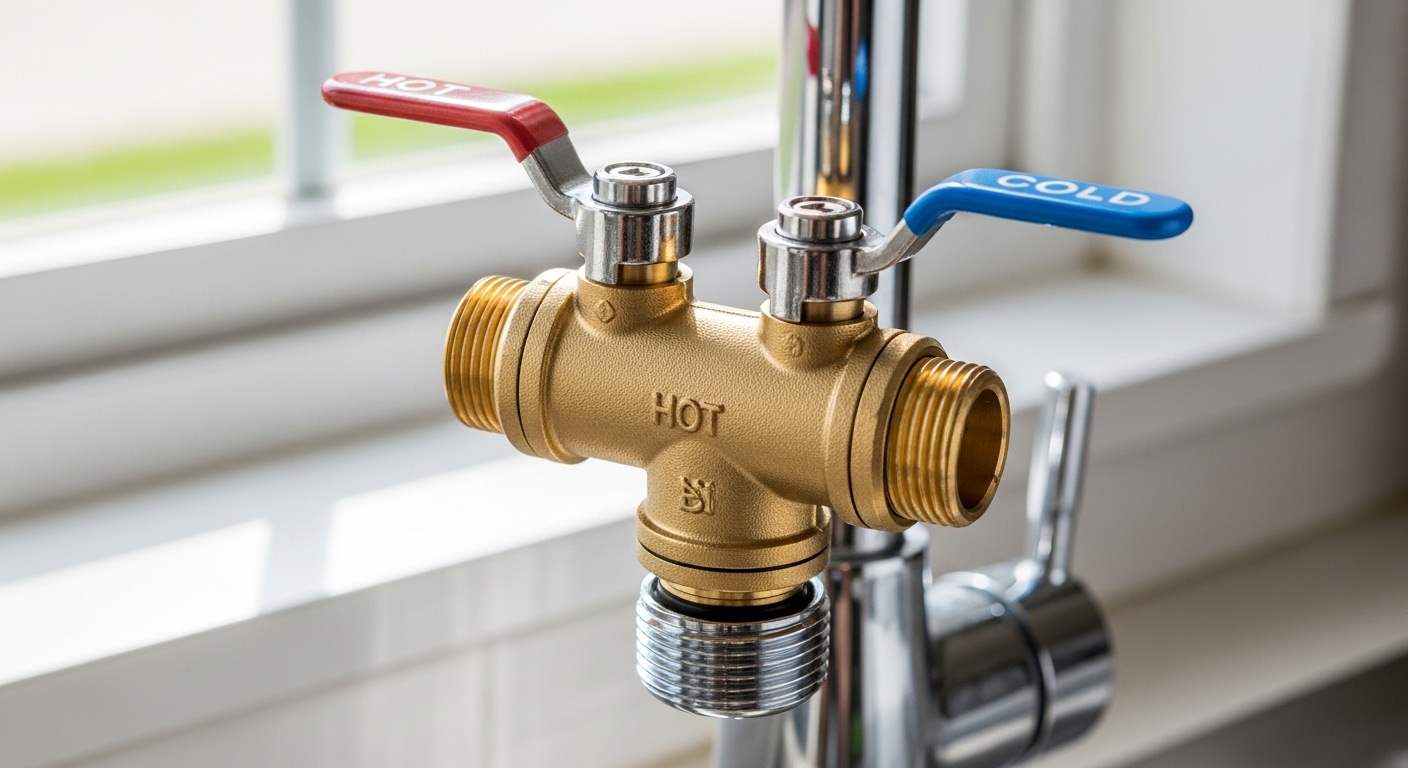
Choosing the right faucet adapter Y sounds simple — until you discover your kitchen faucet has a hidden internal thread, your laundry hookup uses a different pitch than your garden spigot, and the cheap plastic splitter you bought last summer cracked at the first freeze. At VigaFaucet, we’ve spent two decades engineering faucets and adapters for both OEM clients and homeowners, so we know exactly where buyers get tripped up. This guide is the resource we wish every customer had before they clicked “add to cart.”
Whether you’re trying to run a portable dishwasher alongside your sink, irrigate two raised garden beds from one hose bib, or split a utility sink line between a washing machine and a wet-bar prep faucet, the right Y-adapter will save you hours of frustration. Pick the wrong one, and you’re looking at leaks, stripped threads, low flow, and ruined countertops.
What Is a Faucet Adapter Y and Why You Need One
A faucet adapter Y is a brass or polymer fitting shaped like the letter Y. It screws onto a single threaded outlet — usually a faucet aerator, a laundry valve, or a garden hose bib — and provides two independently controllable outlets on the other side. Most quality Y-adapters include two quarter-turn ball valves so you can shut off one outlet while keeping the other running.
That sounds like a small upgrade, but it transforms how a single tap is used. A homeowner can keep a soaker hose on one branch and a sprinkler on the other. A renter can connect a countertop dishwasher without sacrificing the kitchen faucet for handwashing. A small business can supply two cleaning stations from one utility sink. The Y-splitter is the most under-appreciated plumbing accessory in the modern home.
Common Names and Variations
- Y-splitter — most common term, particularly in garden and laundry contexts.
- Dual-outlet faucet adapter — what you’ll see on plumbing supply sites.
- 2-way diverter — usually refers to a Y-adapter with a single lever that switches flow instead of two valves.
- Hose Y-connector — almost always refers to the GHT (Garden Hose Thread) version.
- T-adapter — technically a different shape, but often used interchangeably for inline tee fittings.
Faucet Adapter Y Thread Sizes Explained
Here is where 90% of buyers go wrong. A “faucet adapter Y” isn’t a single product — it’s a category that spans at least four common thread standards. Buy the wrong thread, and the adapter will either spin freely without sealing, or refuse to thread at all.
Before you order, identify the thread on your faucet or hose bib. The easiest method is to unscrew your existing aerator (use a soft cloth and channel-lock pliers if needed) and bring it to a hardware store, or measure it with calipers. The dominant North American kitchen and bathroom faucet thread is 15/16″-27 male or 55/64″-27 female. Garden faucets use the much larger 3/4″ GHT.
Thread Size Reference Chart
| Application | Thread Designation | Outer Diameter | Typical Y-Adapter Use |
|---|---|---|---|
| Standard kitchen faucet aerator (male) | 15/16″-27 | ~23.6 mm | Portable dishwasher + sprayer hose splits |
| Standard kitchen faucet aerator (female) | 55/64″-27 | ~21.8 mm | Recessed-thread faucets, newer pull-down models |
| Bathroom lavatory faucet | 13/16″-24 or 15/16″-27 | ~20.6–23.6 mm | Bidet sprayer + handheld attachment |
| Garden hose bib / outdoor spigot | 3/4″ GHT (NH) | ~26.4 mm | Dual irrigation or wash-down lines |
| Laundry / utility supply valve | 3/4″ GHT or 1/2″ NPT | varies | Washer + utility hose simultaneously |
| European / metric kitchen faucet | M22 male / M24 female | 22 mm / 24 mm | EU/UK installations or imported fixtures |
If your faucet has internal threads only (a “female” aerator opening), you need a Y-adapter with male 55/64″-27 threads — or you’ll need an intermediate adapter ring. Many quality Y-splitters now ship with a dual-thread housing so they fit either configuration straight from the box. For deeper guidance on sizing and adapter ecosystems, our team also maintains a detailed faucet aerator adapter kit buying guide that pairs perfectly with this article.
Materials: Brass vs. Zinc Alloy vs. Plastic
The material of your faucet adapter Y determines how long it lasts, how it handles freezing temperatures, and whether it leaches anything into your potable water. Don’t let a $4 plastic splitter become a $400 water-damage claim.
Solid Brass (Recommended)
Forged brass — particularly lead-free C46500 or C69300 alloys — is the gold standard for any faucet adapter Y that handles drinking water or operates outdoors year-round. Brass resists corrosion, doesn’t crack in freeze/thaw cycles when properly drained, and offers the threading precision needed to seal at city water pressures of 60–80 PSI. Look for adapters certified to NSF/ANSI 372 (low-lead) and NSF/ANSI 61 (drinking water safety).
Zinc Alloy
A budget-tier option that looks like brass but pits and corrodes within 1–2 outdoor seasons. Zinc Y-adapters are acceptable for short-term indoor use (a temporary laundry split, for example) but a poor long-term investment. They also tend to seize onto faucet threads — a frustrating discovery when you try to remove them after a year.
ABS / Polypropylene Plastic
Lightweight, cheap, and prone to UV degradation, thread cross-stripping, and winter cracking. Reserve plastic Y-adapters for indoor-only, low-pressure, temporary uses such as RV hookups or seasonal patio setups.
Top Use Cases for a Faucet Adapter Y
The faucet adapter Y is one of the most versatile fittings in residential plumbing. Here are the scenarios where customers most often install one:
- Portable dishwasher + active sink. Run the dishwasher’s quick-connect hose off one branch while keeping the sink available for prep and handwashing on the other.
- Dual-zone garden irrigation. Run a drip line to a vegetable bed on one side and a sprinkler or soaker hose on the other, each controlled by its own valve.
- Washer + utility hose. Keep the washing machine plumbed in while leaving a second outlet for filling buckets, mop sinks, or a deep-clean sprayer.
- Bidet sprayer installation. Add a handheld bidet to an existing toilet supply line without sacrificing the cold-water feed.
- RV and outdoor kitchen hookups. Split a single campground spigot between the RV intake and an outdoor shower or wash station.
- Pet wash and garden combo. Mount a permanent pet-rinse hose on one outlet and rotate seasonal accessories on the other.
- Reverse osmosis or filter feed. Some under-sink filtration systems use a Y-adapter to tap potable cold water before the aerator.
How to Install a Faucet Adapter Y (Step-by-Step)
Installation is genuinely a five-minute job if you have the right Y-adapter and a basic understanding of thread direction. No soldering, no Teflon-tape gymnastics — just hand-tight plus a quarter turn.
Tools You’ll Need
- Soft cloth or rubber jar opener (to grip without scratching)
- Adjustable pliers or basin wrench (only if the existing aerator is seized)
- PTFE plumber’s tape (white, ½” width)
- A small flashlight to inspect threads
- Replacement washer (most Y-adapters ship with one — check the packaging)
Installation Steps
- Shut off the faucet. Make sure both hot and cold handles are fully closed. For outdoor spigots, no shut-off is required since the valve handle already controls flow.
- Remove the existing aerator. Most aerators thread off counter-clockwise by hand. If yours is stuck, wrap it in a cloth and use channel-lock pliers gently.
- Inspect the faucet threads. Look for mineral buildup or stripped grooves. A quick soak in white vinegar will clear scale — for a refresher, our guide on cleaning a faucet head with vinegar and baking soda works perfectly here.
- Apply PTFE tape. Wrap 2–3 turns clockwise around the male threads. Skip this step if your Y-adapter has a built-in rubber washer (most quality models do).
- Thread the Y-adapter on by hand. Always start clockwise and stop the moment you feel resistance. If it won’t seat in 2–3 turns, you have the wrong thread — back off and recheck.
- Snug with a quarter turn. Hand-tight plus a quarter turn with pliers (cloth-protected) is plenty. Over-tightening crushes the washer and causes leaks.
- Open the valves and pressure-test. Run water through each outlet for 30 seconds and watch the seam between the adapter and faucet for drips.
If you discover damaged threads on the faucet itself, you may need to address the valve rather than just the adapter. Our walkthrough on how to change a kitchen tap valve covers the next layer of repair.
Faucet Adapter Y vs. Other Splitting Solutions
The Y-adapter isn’t the only way to get two outlets from one source. Here’s how it stacks up against the alternatives so you can pick the right tool for the job.
| Solution | Outlets | Independent Shut-Off | Typical Cost | Best For |
|---|---|---|---|---|
| Faucet Adapter Y (dual-valve) | 2 | Yes | $10–$30 | Most homeowners — versatile and reliable |
| 2-way diverter (single lever) | 2 (one at a time) | No (switch only) | $8–$20 | Bidet installs, simple toggling |
| 4-way manifold splitter | 4 | Yes | $25–$60 | Heavy garden irrigation setups |
| Permanent T-fitting (soldered/PEX) | 2 | Requires separate valves | $15 + labor | Built-in dual fixtures (permanent) |
| Quick-connect coupler | 1 (swappable) | N/A | $5–$15 | Frequent accessory changes |
For nearly every consumer scenario, the dual-valve Y-adapter wins on flexibility and price. The 4-way manifold is the right choice only for serious gardeners running multiple irrigation zones simultaneously.
Flow Rate, Pressure Drop, and Performance
A common worry: “Will splitting the line cut my pressure in half?” The short answer is no — pressure is shared, not divided, as long as only one outlet is open. When both outlets run simultaneously, flow rate (GPM) does split based on each branch’s resistance, but pressure (PSI) at the faucet only drops marginally as long as the supply line is properly sized.
Look for these specifications on a quality faucet adapter Y:
- Internal bore: at least 9 mm (3/8″) to avoid choking flow.
- Maximum pressure rating: 150 PSI minimum for indoor use; 200 PSI for outdoor.
- Temperature range: 33°F to 180°F for any indoor hot-water application.
- Ball valve type: full-port stainless or chrome-plated brass ball — never plastic.
- Backflow resistance: integrated check valves are a plus for garden applications.
How to Choose the Right Faucet Adapter Y
Before you click “buy,” walk through this short checklist. It’s the same one our customer support team uses when helping homeowners diagnose a “leaky splitter” problem (which is almost always actually a thread-mismatch problem).
- Identify your faucet thread (15/16″-27 M, 55/64″-27 F, 3/4″ GHT, or M22/M24 metric).
- Determine indoor vs. outdoor use — outdoor units need brass and UV-stable components.
- Decide between dual-valve (two independent outlets) and single-diverter (toggle).
- Check certification labels: NSF/ANSI 61, NSF/ANSI 372, or WaterSense if you live in a drought region.
- Confirm the warranty — quality manufacturers offer 5 years or more.
- Inspect the included washer: EPDM rubber outperforms cheap nitrile in hot-water service.
- Consider future expansion — if you plan to add more accessories, choose a Y-adapter with quick-connect compatibility.
If you’re hunting for a related upgrade, our faucet extender guide walks through similar fitment principles for tap extensions — the same thread-matching rules apply.
Maintenance and Lifespan
A solid-brass faucet adapter Y will outlive most faucets if you maintain it. The two failure points are mineral scale inside the ball valves and washer compression set at the threaded connection. Both are easy to manage.
Every 6–12 months, unscrew the Y-adapter and soak it in a 50/50 white vinegar solution for 30 minutes. Rinse, dry the threads, replace the washer if it shows ridges or flattening, and reinstall. For outdoor adapters, drain the body before the first hard freeze of the season — water trapped inside the ball cavity will crack even thick brass if it freezes. Many quality Y-adapters now include a small drain port specifically for winterization.
Warning Signs Your Y-Adapter Needs Replacing
- Drips that persist after washer replacement and re-tightening
- Stiff or seized ball valves that no longer turn smoothly
- Green corrosion bloom on the body (sign of dezincification in cheap alloys)
- Audible whistling under flow, indicating internal cavitation or eroded seats
- Visible cracks at the Y junction, often from a freeze
Why Buy from VigaFaucet
VigaFaucet has been engineering and manufacturing faucets, adapters, and bathroom fixtures from Kaiping, China — the world’s sanitary ware capital — for over 20 years. Every Y-adapter we produce is forged from lead-free brass, tested to 200 PSI hydrostatic pressure, and certified to NSF/ANSI 61 and 372 standards for potable water safety. Our quality control lab runs ASTM B584 chemistry verification on every brass lot, and each batch ships with a 5-year limited warranty against manufacturing defects.
We ship globally to plumbing distributors, big-box retailers, and direct-to-consumer customers through www.vigafaucet.com. If you’re sourcing in volume, our OEM team can match custom thread profiles, finishes, and packaging — a level of customization most off-the-shelf brands can’t offer.
Author Note
This guide was written by the VigaFaucet product engineering team in collaboration with our senior plumbing applications specialist, who has 15+ years of hands-on experience installing and troubleshooting faucet fittings in both residential and light-commercial settings. All product claims regarding pressure, temperature, and certification reflect our own laboratory testing protocols and align with standards published by NSF International and ASME A112.18.1. We update this article quarterly as new thread standards and adapter designs reach the North American market.
FAQ
What does a faucet adapter Y do?
A faucet adapter Y screws onto a single threaded faucet or hose bib outlet and splits it into two independently controllable outlets, each typically equipped with its own ball valve. It lets you run two hoses, appliances, or accessories from one tap without swapping fittings.
What thread size do most kitchen faucet Y-adapters use?
The most common North American kitchen faucet thread is 15/16″-27 male, with 55/64″-27 female as the second most common. Many quality Y-adapters ship with a dual-thread housing that fits both, eliminating guesswork at the hardware store.
Can I use a faucet adapter Y outdoors year-round?
Yes, but only if it’s solid brass and you drain it before freezing temperatures arrive. Plastic and zinc-alloy Y-adapters crack quickly outdoors. Look for a model with a built-in drain port for easy winterization, and disconnect any hoses on the outlet side before the first hard freeze.
Will a Y-splitter reduce my water pressure?
Pressure (PSI) is shared between both outlets, not divided, so a single outlet runs at near-full pressure. Flow rate (GPM) does split when both outlets are open simultaneously, but the effect is minor for typical household uses like running a dishwasher and a sink at the same time.
Is a faucet adapter Y safe for drinking water?
Yes — provided it’s certified to NSF/ANSI 61 (drinking water safety) and NSF/ANSI 372 (lead-free content under 0.25%). Reputable brands like VigaFaucet certify their potable-water adapters; avoid uncertified imports for any indoor kitchen or bathroom installation.
What’s the difference between a Y-adapter and a diverter?
A Y-adapter has two outlets that can both flow at the same time, each with its own shut-off valve. A diverter has two outlets but only one flows at a time, switched by a single lever. Choose a Y-adapter when you need both outlets simultaneously; choose a diverter for toggling between accessories like a bidet sprayer and a toilet supply.
How do I stop my faucet adapter Y from leaking?
Nine out of ten leaks are caused by a missing or compressed washer, mismatched threads, or insufficient PTFE tape. Unscrew the adapter, inspect the rubber washer (replace if flat or cracked), wrap fresh PTFE tape clockwise on male threads, and re-tighten hand-tight plus a quarter turn. If it still leaks, you likely have a thread mismatch.
WeChat
Scan the QR Code with WeChat