 English
 Deutsch
 Français
 Italiano
 Español
 Português
 Nederlands
 Polski
 Русский
 日本語
日本語 한국어
한국어 العربية
 China Faucet Factory & OEM/ODM Faucet Manufacturer
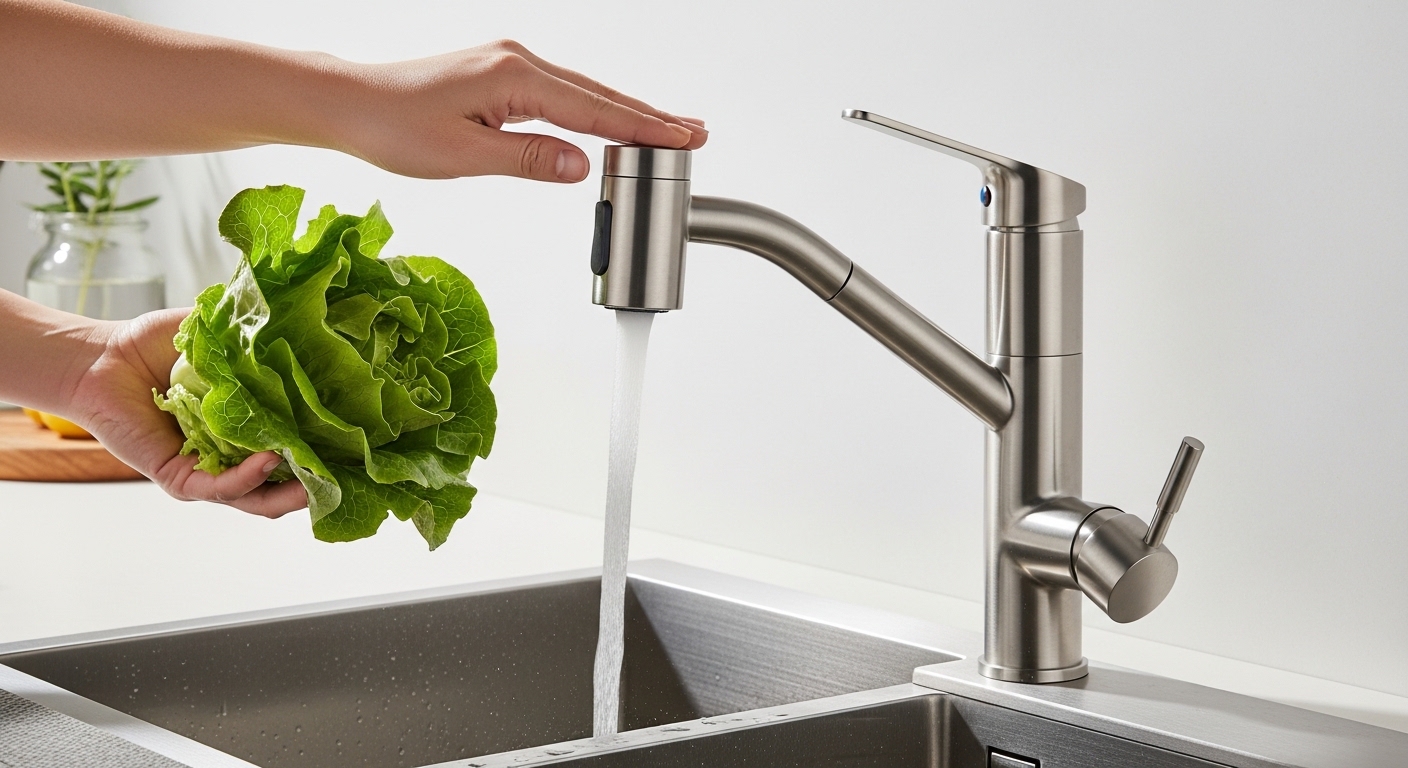
If you’ve been searching for the best kitchen faucet touch setup, here’s the honest version: a touch faucet is genuinely worth it the moment you’re elbow-deep in raw chicken, bread dough, or muddy garden veg and you can start the water with a forearm bump instead of smearing the handle. The technology has matured a lot, prices have come down, and the better models now last for years. But “touch” and “touchless” are not the same thing, the battery situation matters more than the marketing admits, and a cheap one will drive you crazy with false triggers. This guide breaks down exactly which type fits which kitchen, what to spend, and how to avoid the three problems that make people return these faucets.
What’s the difference between a touch faucet and a touchless (motion-sensor) faucet?
A touch faucet turns on when you physically tap it anywhere on the spout or handle; a touchless faucet turns on when an infrared sensor sees your hand wave near it — no contact at all. Both let you avoid twisting a dirty handle, but they fail in opposite ways. Touch faucets can occasionally register an accidental tap (a pan brushing the spout), while touchless faucets are the ones notorious for switching on by themselves when you reach for a sponge or a dish towel sways past the sensor.
Here’s the practical rule I give people: if you cook a lot and move pots around the sink constantly, get a touch faucet — you stay in control because nothing happens unless you mean it. If your top priority is hygiene (think households with someone immunocompromised, or a bathroom-adjacent prep area), a touchless model wins because you never make contact at all. Many premium faucets now include both modes plus a manual lever, which is the most flexible setup and what I’d steer most families toward.
| Feature | Touch faucet | Touchless (motion) faucet | Standard manual faucet |
|---|---|---|---|
| How it activates | Tap anywhere on spout/handle | Wave hand near sensor | Lift/turn the handle |
| Accidental activation | Occasional (a bump) | More common (false triggers) | None |
| Hygiene (no contact) | Reduced contact | Best — zero contact | Full contact |
| Typical price (2026) | $180–$350 | $200–$450 | $90–$250 |
| Needs power/batteries | Yes | Yes | No |
| Best for | Heavy cooks, families | Hygiene-first homes | Budget / off-grid kitchens |
Is a touch kitchen faucet actually worth it, or is it a gimmick?
It’s worth it for anyone who cooks regularly — and a gimmick for people who mostly use the kitchen to fill a kettle. The value is concentrated in the messy moments: raw meat, dough, gardening, painting cleanup, and anything where your hands carry something you don’t want on the handle. With a tap-to-start faucet you also save water, because it’s effortless to shut the flow off between rinses instead of letting it run.
That said, be realistic about the trade-offs. A touch faucet has a small electronic control box (the solenoid valve) under the sink that needs either batteries — usually 4–6 AA cells lasting around a year — or an optional AC adapter. When the batteries die, a well-designed faucet still works as a normal manual faucet via the handle, so you’re never stuck with no water. Cheaper units sometimes lock you out entirely when power dies, which is the single biggest complaint in reviews. Always confirm the manual override before buying.
- You’ll love it if: you cook from scratch, have kids, garden, or hate cleaning gunk off the faucet handle.
- Skip it if: you want zero electronics, rarely cook, or your sink area gets bumped constantly by a busy countertop.
- Get touchless instead if: hygiene is the whole point and you can tolerate the occasional false trigger.
What should I look for in the best kitchen faucet touch model? (buyer’s checklist)
Look for five things: a reliable manual override, a battery-backed solenoid (with optional AC), a solid brass body, a high-quality finish like spot-resistant stainless or matte black PVD, and a strong magnetic dock for the spray head. Those five separate a faucet you’ll still love in five years from one you’ll resent in five months.
Let me explain why each matters in plain terms. The brass body resists corrosion far better than the zinc-alloy cores in bargain faucets — this is the difference a good manufacturer’s casting and machining makes, and it’s exactly the kind of build quality that separates a faucet rated for 500,000 use cycles from a no-name unit. The finish is what you touch all day; PVD (physical vapor deposition) coatings are dramatically more scratch- and tarnish-resistant than cheap electroplate. The magnetic dock keeps the pull-down spray head snapping firmly back into place instead of drooping after a few months — droop is the most common long-term annoyance with pull-downs.
One more thing people forget: water pressure and spray modes. A good touch faucet should offer at least a steady aerated stream and a powerful spray, and ideally a pause button on the spray head. If your home runs on a well or you struggle with hard water, pay attention to flow rate (1.5–1.8 GPM is the modern sweet spot) and consider how easy the aerator is to clean. If you’re weighing a lower-flow design specifically, our breakdown of whether a kitchen faucet with sprayer low flow is worth it for daily cooking covers the trade-offs in detail.
How much should I spend on a good touch kitchen faucet?
Plan on $180–$350 for a genuinely reliable touch faucet from a reputable brand in 2026 — that’s the band where you get a brass body, real manual override, and a finish that survives daily abuse. Below about $150, you’re gambling on the electronics and the finish; above $400, you’re mostly paying for designer styling, smart-home voice control, or premium showroom names.
Here’s how the tiers actually shake out:
- $120–$170 (entry): Touch works, but expect a zinc or part-plastic body, weaker magnetic dock, and a higher chance of finish wear. Fine for a rental or low-use kitchen.
- $180–$280 (sweet spot): Brass body, spot-resistant finish, battery + AC option, solid pull-down spray. This is where most buyers should land.
- $300–$450 (premium): Designer finishes, voice/app integration, longer warranties, and the smoothest touch sensitivity with the fewest false triggers.
Whatever you spend, factor in that a touch faucet is plumbed exactly like a normal one — so installation cost is the same. If you’re doing it yourself, the same skills apply as any modern faucet swap; our guide on single handle faucet removal the right way walks through pulling the old unit without calling a plumber, and if your shutoff valves are crusty, the how to change a kitchen tap valve walkthrough covers that part too.
Do touch faucets work with hard water, and how do I keep one reliable?
Yes, touch faucets work fine with hard water, but mineral buildup is their real long-term enemy — not the electronics, the aerator. Hard water clogs the aerator screen and the spray-head nozzles, which weakens flow and makes the spray spit. The fix is simple maintenance, not a special faucet.
Most touch faucets today have rubber spray nozzles you can rub clean with a thumb, and an aerator that unscrews for a vinegar soak. If your flow has dropped, a 30-minute soak usually restores it — the same technique we cover in our guide to cleaning a faucet head with vinegar and baking soda. Do this every few months in a hard-water area and the faucet will feel new for years. The touch electronics themselves are sealed and essentially maintenance-free; the only routine task there is swapping the AA batteries about once a year (or wiring in the AC adapter so you never think about it).
If you frequently switch between the main faucet and an accessory like a dishwasher line or a second outlet, also look at whether you need a diverter in the setup — our explainer on the kitchen faucet diverter covers when that matters for a touch-enabled kitchen.
Touch faucet vs. touchless vs. a second prep faucet — which setup fits my kitchen?
For a single-sink kitchen, a touch pull-down faucet is the best all-rounder. For a large kitchen with an island prep sink, a touch faucet on the main sink plus a simpler dedicated faucet on the prep sink is the smarter spend — you don’t need two sets of electronics. And for someone whose whole motivation is hygiene, go fully touchless on the main sink.
The reason a second sink changes the math is that prep work (rinsing veg, filling stockpots) doesn’t always need touch — it needs reach and a good spray. If you’re outfitting an island or butler’s pantry, our look at whether a prep sink pull-down faucet is worth it for a second kitchen sink helps you decide where to put your budget. The general principle: spend the touch premium where your hands are dirtiest and you turn the water on and off the most — that’s almost always the main sink.
How do I install a touch kitchen faucet myself?
Installing a touch faucet takes about an hour and uses the same steps as any single-hole faucet, plus connecting one extra component — the solenoid control box — under the sink. If you’ve ever swapped a faucet, you can do this; no special tools beyond a basin wrench and a bucket.
- Shut off the water at the under-sink supply valves and open the old faucet to release pressure.
- Remove the old faucet and clean the deck or mounting hole.
- Drop in the new faucet, feeding the supply lines and the data/sensor cable through the deck plate, and tighten the mounting nut from below.
- Connect the solenoid valve: the faucet’s sensor cable plugs into the control box, and the supply lines connect through it.
- Attach the battery pack or AC adapter in a dry spot under the sink.
- Turn the water back on, check for leaks, then test both the manual handle and the touch activation.
If anything goes sideways during removal — corroded nuts, stuck supply lines — slow down and deal with that first. A clean install is the single biggest factor in whether the touch feature behaves correctly afterward, because a loose mount can cause the faucet to read vibrations as “taps.”
FAQ
Why does my touch faucet turn on by itself?
Usually it’s one of three things: a loose mounting nut letting the spout vibrate, static electricity in very dry conditions, or interference from a metal object resting against the spout. Tighten the mount first — that fixes most cases. If it persists, check that the supply lines and sensor cable aren’t pressing against the spout shank, which can transmit false “taps.”
What happens to a touch faucet when the batteries die?
On any well-made touch faucet, you simply lose the touch feature and the faucet works as a normal manual faucet via the handle — you’ll never be without water. Cheaper models sometimes lose all function, so confirm manual override before buying. Most batteries last about a year; an optional AC adapter eliminates the issue entirely.
Are touch faucets safe — can they shock you or short out?
Yes, they’re safe. The system runs on low-voltage DC (from AA batteries or a small adapter), not household current, so there’s no shock risk even though it’s controlling water. The control box is sealed against splashes. Look for faucets that meet recognized plumbing and safety standards (such as cUPC/NSF listing) for added assurance.
Can I add touch capability to my existing faucet?
Generally no — the touch sensing is built into the faucet body and wired to its own solenoid, so it’s not a clip-on upgrade for a standard faucet. There are a few aftermarket “touch adapter” kits, but they’re bulky and unreliable compared to a purpose-built touch faucet. If you want touch, it’s worth buying a true touch faucet.
Touch or touchless — which is better for a family with kids?
Touch is usually better for families with young kids, because nothing happens unless someone deliberately taps it — there’s less random water-wasting than a motion sensor that triggers when a child walks past. The tap action is also easy for kids to learn. If your main concern is germs during cold-and-flu season, a touchless model edges ahead.
How long do touch kitchen faucets last?
A quality brass-bodied touch faucet should last 10–15 years, comparable to a good manual faucet, because the mechanical valve is the same proven cartridge design. The electronics are the newer variable, but the solenoid is a simple, sealed component with no moving parts to wear out. A strong warranty (lifetime on the finish and function, several years on the electronics) is the clearest signal of a faucet built to last.
About the author: This guide was written by the product team at VIGA Faucet, drawing on hands-on testing of pull-down, touch, and touchless kitchen faucets across hard- and soft-water conditions. We evaluate spray strength, dock retention, finish durability, and false-trigger behavior in real kitchen use, not just on spec sheets.
About VIGA: VIGA is a manufacturer of kitchen and bathroom faucets and fixtures with deep roots in the Kaiping sanitary-ware industry belt. Our faucets are built with solid brass bodies and PVD finishes, cycle-tested for long-term reliability, and backed by warranty support. For more on what separates a durable fixture from a throwaway one, see our breakdown of the manufacturing processes behind a durable faucet.
WeChat
Scan the QR Code with WeChat