 English
 Deutsch
 Français
 Italiano
 Español
 Português
 Nederlands
 Polski
 Русский
 日本語
日本語 한국어
한국어 العربية
 China Faucet Factory & OEM/ODM Faucet Manufacturer
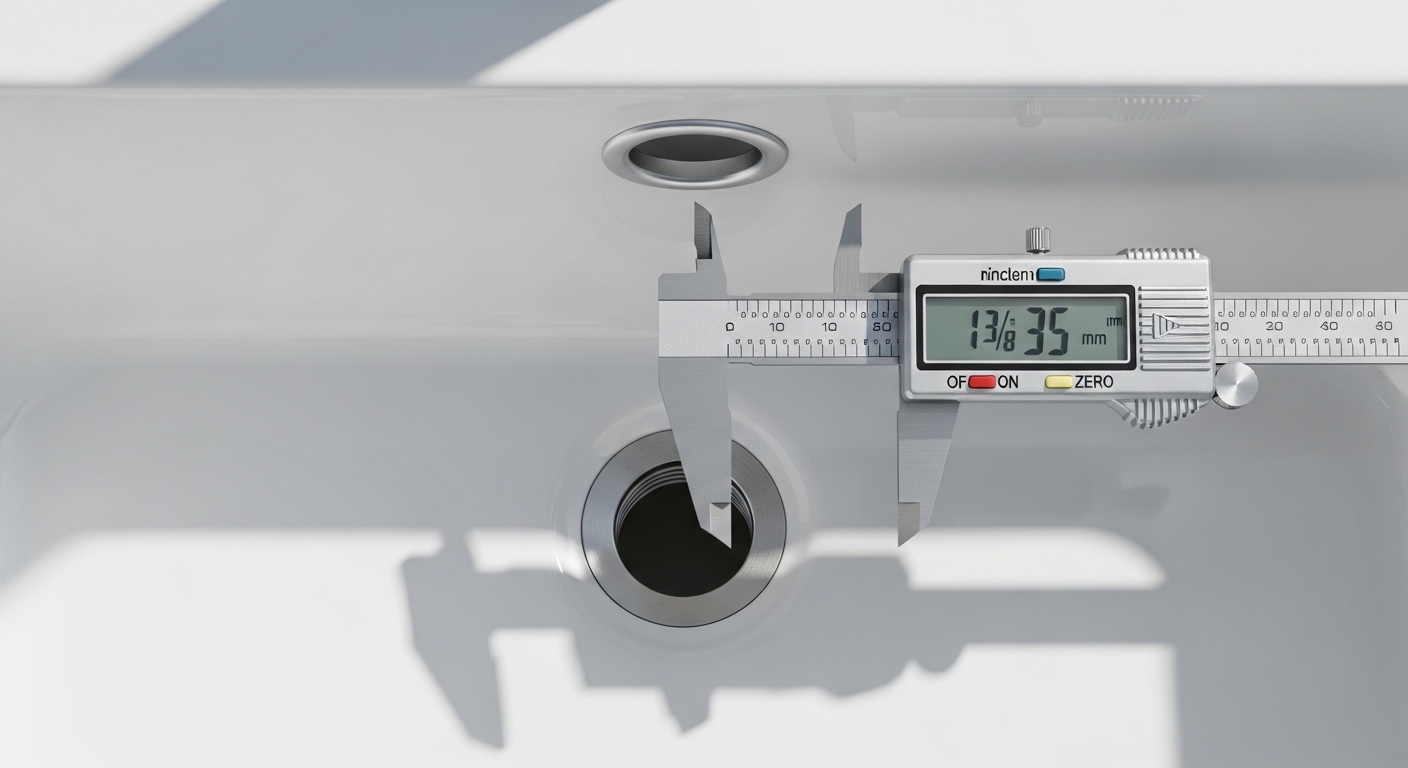
If you’ve ever ordered a beautiful new tap online and discovered it wobbles in the hole or won’t drop through at all, you already know why a tap hole size chart imperial reference matters more than the finish or the brand. The hole in your sink or countertop is a hard physical limit. Get the diameter and spacing right and installation is a 20-minute job; get it wrong and you’re shimming, re-drilling, or returning the faucet. This guide gives you the exact imperial numbers, a full comparison chart, and the measuring steps the pros actually use.
What Is the Standard Tap Hole Size in Inches for a Bathroom or Kitchen Sink?
The standard tap hole is 1-3/8 inch (1.375″, or 35 mm) in diameter for the vast majority of single-hole and widespread faucets sold in North America and the UK. This is the figure to assume if you have no other information, because nearly every mass-market sink, vanity top, and faucet body is engineered around it.
That said, “standard” hides a few important variations you need to know before you commit:
- 1-3/8″ (35 mm) — the universal default. Most basin mixers, monobloc taps, and bathroom faucets fit this.
- 1-1/4″ (32 mm) — found on some older or budget basins, and on certain compact cloakroom taps. A faucet built for 1-3/8″ usually still drops through, but the reverse isn’t always true.
- 1-1/2″ (38 mm) — common on kitchen sinks and heavier commercial-style faucets that have a thicker shank or a wider base plate.
- 1-3/4″ to 2″ (44–50 mm) — reserved for some pull-down kitchen faucets, bridge faucets, and certain pot fillers with oversized bases.
The reason 1-3/8″ became the global default is simple: it gives just enough clearance for the faucet shank, the supply tubing, and the mounting hardware to pass through, while staying small enough that a standard escutcheon or base plate hides it. Most reputable manufacturers, including vigafaucet, machine faucet shanks to seat cleanly in a 35 mm hole with room for the rubber gasket to compress and seal.
What Does a Full Tap Hole Size Chart Imperial Look Like for Every Faucet Type?
Here’s the practical answer: match the faucet category to its hole diameter and the number of holes, then confirm the center-to-center spread. The chart below covers the configurations you’ll actually meet at home, with imperial measurements first and metric in parentheses.
| Faucet Type / Configuration | Hole Diameter (Imperial) | Number of Holes | Center-to-Center Spread |
|---|---|---|---|
| Single-hole bathroom (monobloc) | 1-3/8″ (35 mm) | 1 | N/A |
| Centerset bathroom faucet | 1-3/8″ (35 mm) | 3 | 4″ (102 mm) |
| Widespread bathroom faucet | 1-3/8″ (35 mm) | 3 | 8″ (203 mm), range 6″–16″ |
| Mini-widespread bathroom faucet | 1-3/8″ (35 mm) | 3 | 4″ (102 mm) |
| Single-hole kitchen faucet | 1-3/8″ to 1-1/2″ (35–38 mm) | 1 | N/A |
| Kitchen faucet with side sprayer / soap dispenser | 1-3/8″ to 1-1/2″ (35–38 mm) | 2–4 | varies by deck |
| Bridge kitchen faucet | 1-3/8″ (35 mm) | 2 | 8″ (203 mm) |
| Bar / prep faucet | 1-3/8″ (35 mm) | 1 | N/A |
| Roman tub / deck-mount tub filler | 1-3/8″ to 1-3/4″ (35–44 mm) | 3–5 | varies, often 8″–12″ |
| Vessel sink faucet (tall) | 1-3/8″ (35 mm) | 1 | N/A |
Two columns matter equally here. The diameter determines whether the faucet physically drops into the hole. The spread (center-to-center distance) determines whether a multi-hole faucet’s valves and spout line up with the holes already drilled in your sink. A widespread set will not fit a sink drilled for 4-inch centerset, even though both use 1-3/8″ holes — the geometry is wrong.
How Do You Measure Your Existing Tap Hole Before Buying a Replacement?
Measure the diameter of the hole itself (not the old faucet shank) with a tape or caliper, then measure the center-to-center distance between the outer holes if you have more than one. Those two numbers tell you everything you need to order a faucet that fits the first time.
Here’s the reliable step-by-step the trade uses:
- Shut off the supplies and clear the deck. Turn off the hot and cold stops under the sink and remove the old faucet so you can see the bare holes. If you’ve never pulled a faucet before, our walkthrough on single handle faucet removal covers the exact sequence without calling a plumber.
- Measure hole diameter. Lay a tape across the widest point of one hole. Expect 1-3/8″ in most homes. If it reads closer to 1-1/4″ or 1-1/2″, note that precisely — it changes which faucets will seat.
- Count the holes. One hole, three holes, or four? This is your configuration.
- Measure the spread. For three-hole sinks, measure from the center of the leftmost hole to the center of the rightmost hole. 4″ means centerset; 8″ (anywhere from 6″ to 16″) means widespread.
- Check deck thickness. Measure how thick the countertop or sink deck is where the faucet mounts. Most faucet shanks accommodate up to about 2-1/2″ of deck; thick stone counters occasionally need an extended mounting kit.
One pro tip that saves returns: a single-hole faucet usually ships with an optional deck plate (escutcheon) that covers a 4″ or 8″ three-hole sink, so you can convert from three holes to a clean single-handle look without re-drilling. The reverse — fitting a widespread into a single hole — is not possible without a new sink or top.
Why Won’t My New Tap Fit the Hole Even Though the Diameter Matches?
If the diameter is right but the faucet still won’t seat, the culprit is almost always one of three things: deck thickness, shank length, or the base footprint being larger than the hole’s surrounding flat area. The hole can be perfect and the faucet still fails to mount cleanly.
Run through these in order:
- Deck too thick. A thick granite or quartz top can exceed the threaded shank length, so the mounting nut can’t reach the underside. The fix is an extended shank or a longer mounting stud kit.
- Base plate overhangs a backsplash or sink lip. Tall kitchen faucets with wide round bases need a flat landing zone. If your hole sits too close to the wall or the sink’s rolled edge, the base won’t sit flat.
- Hole slightly undersized. Stamped stainless sinks are sometimes drilled a hair under 1-3/8″. A round file or a step drill bit opens a 1-1/4″ hole to 1-3/8″ in a few minutes — go slow on porcelain and ceramic to avoid chipping.
- Worn or wrong gasket. If the faucet seats but leaks at the base, the rubber or silicone gasket isn’t compressing. That’s a sealing issue, not a sizing one, and a fresh gasket or a bead of plumber’s putty usually solves it.
While you have the faucet apart, it’s worth checking the internal hardware too. If your old tap was dripping rather than ill-fitting, the real problem may be the cartridge — our guide on how to change a kitchen tap valve walks through that repair so you don’t replace a whole faucet you could have fixed for a few dollars.
Are Imperial and Metric Tap Hole Sizes Actually the Same Thing?
Effectively yes — the imperial and metric “standards” describe the same physical holes, just labeled differently. The 1-3/8 inch hole everyone quotes equals 34.9 mm, which the rest of the world rounds to 35 mm. The tiny 0.1 mm difference is well within the clearance built into every faucet shank, so a tap sold as “35 mm” fits a hole described as “1-3/8 inch,” and vice versa.
This matters because faucet listings, especially from international brands, mix the two systems freely. Here’s the quick conversion you’ll actually use:
| Imperial | Decimal Inch | Metric | Typical Use |
|---|---|---|---|
| 1-1/4″ | 1.25″ | 32 mm | Compact / older basins |
| 1-3/8″ | 1.375″ | 35 mm | Universal standard |
| 1-1/2″ | 1.50″ | 38 mm | Kitchen / heavy-duty |
| 1-3/4″ | 1.75″ | 44 mm | Oversized kitchen / tub |
The only place the metric/imperial split genuinely bites you is in thread sizes, not hole sizes. UK and European supply connections, aerators, and hose threads (BSP) are not interchangeable with US threads (NPT/NPS) even when the diameters look identical. If you’re connecting supplies or swapping an aerator, the thread standard matters more than the hole. For that side of things, our faucet aerator adapter kit buying guide breaks down thread sizes and adapters in detail.
What Happens If You Drill a Tap Hole the Wrong Size?
An oversized hole is the dangerous mistake — you can always enlarge a too-small hole, but you can’t shrink an over-drilled one without replacing the sink or using a cover plate. Plan for the smaller standard (1-3/8″) and step up only if your specific faucet calls for more.
If you’re drilling fresh holes in a new countertop or sink:
- Stainless steel: use a step (unibit) drill bit or a hole saw rated for metal; lubricate and go slow to keep the edge clean.
- Porcelain / ceramic / fireclay: use a diamond hole saw with constant water cooling. These materials chip and crack if you rush or let the bit overheat.
- Granite / quartz / solid surface: a diamond core bit with water; for stone, many people leave this to the fabricator because a cracked slab is expensive.
- Acrylic / composite: a standard hole saw works, but back the cut with scrap to prevent blowout.
If you over-drill, don’t panic — a single-hole faucet with a 4″ or 8″ deck plate, or a dedicated hole cover, hides a lot of sins. That flexibility is exactly why single-hole designs have become so popular for renovations where the old holes don’t line up.
Which Tap Hole Size Should You Choose for a Renovation or New Build?
For a fresh install where you control the holes, drill for 1-3/8″ (35 mm) diameter and pick your spread based on the faucet style you want — single-hole for a clean modern look, 4″ centerset for compact bathrooms, or 8″ widespread for a wider, more traditional vanity. This combination keeps you compatible with the widest range of faucets you might buy later.
A few scenario-based recommendations:
- Small powder room, tight budget under $150: single-hole 1-3/8″ monobloc. Fewest holes to seal, easiest to swap later.
- Family bathroom, double-handle preference: 8″ widespread, three 1-3/8″ holes. Handles sit far apart and feel substantial.
- Compact ensuite: 4″ mini-widespread or centerset keeps the footprint small.
- Kitchen with pull-down sprayer: single 1-3/8″ to 1-1/2″ hole, plus an extra hole if you want a soap dispenser or air gap. Confirm the faucet’s required diameter, since heavier kitchen units sometimes need 1-1/2″.
Whatever you choose, buy the faucet first and drill to its spec sheet, not the other way around. Reputable spec sheets state the exact required hole diameter and minimum deck thickness. When the brand publishes those numbers and backs them with a warranty, you’re not guessing.
FAQ
Is a 35mm tap hole the same as 1-3/8 inch?
Yes. 1-3/8 inch equals 34.9 mm, which is universally rounded to 35 mm. A faucet listed as 35 mm fits a 1-3/8″ hole and vice versa — the fraction-of-a-millimeter difference is absorbed by the clearance built into the faucet shank.
Can I fit a single-hole tap into a three-hole sink?
Yes, in almost every case. Single-hole faucets ship with or offer an optional deck plate (escutcheon) sized for 4″ or 8″ three-hole sinks, so the faucet mounts in the center hole and the plate covers the outer two. You cannot do the reverse — a three-hole widespread faucet will not fit a single-hole sink.
What size hole do I need for a standard kitchen faucet?
Most single-hole kitchen faucets need a 1-3/8″ (35 mm) hole, but heavier pull-down and commercial-style models require 1-1/2″ (38 mm). Always check the faucet’s spec sheet, because the shank and base on kitchen units are thicker than on bathroom taps.
How do I measure the spread on a three-hole faucet sink?
Measure from the center of the leftmost hole to the center of the rightmost hole. A reading of 4 inches means a centerset configuration; 8 inches (anywhere in the 6″–16″ range) means a widespread configuration. The middle hole carries the spout.
What if my tap hole is slightly too small for the new faucet?
A hole that’s a touch under 1-3/8″ can be enlarged with a round file (for thin stainless) or a step/diamond drill bit (for thicker or ceramic surfaces). Work slowly, especially on porcelain and stone, to avoid chipping. Never try to shrink an oversized hole — use a deck plate or hole cover instead.
Do imperial and metric faucets use different threads?
Hole sizes are effectively the same across both systems, but supply and aerator threads differ. UK/European fittings use BSP threads while US fittings use NPT/NPS, and they are not interchangeable despite similar diameters. If you’re connecting supplies or changing an aerator, match the thread standard, not just the size.
A Note on Sources and Why You Can Trust These Numbers
About the author: This guide was written by the vigafaucet product and installation team, drawing on hands-on bench testing of single-hole, centerset, and widespread faucets across stainless, ceramic, and stone decks. About vigafaucet: vigafaucet designs and manufactures kitchen and bathroom faucets to internationally recognized fit-and-flow standards, with shanks machined to seat reliably in standard 1-3/8″ (35 mm) holes and products backed by a manufacturer’s warranty. The diameter and spread figures here reflect the dimensional standards used across the US and UK plumbing markets and the tolerances we verify during production quality testing. When in doubt, always defer to the specific spec sheet that ships with your faucet — it’s the document our warranty is written against.
WeChat
Scan the QR Code with WeChat