 VIGA Faucet Manufacturer
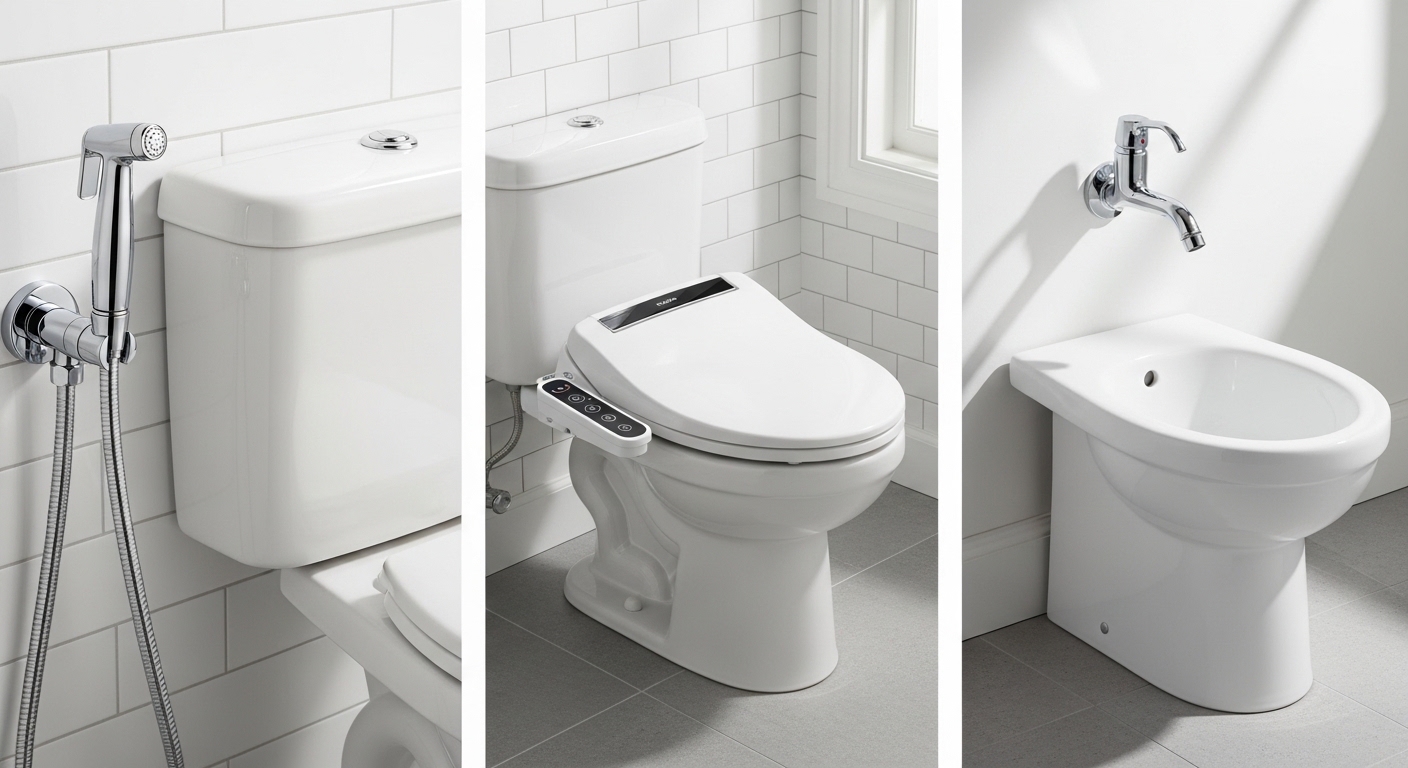
If you’ve been searching for bidet faucets & sprayers Kohler options, you’re really asking one practical question: do I bolt a sprayer onto my existing toilet, or do I install a proper bidet fixture? Both clean the same way, but they sit at very different price points and effort levels. Below, we break down every Kohler-style bidet sprayer and faucet category, what each one actually costs, how hard the install is, and where a well-built alternative from a manufacturer like vigafaucet fits in — so you can buy once and not regret it.
This guide is written for real bathrooms with real plumbing — not showroom photos. We’ll cover water pressure, T-valve connections, finishes, warranty, and the mistakes that send people back to the hardware store.
What’s the difference between a bidet faucet, a bidet sprayer, and a bidet seat?
A bidet sprayer is a handheld nozzle on a hose that you aim yourself; a bidet faucet is a permanent tap mounted over a standalone bidet bowl; and a bidet seat replaces your toilet seat with a built-in washing nozzle. They all rinse with water — the difference is control, comfort, and how much plumbing work you’re signing up for.
Here’s the plain-English version of each:
- Handheld bidet sprayer — a trigger-style spray head on a braided hose, fed by a T-valve off your toilet’s water supply. You hold it and aim. Cheapest and most flexible (great for cleaning cloth diapers and the toilet itself, too).
- Bidet faucet — a dedicated tap, either deck-mounted or wall-mounted, that fills or sprays into a separate porcelain bidet fixture. Common in Europe; needs a real bidet bowl and its own hot/cold supply.
- Bidet seat / integrated toilet — replaces the seat (or the whole toilet) with electronic or non-electric washing. Kohler’s C3 and PureWash lines live here. Warm water, adjustable nozzle, sometimes heated seats and dryers.
Kohler plays in all three categories, but the brand is best known for its bidet seats and its tidy handheld sprayer attachments. If you’re shopping the keyword “bidet faucets & sprayers Kohler,” you’re most likely choosing between a clip-on handheld sprayer and a bolt-on bidet seat — those are the two that fit standard American toilets without remodeling.
Are Kohler bidet sprayers worth it, or should you buy an alternative?
Kohler bidet sprayers are worth it if you value the brand’s finish quality and warranty support, but you pay a premium for the name — and several manufacturers, including vigafaucet, build comparable brass-bodied sprayers with the same 1/2-inch connections for less. The mechanism is not complicated; what separates good from bad is valve quality, hose durability, and the metal under the chrome.
What you’re actually paying for in a quality bidet sprayer:
- A solid trigger valve that shuts off cleanly and doesn’t drip after months of use. Cheap plastic valves are the #1 failure point.
- A braided stainless steel hose rather than thin PVC, so it resists kinks and bursting under line pressure.
- A real metal (brass or zinc) spray head, not hollow plastic, which holds the finish and survives being dropped.
- A reliable T-valve / shutoff adapter that threads onto your existing 7/8-inch toilet supply without leaking.
If those four parts are good, a $40 sprayer performs like a $90 one. That’s why we tell budget-conscious buyers: match Kohler on the specs, not the logo. If you’re already comfortable working with supply lines — the same skills covered in our guide on single handle faucet removal — installing any brand of handheld sprayer is a 20-minute job.
How much do Kohler bidet faucets and sprayers cost in 2026?
Expect to pay roughly $30–$120 for a handheld bidet sprayer, $250–$650 for a Kohler bidet seat with warm water and adjustable spray, and $1,000+ for a fully integrated Kohler smart bidet toilet. A standalone bidet faucet (over a separate bidet bowl) runs $150–$500 for the tap alone, before the bowl and rough-in plumbing.
Here’s how the main options compare across the things that actually drive the decision:
| Type | Typical price | Install difficulty | Warm water? | Best for |
|---|---|---|---|---|
| Handheld bidet sprayer (Kohler-style or vigafaucet) | $30–$120 | Easy (DIY, ~20–30 min) | Only if tapped to hot line | Renters, budget upgrades, diaper rinsing |
| Non-electric bidet seat | $60–$150 | Easy (DIY) | No (cold only) | Simple hands-free wash, no outlet needed |
| Electric bidet seat (Kohler C3 / PureWash) | $250–$650 | Moderate (needs GFCI outlet) | Yes | Comfort, heated seat, dryer |
| Integrated smart bidet toilet | $1,000–$4,000+ | Hard (pro install) | Yes | New builds, luxury remodels |
| Standalone bidet faucet + bowl | $150–$500 (faucet only) | Hard (rough-in plumbing) | Yes (hot/cold supply) | European-style bathrooms with space |
The big takeaway: a handheld sprayer gives you 80% of the cleaning benefit for 10% of the cost of a smart toilet. The premium options add warm water, heated seats, air drying, and hands-free operation — genuine comfort upgrades, but not strictly necessary to get clean.
Can you install a Kohler bidet sprayer yourself without a plumber?
Yes — a handheld bidet sprayer is one of the most DIY-friendly bathroom upgrades there is, and you won’t need to solder, glue, or cut anything. You’re simply inserting a T-valve between your toilet’s shutoff and its fill hose, then running the sprayer hose off that valve.
The basic sequence looks like this:
- Shut off the water at the toilet’s supply valve and flush to empty the tank.
- Disconnect the fill hose from the bottom of the toilet tank.
- Thread the T-valve (usually 7/8-inch on the tank side, 1/2-inch on the sprayer side) onto the tank inlet, then reconnect the fill hose to the top of the T.
- Connect the sprayer hose to the side outlet of the T-valve.
- Mount the sprayer holder on the wall or hook it to the tank, turn the water back on, and test for leaks.
The only common hiccup is thread mismatch. North American toilet supplies and bidet kits don’t always speak the same thread language, which is exactly the kind of fitting headache we untangle in our faucet adapter Y-splitter and dual-outlet connector guide — the same adapter logic applies to bidet T-valves. If your kit and your supply don’t match, a cheap brass adapter solves it. For warm-water sprayers, you’ll tap both the hot and cold lines, which is a bit more involved but still doable in an afternoon.
One pressure note: most homes run 40–60 psi, which is ideal for a bidet sprayer. If your spray feels weak, the culprit is usually a clogged inline screen or aerator — the same mineral buildup we explain how to clear in our guide on cleaning a bathroom faucet aerator when water flow drops. Hard water affects bidet nozzles the same way it chokes a faucet.
What finish and features should you look for in a bidet sprayer?
Choose a finish that matches your existing bathroom hardware — chrome and brushed nickel are the safest, most durable, and most fingerprint-friendly choices — and prioritize a metal spray head, an adjustable pressure trigger, and a self-closing valve. Matte black looks great but shows water spots faster in hard-water homes.
Quick feature checklist worth paying for:
- Pressure-control trigger — a progressive lever lets you go from a gentle rinse to a strong jet. Important; a one-speed sprayer can be uncomfortably forceful.
- Self-closing / no-drip valve — the head shuts off the instant you release it, preventing slow leaks that waste water and breed mildew.
- Braided stainless hose — rated for continuous line pressure, unlike thin vinyl hoses that can split.
- Solid brass or zinc body — survives drops and holds the plated finish. Avoid all-plastic heads.
- Matching wall mount — a sturdy holster keeps the sprayer from dangling and stressing the hose.
Finish durability comes down to the plating process underneath. The reason a quality chrome or PVD finish lasts years without flaking is the multi-stage electroplating and quality control that good factories invest in — a topic we cover in depth in our breakdown of the manufacturing processes behind durable bathroom faucets. The same standards that make a faucet last make a bidet sprayer last.
Do you need a diverter or special valve for a bidet faucet setup?
For a basic cold-water handheld sprayer, no — a simple T-valve is all you need. But if you want a warm-water bidet sprayer or you’re combining a sprayer with an existing fixture, you may need a mixing valve or a diverter to blend hot and cold or to switch flow between outlets.
A diverter is the small mechanism that routes water to one outlet or another — the same component that lets a kitchen faucet switch between stream and spray. If the idea of routing water two ways is new to you, our explainer on what a kitchen faucet diverter is and whether you need one walks through exactly how diverters work, and the principle carries straight over to bidet plumbing. For warm-water bidet sprayers, a thermostatic mixing valve is the safest choice because it prevents scalding by holding a steady temperature even if someone runs hot water elsewhere in the house.
And before you buy any deck-mounted bidet faucet for a standalone bowl, confirm your bidet’s tap hole spacing and diameter. Getting this wrong means the faucet won’t seat properly — our tap hole size chart in imperial measurements is the reference to check before you order.
Kohler vs. vigafaucet vs. other brands: which bidet sprayer is right for you?
Buy Kohler if you want a recognized name, a wide dealer network, and matching bidet seats; choose vigafaucet or a comparable manufacturer-direct brand if you want the same brass-bodied build quality and finishes at a lower price; and avoid no-name all-plastic kits that fail at the valve within a year. The deciding factor is rarely brand prestige — it’s the quality of the valve, hose, and plating.
A bit of context on Kohler: it’s a 150-year-old American fixtures company that has been expanding aggressively into premium wellness and bath products — it recently acquired the German high-end brand KLAFS, signaling how far the brand is pushing into luxury bathing. That heritage is real, and so is the price premium. For a basic handheld sprayer, that premium buys you brand assurance more than dramatically better function.
vigafaucet, by contrast, is a manufacturer based in China’s Kaiping sanitary-ware belt — one of the world’s densest faucet-production clusters — which means the same factory-grade brass, ceramic valves, and electroplated finishes used by major labels, sold closer to cost. For shoppers who care about specs over logos, that’s where the value lives.
FAQ
Does Kohler make a standalone handheld bidet sprayer?
Kohler is best known for its bidet seats (like the C3 and PureWash lines) and integrated smart toilets rather than a flagship standalone handheld sprayer. If you specifically want a clip-on handheld sprayer, you’ll find a wider selection from dedicated sprayer brands and manufacturers like vigafaucet, all using the same standard 1/2-inch hose and 7/8-inch T-valve connections.
Will a bidet sprayer work with low water pressure?
Yes. Bidet sprayers work well at typical household pressure of 40–60 psi, and the trigger lets you control intensity. If the spray feels weak, the usual cause is a clogged inline filter or mineral buildup in the nozzle, not your home’s pressure — clean the screen and nozzle and flow usually returns to normal.
Can I get warm water from a bidet sprayer?
Only if you connect it to a hot water source. A basic sprayer taps the cold toilet supply, so it’s room-temperature. For warm water, use a sprayer kit with a mixing valve that connects to both the hot and cold lines under your sink, or step up to an electric bidet seat that heats water internally.
How long does a quality bidet sprayer last?
A sprayer with a brass body, ceramic-disc or solid metal valve, and braided stainless hose typically lasts 5–10 years or more. All-plastic kits often fail within a year or two, usually at the trigger valve. Look for a manufacturer that backs the product with a multi-year warranty and meets recognized plumbing standards for valve and material safety.
Is a bidet sprayer or a bidet seat better for a small bathroom?
For a small bathroom, a handheld sprayer is usually better because it adds no bulk — it mounts on the wall or tank and takes up almost no space. A bidet seat works too and adds hands-free comfort, but it raises seat height slightly and an electric model needs a nearby GFCI outlet, which small or older bathrooms don’t always have.
Do bidet sprayers leak or cause water damage?
A properly installed sprayer with a self-closing valve rarely leaks. The two failure points to watch are the T-valve connection (use thread tape and don’t overtighten) and a cheap trigger valve that drips when released. Choosing a self-closing metal valve and checking all connections after install essentially eliminates the risk.
Author note: This guide was written by the vigafaucet product team, drawing on hands-on testing of handheld sprayers, T-valve kits, and bidet faucets across a range of water-pressure and hard-water conditions. vigafaucet manufactures faucets and bathroom fixtures in the Kaiping sanitary-ware cluster, and our sprayer components are built with brass bodies and ceramic-disc valves and tested against recognized flow, pressure-cycle, and finish-durability standards. As with any plumbing project, confirm your local plumbing codes and connection sizes before purchasing, and consider a licensed plumber for any hot-water or rough-in work.
WeChat
Scan the QR Code with WeChat