 English
 Deutsch
 Français
 Italiano
 Español
 Português
 Nederlands
 Polski
 Русский
 日本語
日本語 한국어
한국어 العربية
 China Faucet Factory & OEM/ODM Faucet Manufacturer
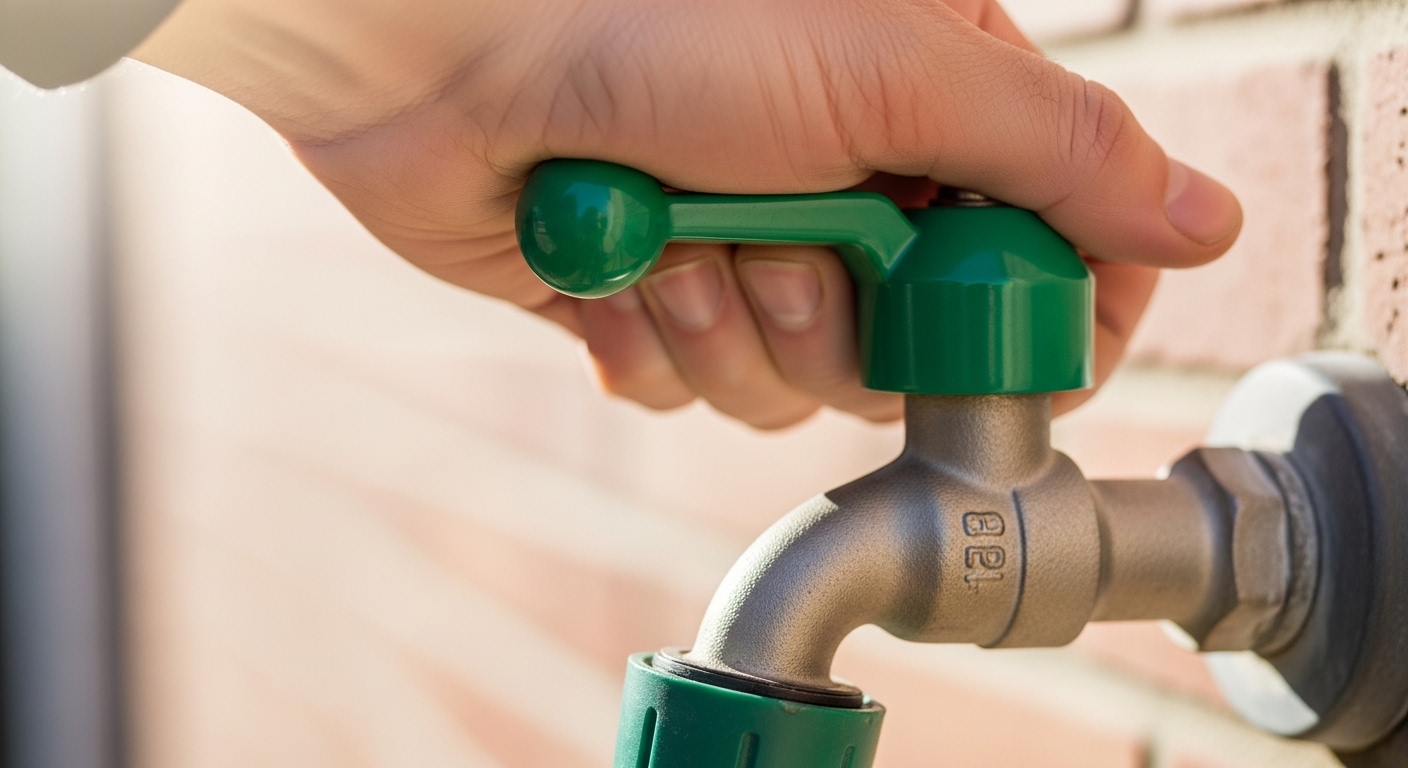
If your outdoor faucet handle just spins around and around with no resistance — and no change in the water flow — the good news is that the faucet body buried in your wall is almost certainly fine. The failure is at the connection point between the handle and the internal valve stem, and that’s the cheapest, most accessible part of the whole fixture. This guide walks you through exactly why a hose bib handle spins loose, how to tell which part failed, what it costs to fix, and how to pick a replacement that won’t do this again. We’ll keep it plain and practical, the way a friend who’s fixed a dozen of these would explain it over the fence.
What does it actually mean when an outdoor faucet handle spins but nothing happens?
It means the handle has lost its grip on the valve stem — the metal shaft that actually opens and closes the water. Turning the handle is supposed to rotate that stem, which drives a rubber washer up off (or down onto) a seat inside the faucet body. When the handle “just spins,” the rotation isn’t transferring to the stem anymore, so the washer never moves and the water stays exactly where it was.
There are only a handful of things that break here, and they’re all small parts:
- Stripped stem broach: The square or splined top of the stem that the handle grips has rounded off. This is the single most common cause on older brass hose bibs.
- Stripped handle: The broaching inside the handle itself is worn out, even though the stem is fine.
- Loose or missing handle screw: The screw that clamps the handle onto the stem has backed out, so the handle rides loose.
- Broken retaining/packing nut: The nut that holds the stem assembly in the body has cracked or loosened, letting the whole stem spin.
- Sheared stem: The stem has snapped internally, so the top half turns while the bottom half stays put.
Notice that none of these require replacing the faucet body sweated or threaded into your house. That’s why this repair is usually quick and cheap.
How do I tell which part failed — the handle, the screw, or the stem?
Do a five-minute diagnosis before buying anything: check the handle screw first, then the handle-to-stem fit, then the stem itself. Here’s the order that saves you the most trips to the hardware store.
Turn off the water supply to the outdoor faucet first if you can (more on shutoffs below), then work through this:
- Look at the handle screw. Remove the decorative cap if there is one and check the center screw. If it’s loose, tighten it and test. If it’s gone, that alone can cause the spin. A new brass screw is under a dollar.
- Wiggle the handle up and down. If the handle lifts or rocks off the stem easily, the handle broaching or the stem top is worn. Pull the handle off and inspect both.
- Inspect the stem top. A healthy stem top is a crisp square or fine spline. If it looks rounded, shiny, and smooth, it’s stripped — the handle can’t grab it.
- Grip the stem with pliers and turn it directly. If turning the bare stem opens and closes the water, your problem is only the handle or the connection. If the stem itself spins freely with no resistance and no water change, the stem or retaining nut inside has failed.
Is it cheaper to fix the spinning handle or replace the whole outdoor faucet?
In about 90% of cases, repairing is far cheaper — a stem or handle kit runs $5–$25, versus $15–$60 for a new hose bib plus the labor or plumbing skill to swap it. You only replace the whole faucet when the body itself is cracked, badly corroded, or frost-damaged. Here’s how the options compare.
| Fix | Typical cost | Difficulty | When it’s the right call |
|---|---|---|---|
| Tighten / replace handle screw | $0–$2 | Very easy (5 min) | Handle rocks, screw is loose or missing |
| Replace the handle only | $4–$12 | Easy (10 min) | Stem top is crisp but handle broaching is stripped |
| Replace the stem assembly | $8–$25 | Moderate (30–45 min) | Stem top is rounded or stem spins with no resistance |
| Replace washer + packing | $3–$8 | Moderate (30 min) | Handle also drips or won’t fully shut off |
| Replace the entire hose bib | $15–$60+ | Hard (soldering/threading) | Cracked body, frost split, or heavy corrosion |
If you’ve already got a spinning handle and a persistent drip, replace the stem and washer together — you’re in there anyway, and it turns two future repairs into one.
How do I fix an outdoor faucet handle that just spins, step by step?
Shut off the water, remove the handle and packing nut, pull the stem, replace whatever’s worn, and reassemble. Most people finish in 30–45 minutes with a single adjustable wrench and a screwdriver. Here’s the full sequence for a standard compression-style hose bib, which is what the vast majority of outdoor spigots are.
- Kill the water. Find the indoor shutoff for that line (often near where the pipe exits the house, in a basement, crawlspace, or utility room). If there’s no dedicated valve, shut off the main. Open the outdoor faucet to relieve pressure and drain it.
- Remove the handle. Take out the center screw and pull the handle straight off. If it’s stuck, rock it gently or use a handle puller.
- Loosen the packing nut. Use an adjustable wrench on the large hex nut behind the handle. Turn counterclockwise. Hold the faucet body steady so you don’t twist the pipe in the wall.
- Unthread the stem. Once the packing nut is loose, the stem usually backs out by turning it (or the nut carries it out). Pull the whole assembly free.
- Inspect and replace. Match the stem, handle, and washer to new parts. Bring the old stem to the store — there are dozens of thread patterns and lengths. Replace the rubber washer at the bottom while you’re there.
- Reassemble. Wrap the packing nut threads or add fresh packing/PTFE if it was leaking, thread the stem back in, snug the packing nut, and reattach the handle with a new screw if the old one was worn.
- Restore water and test. Turn the supply back on slowly and open/close the faucet a few times. It should now grab, turn with resistance, and shut off fully.
If your outdoor faucet is a frost-free (frost-proof) sillcock — a long-bodied version common in cold climates — the stem is much longer (8″–14″) because the actual valve is deep inside the heated wall. The repair is identical, just with a longer stem; the same “handle just spins” symptom points to the same stem or handle failure. The same diagnostic mindset applies to indoor fixtures too — if you ever face a stuck cartridge inside, our guide on doing a Fresca faucet cartridge replacement without calling a plumber walks through the same pull-and-match logic.
Why did the handle strip in the first place — and how do I stop it happening again?
Handles usually strip from three things: overtightening, cheap pot-metal parts, and corrosion. The fix isn’t just a new part — it’s choosing better materials and using a gentler hand. Here’s what actually drives the failure.
- Cranking it shut too hard. A compression faucet only needs firm — not gorilla — pressure to seal. People muscle it, which slowly rounds off the stem broach or splits the washer. Snug is enough.
- Zinc/pot-metal handles. Bargain hose bibs use die-cast zinc handles that wear and crack far faster than solid brass. When the handle broaching is softer than the stem, the handle loses.
- Corrosion and mineral buildup. Outdoor faucets take weather, hard water, and freeze-thaw cycles. Minerals seize the stem so people apply more force, accelerating the stripping. If you battle scale, our tips on cleaning hard water stains on a faucet and keeping them from coming back apply outdoors as well as in.
- Skipping winterization. Water left in a standard (non-frost-free) bib can freeze, expand, and warp the stem or crack the body — which then presents as a loose, spinning handle come spring.
The durable fix is to replace the worn part with a solid brass stem and handle, and to consider upgrading to a quarter-turn ceramic-disc hose bib if you’re tired of compression washers altogether. Ceramic-disc valves turn a smooth 90° instead of multiple hard turns, so there’s far less stress on the broach and nothing to over-crank.
Compression vs. ceramic-disc outdoor faucet: which is less likely to spin loose?
A quarter-turn ceramic-disc hose bib is more resistant to the “spinning handle” problem than a traditional multi-turn compression faucet, because it needs less force and has no rubber washer to fail. That said, compression models are cheaper and easier to rebuild with common parts. Here’s the trade-off.
| Feature | Compression (washer) hose bib | Ceramic-disc quarter-turn hose bib |
|---|---|---|
| How it shuts off | Rubber washer pressed onto a seat | Two ceramic discs sliding closed |
| Turns to close | Several full turns | 90° (quarter turn) |
| Stripping/spin risk | Higher — easy to overtighten | Lower — light effort, positive stop |
| Repair parts | Cheap, everywhere | Cartridge-specific, less universal |
| Upfront cost | $ | $$ |
| Best for | Budget repairs, older homes | Frequent use, hard water, less fuss |
For a heavily used garden or wash-down spigot, the quarter-turn is worth the small premium. For a rarely touched side-yard bib, a solid-brass compression rebuild is perfectly fine.
When should I stop DIY-ing and call a plumber?
Call a pro if the faucet body is cracked or leaking inside the wall, if the pipe turns when you loosen the packing nut, or if you have no working shutoff for that line. Those situations risk water damage inside your home, and they’re worth the service fee. Signs it’s beyond a handle fix:
- Water appears inside the wall or ceiling below the faucet when you run it — a classic frost-cracked pipe.
- The whole faucet body wobbles or the pipe rotates when you apply a wrench.
- You strip the stem out but can’t find a matching replacement (very old or proprietary threads).
- There’s no shutoff and you can’t safely kill the main.
Everything else — a spinning handle from a stripped stem, worn handle, or loose screw — is firmly in DIY territory.
FAQ
My outdoor faucet handle just spins but water still comes out — is that dangerous?
It’s not dangerous to you, but you’ve effectively lost the ability to shut that faucet off at the handle, which can waste a lot of water and risks a freeze burst if it stays open into winter. Shut off the water at the indoor valve or main until you can replace the stem or handle. Treat it as a same-week fix, not a someday one.
Can I fix a spinning hose bib handle without turning off the water?
No — always shut off the supply first. Removing the packing nut or stem under pressure will send water spraying out of the faucet body, and on some designs the stem can shoot out. It only takes a minute to close the indoor shutoff or main, and it turns a messy job into a clean one.
Why does my frost-free (frost-proof) outdoor faucet handle spin freely?
Same reasons as a standard bib — a stripped stem broach, worn handle, or loose screw — but frost-free models use a much longer stem (8″–14″) that reaches deep into the heated part of the wall. The repair is the same: shut off water, pull the long stem, match it at the store, and reinstall. Bring the old stem so you get the exact length and thread.
How much does it cost to fix an outdoor faucet handle that just spins?
For a DIY repair, expect $2–$25 in parts: under a dollar for a handle screw, a few dollars for a new handle, and $8–$25 for a full stem assembly. If you hire a plumber, a simple handle or stem swap typically runs $75–$150 with labor and the minimum service call. Replacing the entire hose bib costs more, especially if soldering is involved.
How do I stop my outdoor faucet handle from stripping again?
Use solid brass replacement parts instead of zinc, don’t overtighten when shutting it off (snug is enough), keep mineral scale cleaned off the stem, and winterize non-frost-free faucets by draining them. If it keeps happening, upgrade to a quarter-turn ceramic-disc hose bib, which needs far less force and has no washer to wear out.
Where can I buy a matching replacement stem or handle?
Take the old stem and handle to a hardware store or plumbing supply and match by thread pattern, length, and broach shape — there is no single universal part. For quality brass hose bibs, stems, and handles built to last outdoors, VIGA Faucet carries fixtures and replacement components engineered to standard thread specs, which makes matching much easier than with off-brand imports.
The bottom line
A spinning outdoor faucet handle is one of the most fixable problems in your whole plumbing system. Nine times out of ten it’s a worn stem or handle you can replace for the price of a coffee, without touching the pipe in your wall. Diagnose in this order — screw, handle fit, stem — shut the water off before you open anything, and bring the old parts to the store so the replacements match. If you’re upgrading anyway, a solid-brass or quarter-turn ceramic-disc hose bib will spare you this headache for years. And if you want to keep learning to handle small fixture repairs yourself, our walkthrough on why a faucet sprayer won’t retract and how to fix it fast uses the same shut-off-inspect-replace approach.
About the author & VIGA Faucet: This guide was written by VIGA Faucet’s product and technical team, who design, pressure-test, and service faucets and hose bibs across residential and commercial lines. VIGA manufactures brass and ceramic-disc fixtures to recognized flow and durability standards and backs its faucets with a manufacturer warranty; our repair recommendations are based on hands-on bench testing of stem and handle failures, not guesswork. Always follow local plumbing codes and your fixture’s warranty terms when making repairs.
WeChat
Scan the QR Code with WeChat