 English
 Deutsch
 Français
 Italiano
 Español
 Português
 Nederlands
 Polski
 Русский
 日本語
日本語 한국어
한국어 العربية
 China Faucet Factory & OEM/ODM Faucet Manufacturer
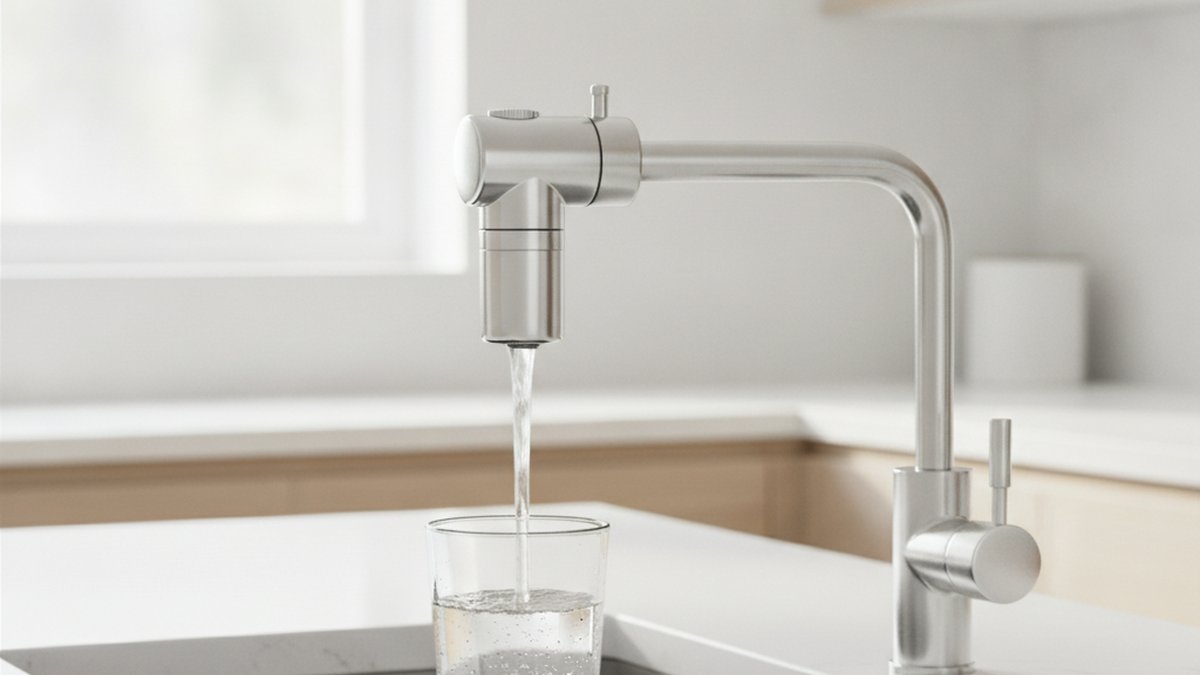
A faucet water filter attachment is a small canister that screws directly onto the end of your kitchen or bathroom faucet spout, in place of (or on top of) the aerator, and filters water on demand as it flows through. It’s the entry-level tier of home water filtration — below under-sink and reverse-osmosis systems — and for most renters and budget-minded homeowners it hits the sweet spot of “clearly better water, almost no effort.” Below, we’ll answer the real questions people actually ask before buying one: does it actually work, how do you know it fits your faucet, how often do you replace the cartridge, and when should you skip it and go straight to an under-sink system instead.
Does a faucet water filter attachment actually work, or is it a gimmick?
Yes, a good one genuinely works — but only for the contaminants it’s certified to reduce, and only if you replace the cartridge on schedule. The key phrase is third-party certification. A quality faucet-mounted filter carries an NSF/ANSI 42 rating (aesthetic effects: chlorine taste and odor) and often NSF/ANSI 53 (health effects: lead, cysts, some VOCs, mercury). Those numbers are not marketing fluff — they mean an independent lab verified the claims.
What a typical carbon-block faucet attachment reliably reduces:
- Chlorine taste and smell — the number-one reason people buy one; results are immediate and obvious.
- Lead — good units certified to NSF 53 reduce lead by 99%+, which matters enormously in older homes with legacy plumbing.
- Sediment, rust, and particulates — the same stuff that clogs aerators and leaves grit in your glass.
- Some VOCs, mercury, and cysts (Giardia, Cryptosporidium) on higher-end certified models.
What it does not do well: it won’t meaningfully soften hard water (that’s a scale/mineral problem, not a taste-and-particle problem), it won’t remove dissolved salts or fluoride, and it won’t handle bacteria unless it’s specifically certified for it. If your goal is scale control or you’re fighting mineral buildup, a faucet filter is the wrong tool — you’d be closer to the world of descaling and aerator maintenance, which we cover in our guide to the best bathroom faucet aerator for water savings and splash-free flow. And if you’re seeing chalky white crust on fixtures, that’s hard water doing its thing — see how to deal with it in how to remove hard water stains from a shower faucet.
How do I know a faucet filter will actually fit my faucet?
Most standard kitchen and bathroom faucets accept a faucet water filter attachment, but pull-down and pull-out spray faucets usually do not. The deciding factor is the threading at the tip of your spout, where the aerator screws in. Here’s the quick fit check before you buy:
- Unscrew your existing aerator. Twist it off (counter-clockwise, from your view looking up at the spout). Most faucet filters include adapters for the two common sizes.
- Identify male vs. female threads. If the threads are on the outside of the spout tip, that’s a male thread (typically 15/16″-27). If they’re on the inside, it’s female (typically 55/64″-27). Filter kits usually ship with both adapters plus washers.
- Rule out incompatible spouts. Pull-down/pull-out sprayers, touchless faucets, and spouts with built-in non-standard nozzles generally can’t take a screw-on filter. Same for faucets with a permanently integrated aerator.
If you have a pull-down sprayer and still want filtered water, don’t force it — go with a separate under-sink filter and a dedicated drinking-water faucet instead. That’s exactly the scenario where a small second tap shines, like a brushed gold reverse osmosis faucet mounted beside your main one. And if you simply need to bridge a thread-size mismatch to attach an accessory, an adapter can save the whole project — we break down how those work in what does a faucet adapter black finish actually do.
Faucet filter vs. pitcher vs. under-sink vs. reverse osmosis — which should I actually buy?
Buy a faucet water filter attachment if you want the best balance of low cost, easy install, and on-demand filtered water without giving up counter or cabinet space. Step up to under-sink or reverse osmosis only if you need higher capacity, better contaminant removal, or you have a pull-down faucet that can’t take an attachment. Here’s the honest side-by-side:
| Option | Upfront cost | Ongoing cost/yr | Install effort | Best for |
|---|---|---|---|---|
| Faucet water filter attachment | $20–$60 | $40–$90 | 5 min, no tools | Renters, chlorine/lead, small kitchens |
| Pitcher / dispenser filter | $25–$50 | $50–$120 | None (just fill) | 1–2 people, no faucet mods allowed |
| Under-sink carbon filter | $80–$200 | $60–$100 | 30–60 min, some plumbing | Families, higher flow, hidden setup |
| Reverse osmosis (RO) system | $180–$450 | $70–$150 | 1–2 hrs, dedicated faucet | TDS/salts/fluoride, well water, best purity |
The quick logic: if your only complaint is taste and smell, a faucet attachment or pitcher solves it for the least money. If you’re worried about lead in an older home, a certified faucet filter or under-sink unit is the move. If you’re on well water, dealing with high dissolved solids (TDS), or want the purest possible drinking water, that’s reverse osmosis territory — and RO almost always pairs with its own small drinking tap rather than screwing onto your main spout.
How often do I replace the cartridge, and what does it really cost per year?
Plan on replacing a faucet filter cartridge every 2 to 4 months, or roughly every 100–200 gallons, whichever comes first. That’s the single biggest ongoing cost and the thing most people underestimate. A filter that’s past its rated capacity doesn’t just stop working — it can start releasing trapped contaminants back into your water, so the replacement schedule isn’t optional.
Real-world math for a two-to-three-person household drinking and cooking with filtered water:
- Cartridges typically run $12–$25 each.
- At 3–5 cartridges per year, that’s roughly $40–$90/year in consumables.
- Higher-flow homes (lots of cooking, big family) burn through them faster — closer to the top of that range.
Two habits stretch cartridge life without hurting quality: only run the filtered setting for drinking and cooking (use unfiltered water for dishes and rinsing), and flush the cartridge for a few seconds when you first switch it on each day. Almost every faucet filter has a diverter lever exactly so you can toggle between filtered and unfiltered — using it correctly is the difference between a cartridge lasting two months versus four.
How do I install a faucet water filter attachment myself?
You can install a faucet water filter attachment in about five minutes with no tools — it screws on where your aerator currently sits. Here’s the full process so nothing surprises you:
- Turn the water off? Not needed. Unlike a real plumbing job, you’re working at the spout tip, so you can leave your supply lines alone.
- Remove the old aerator. Twist it counter-clockwise by hand. If it’s crusted on with mineral scale, wrap it in a cloth and use pliers gently, or soak the tip in vinegar first.
- Pick the right adapter. Match the male or female adapter from the kit to your spout threads and seat the rubber washer.
- Thread on the filter housing. Screw it on hand-tight — don’t crank it. Over-tightening crushes the washer and causes drips.
- Insert the cartridge and flush. Pop in the new cartridge and run cold water through the filtered setting for 3–5 minutes to rinse out carbon fines. The water may look a little gray at first; that’s normal and clears fast.
- Check for leaks. Run water on both settings and look at the connection point. A slow drip almost always means a missing or misaligned washer, not a defective unit.
If you turn the water on and get a leak at the base of the faucet rather than at the filter connection, that’s a separate issue — the filter didn’t cause it, but the added weight can reveal an existing weak seal. Our guide on why your sink is leaking from the faucet base walks through that fix.
What should I look for when buying one — the real buyer’s checklist
Focus on certification, fit, flow rate, and cartridge cost — in that order. Everything else (finish, indicator lights, lever design) is secondary comfort. Here’s what actually separates a good faucet water filter attachment from a disappointing one:
- NSF/ANSI certification, printed on the box. At minimum NSF 42 (chlorine/taste). For lead reduction, insist on NSF 53. Don’t accept “tested to NSF standards” — that phrase means it was not actually certified.
- Flow rate. Cheap filters can choke flow down to a trickle. Look for at least 0.5 GPM so filling a pot doesn’t take forever.
- Cartridge availability and price. A $25 filter with $30 cartridges you can’t find anywhere is a bad deal. Check that replacements are cheap and in stock before you commit to the platform.
- Housing material and finish. Chrome and brushed finishes look better and resist corrosion at the connection; make sure the finish matches your faucet if it’s visible.
- Diverter and indicator. A smooth filtered/unfiltered lever and a change-reminder (dial or electronic) are worth the small premium — they directly control your running cost.
- Warranty. Look for at least a 1-year warranty on the housing; reputable brands stand behind the plastic and threading.
One finish note: if you’re upgrading the whole tap area for looks as well as function, plan the filter and faucet finish together so the attachment doesn’t clash. Mismatched metals at the spout tip are the most common regret people mention after the fact.
When should I NOT buy a faucet water filter attachment?
Skip it if you have a pull-down or pull-out sprayer, if your water problem is hardness/scale rather than taste, or if a lab test shows contaminants (like high TDS, nitrates, or fluoride) that faucet carbon filters can’t touch. In those cases the attachment either won’t fit or won’t fix the actual problem, and you’ll be back to square one after wasting $40.
Also reconsider if you have very high daily water use — a big family that cooks constantly will burn through cartridges fast enough that an under-sink system becomes cheaper within a year. And if you rent but your faucet is a specialty model you can’t modify, a countertop pitcher is the safer, deposit-friendly choice. The whole point of a faucet filter is convenience and cost; when either of those breaks down for your specific situation, one of the other tiers wins.
A quick word on trust: how we tested and who wrote this
Author note: This guide was written by the VIGA product team, drawing on hands-on installation of dozens of faucet-mounted and under-sink filtration setups across chrome, brushed nickel, and matte-finish spouts, plus manufacturer certification data. We cross-check every filtration claim against published NSF/ANSI 42 and 53 standards rather than marketing copy, because those are the only claims a lab has actually verified.
About VIGA: VIGA (www.vigafaucet.com) designs and manufactures kitchen and bathroom faucets, shower systems, and fixture accessories, with a focus on durable finishes and standard-compliant fittings that make add-ons like filters, aerators, and adapters fit the first time. Our fixtures are pressure- and durability-tested, and we back them with a manufacturer warranty so the threading and finish you rely on for an attachment hold up over years, not months.
FAQ
Do faucet water filters remove lead?
Yes — but only if the specific model is certified to NSF/ANSI 53 for lead reduction. Look for that exact wording on the box. A filter certified only to NSF 42 handles chlorine taste and odor but is not verified for lead. In older homes with legacy service lines or brass fittings, a lead-certified faucet filter is one of the cheapest meaningful protections you can add.
How long does a faucet water filter cartridge last?
Typically 2 to 4 months, or about 100–200 gallons. Heavy cooking-and-drinking households hit the low end; couples who filter only drinking water reach the high end. Using the diverter to run filtered water only when you need it is the single best way to extend cartridge life and cut your yearly cost.
Will a faucet filter reduce my water pressure?
A little, yes — that’s normal, because water is being pushed through a dense carbon block. A good unit still delivers at least 0.5 GPM. If flow drops to a weak trickle, the cartridge is either clogged and overdue for replacement, or it’s a low-quality filter. Switch to the unfiltered setting for dishes and pot-filling to keep full pressure when you don’t need filtration.
Can I put a water filter on a pull-down or pull-out kitchen faucet?
Almost never. Pull-down and pull-out sprayers don’t have standard aerator threads at a fixed spout tip, so a screw-on attachment won’t fit. If that’s your faucet, install an under-sink filter with a separate dedicated drinking-water tap — a reverse-osmosis or carbon setup — instead of trying to force an attachment onto the sprayer head.
Is a faucet filter better than a Brita-style pitcher?
For convenience and on-demand volume, yes — you get filtered water instantly without refilling and waiting. Pitchers win only when you can’t modify the faucet (strict rentals) or you use very little water. Cost per year is similar; the faucet filter usually edges ahead on per-gallon value and always beats the pitcher on speed.
Does a faucet water filter attachment soften hard water?
No. Carbon-based faucet filters reduce taste, odor, chlorine, lead, and sediment — they do not remove the dissolved calcium and magnesium that cause hardness and scale. If your real problem is chalky buildup on fixtures and spotty glassware, you need a water softener or descaling routine, not a drinking-water filter.
WeChat
Scan the QR Code with WeChat