 English
 Deutsch
 Français
 Italiano
 Español
 Português
 Nederlands
 Polski
 Русский
 日本語
日本語 한국어
한국어 العربية
 China Faucet Factory & OEM/ODM Faucet Manufacturer
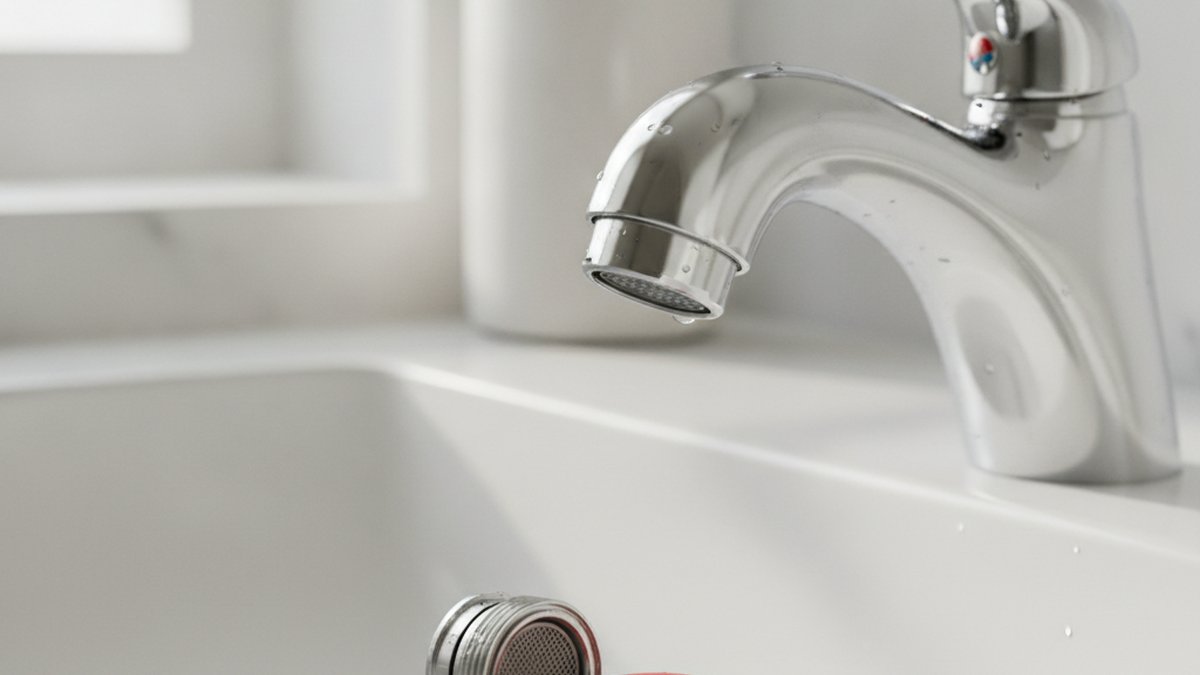
If you’re shopping for the best bathroom faucet aerator, the honest answer is that “best” depends on three things: how much water you want to save, how your water actually feels coming out (bubbly vs. glassy), and — the part most people forget — whether the threads match your faucet. Get those three right and a $6 part quietly lowers your water bill, kills the splashing that soaks your countertop, and even helps with hard-water gunk. Get them wrong and you’ve bought a plastic disc that leaks or won’t screw on. This guide walks through all three, with real GPM numbers, a side-by-side comparison table, and the exact way to measure your thread size before you buy.
What Does a Bathroom Faucet Aerator Actually Do?
An aerator is the little screw-on tip at the end of your faucet spout, and it does three jobs at once: it mixes air into the water so the stream feels full at a lower flow rate, it shapes the stream so it doesn’t splash, and it screens out grit and sediment. That’s it — but each job matters more than people expect.
Without an aerator, a faucet just dumps water. With a good one, you get the same “feel” of a strong stream while using far less water, because roughly half of what your brain reads as “water” is actually air. This is why a well-chosen 1.0 GPM aerator can feel almost identical to a 2.2 GPM open spout at the bathroom sink, where you’re mostly wetting your hands, brushing teeth, or rinsing a razor — tasks that don’t need volume.
There are two broad stream types worth knowing before you buy:
- Aerated stream: the classic soft, white, bubbly flow. Feels full and forgiving, splashes the least, and is the default choice for most bathroom sinks.
- Laminar stream: multiple clear, non-aerated streams that look like glass rods. It draws in almost no air, which matters in healthcare and hard-water settings because it’s less likely to aerosolize bacteria and mineral buildup. It splashes a little more but stays crystal clear.
- Spray/needle stream: a wide fan of fine droplets, lowest flow of all, common on ultra-low 0.5 GPM models. Great for hand-rinsing, less pleasant for filling a cup.
What GPM Aerator Is Best for a Bathroom Sink?
For a bathroom sink, 1.0 to 1.2 GPM is the sweet spot — low enough to save real water, high enough that the flow still feels normal. Go down to 0.5 GPM only in a powder room or commercial restroom where the faucet is purely for hand-washing.
Here’s the context that makes those numbers mean something. The U.S. federal maximum for a bathroom faucet is 2.2 GPM (gallons per minute), but California, Colorado, and several other states cap new lavatory faucets at 1.2 GPM, and the EPA WaterSense label requires 1.5 GPM or less with a minimum performance standard so the faucet still works well. A lot of older faucets are still running a 2.2 GPM aerator from the factory, which means swapping in a 1.0 GPM unit can cut that faucet’s water use by more than half.
What does that save in practice? A family of four running bathroom taps for roughly 8 minutes a day combined can save somewhere around 500–700 gallons a month by dropping from 2.2 to 1.0 GPM — and because a chunk of bathroom water is heated, you’re also trimming the energy to heat it. The aerator pays for itself many times over in the first year.
One caveat: if your home has genuinely low water pressure (under about 40 psi), avoid the lowest 0.5 GPM aerators, and specifically look for a pressure-compensating aerator. These have a flexible internal ring that holds a steady flow rate whether your pressure is high or low, so you don’t get a sad trickle on the second floor.
| Aerator flow rate | Best for | Stream feel | Water savings vs. 2.2 GPM |
|---|---|---|---|
| 2.2 GPM | Old/standard faucets, fast tub-adjacent fills | Strong, high volume | Baseline |
| 1.5 GPM (WaterSense) | Everyday bathroom, families who dislike low flow | Full, familiar | ~32% |
| 1.2 GPM | Most bathrooms; meets strict state codes | Full, slightly softer | ~45% |
| 1.0 GPM | Best all-round savings without feeling weak | Soft, still satisfying | ~55% |
| 0.5 GPM | Powder rooms, commercial hand-wash only | Fine spray, low volume | ~77% |
How Do I Know What Size Aerator I Need? (Male vs. Female Threads)
Measure the threads before you buy anything — this is where most returns happen. Bathroom faucet aerators come in two thread genders and a few diameters, and the wrong one simply won’t screw on. The two most common bathroom sizes are Regular male (M24 x 1) — threads on the outside of the spout — and Regular female (M22 x 1) — threads on the inside of the spout.
The quickest test at home: look up into the end of your faucet. If you see threads inside the spout, you need a male aerator (its threads go on the outside to grab those inner threads). If the threads are on the outside of the spout tip, you need a female aerator that caps over them. A U.S. nickel is almost exactly the diameter of a regular male aerator (about 15/16″ / 24mm), and a dime is close to a junior/Tom Thumb size — handy for a rough field check.
If you’re not sure, buy a dual-thread aerator, which includes both a male and female insert plus a washer, covering the vast majority of household faucets in one package. This is the same “match the thread before you buy” logic that trips people up with connectors and adapters elsewhere in the plumbing chain — the same reason it pays to understand what a faucet L adapter is and how to pick the right one before you assume a part will fit. And if you’re picking a whole new faucet at the same time, confirm your vessel sink faucet hole size so the spout and aerator both land where you expect.
Which Aerator Is Best for Hard Water and Mineral Buildup?
For hard water, choose a laminar or non-aerated aerator with a stainless steel or brass housing and a large, easy-to-remove screen — and expect to soak it in vinegar every few months. Aerated “bubble” screens clog faster in hard water because minerals cling to the fine mesh that mixes in air.
Hard water is the number-one reason a faucet suddenly runs weak, sputters, or sprays sideways. Calcium and magnesium deposits build up on the aerator screen until the flow gets choked and erratic. The fix is almost never a new faucet — it’s cleaning or swapping the aerator. If your water is hard, prioritize these features:
- Solid brass or stainless housing instead of plastic — it resists corrosion and threads on and off many more times without stripping.
- A laminar (non-aerated) insert if you want the least buildup, since it pulls in less air and mineral-laden mist.
- A key-removable or tool-free design so you can pop it out, soak it in white vinegar for an hour, brush it, and reinstall — no plumber needed.
- A replaceable rubber washer so you can re-seal it after every cleaning without leaks.
Managing flow-restricting hardware is the same skill whether it’s a faucet tip or a showerhead — if you’ve ever descaled a spray plate, you already understand it. It’s the same maintenance mindset covered in our guide to the handheld shower head parts you actually need to know, where mineral buildup on the nozzles is the usual culprit behind weak spray.
How Do You Replace a Bathroom Faucet Aerator?
Replacing an aerator takes about two minutes and usually needs nothing more than your hand — or a rag and pliers if it’s stuck. It’s the easiest plumbing upgrade in the house, far simpler than swapping an entire faucet.
Here’s the whole process:
- Close the sink drain or lay a towel down so no small parts vanish down the pipe.
- Unscrew the old aerator by turning it clockwise when viewed from below (it’s counter-intuitive because you’re looking up at it — essentially “lefty-loosey” from your normal viewpoint). Hand-tight is usually enough; if it’s seized, wrap the housing in a rag to protect the finish and use slip-joint pliers gently.
- Check the threads and flush the faucet — run the water briefly with the aerator off to blow out any grit, so it doesn’t clog your new screen immediately.
- Insert the correct washer for your thread type (dual-thread kits include the right one).
- Hand-thread the new aerator counter-clockwise from below, then snug it about a quarter turn past hand-tight. Don’t overtighten — you’ll crush the washer and cause a leak.
- Test for leaks and check the stream is centered.
If while you’re under there you discover the faucet body itself is corroded or the spout is pitted, an aerator won’t save it — that’s a bigger job, and our walkthrough on whether replacing a faucet is easy enough to do yourself in an afternoon covers what that upgrade actually involves.
Does the Aerator Finish Need to Match My Faucet?
Yes, if the aerator is visible — match the finish to your faucet so a shiny chrome tip doesn’t stick out on a brushed or bronze spout. Many aerators recess up inside the spout and are nearly invisible, in which case finish doesn’t matter and you should optimize purely for flow and material.
Most aerators come in chrome, brushed nickel, matte black, brushed gold/champagne bronze, and oil-rubbed bronze to match popular faucet finishes. If you run a warmer finish in your bathroom, you’ll want the exposed aerator ring to match — the same finish-matching thinking we get into in our piece on whether an oil rubbed bronze color faucet is still worth buying. A cheap chrome aerator glinting under a dark bronze faucet is a small detail, but it’s the kind of thing you notice every day once you see it.
Best Bathroom Faucet Aerator by Situation: A Quick Buyer’s Cheat Sheet
The best bathroom faucet aerator for you comes down to your specific situation, so here’s the short version by scenario:
- Best all-round for a family bathroom: a 1.0–1.2 GPM dual-thread, pressure-compensating aerated model in a brass housing. Big savings, feels normal, fits almost any faucet.
- Best for a low-pressure upstairs bathroom: a 1.5 GPM WaterSense pressure-compensating aerator — enough flow to feel strong even at 40 psi.
- Best for hard water: a laminar, non-aerated stainless or brass aerator with a tool-free removable screen for easy vinegar soaks.
- Best for a powder room or commercial restroom: a 0.5 GPM spray aerator — maximum savings for hand-washing only.
- Best for a designer bathroom: a finish-matched (matte black, champagne bronze, or brushed nickel) 1.2 GPM aerator so the detail disappears into the faucet.
At Vigafaucet, we spec our bathroom faucets around 1.2 GPM WaterSense-class aerators as standard precisely because that number hits the balance between real water savings and a flow that customers don’t complain feels weak. If you’re buying a replacement aerator on its own, match the flow rate to your household pressure first, the thread size second, and the finish last.
FAQ
Are all bathroom faucet aerators the same size?
No. Bathroom aerators come in different thread genders (male/external vs. female/internal) and diameters, with regular male (M24) and regular female (M22) being the most common. Always measure or bring your old aerator to match, or buy a dual-thread kit that includes both inserts to cover most faucets.
Can I use a kitchen aerator on a bathroom faucet?
Sometimes physically, but you shouldn’t for flow. Kitchen aerators are typically 1.5–2.2 GPM because kitchens need volume to fill pots, while bathroom sinks do best at 1.0–1.2 GPM. Putting a high-flow kitchen aerator on a bathroom faucet wastes water and increases splashing. Even if the threads match, choose one rated for bathroom use.
Why is my faucet spitting or spraying sideways?
That’s almost always a clogged or misaligned aerator, not a broken faucet. Mineral deposits or trapped grit disrupt the stream. Unscrew the aerator, soak it in white vinegar for an hour, brush the screen, flush the faucet with the aerator off, and reinstall. If the screen is damaged, replace the aerator — it’s a few dollars.
Will a low-flow aerator ruin my water pressure?
Not if you pick a pressure-compensating model. Flow rate (GPM) and pressure (psi) are different things — a good low-flow aerator maintains a steady, full-feeling stream even as it limits gallons per minute by mixing in air. Avoid the extreme 0.5 GPM aerators in low-pressure homes and choose 1.0–1.5 GPM pressure-compensating units instead.
How often should I replace a bathroom faucet aerator?
Clean it every 3–6 months and replace it every 2–3 years, sooner in hard-water areas. Aerators are cheap wear parts — screens degrade, washers harden, and plastic housings can crack. If cleaning no longer restores a smooth, centered stream, just swap in a new one.
Do aerators reduce lead or filter the water?
A standard aerator screens out grit and sediment but does not filter contaminants or reduce lead — it’s a flow device, not a water filter. If you want lead or chlorine reduction, use a certified faucet-mounted or under-sink filter in addition to the aerator, and look for products certified to NSF/ANSI 42 or 53.
A Note on Sourcing and Standards
About the author: This guide was written by the Vigafaucet product team, who spec, test, and manufacture bathroom and kitchen faucets and their components, including aerators, for residential and commercial clients worldwide. We’ve fielded thousands of “why is my flow weak?” questions, and the answer is an aerator far more often than a faucet.
Testing and standards: Reputable aerators are validated against flow-rate performance under the EPA WaterSense specification (1.5 GPM max with a minimum functional flow so the faucet still performs) and against material and durability requirements under standards like ASME A112.18.1/CSA B125.1 for plumbing fittings. Vigafaucet faucets and fittings are produced under audited quality systems and carry manufacturer warranty coverage; when you buy a replacement aerator, choosing a WaterSense-labeled, brass-bodied unit from a known maker is the simplest way to avoid the leaky plastic knockoffs that flood online marketplaces.
WeChat
Scan the QR Code with WeChat