 English
 Deutsch
 Français
 Italiano
 Español
 Português
 Nederlands
 Polski
 Русский
 日本語
日本語 한국어
한국어 العربية
 China Faucet Factory & OEM/ODM Faucet Manufacturer
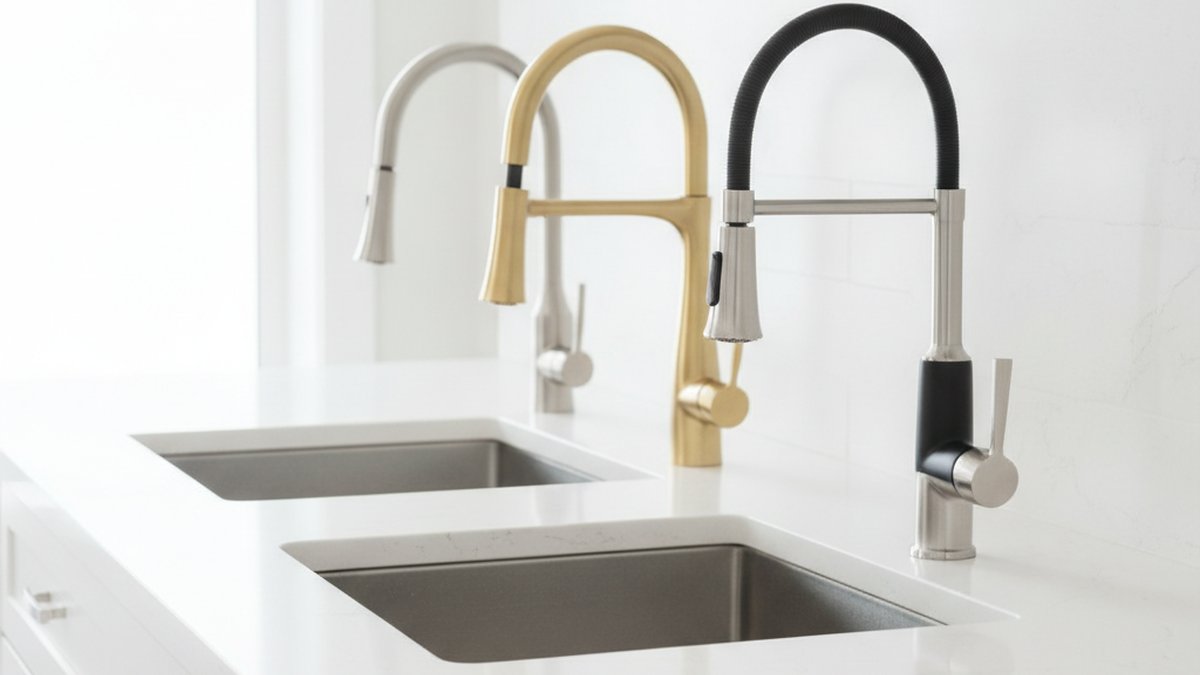
Choosing between a moen vs kohler vs delta kitchen faucet comes down to three things almost nobody tells you upfront: how the spray head and hose feel in daily use, how easy the faucet is to fix five years from now, and whether the finish will still look good after a thousand rounds of hard water. All three brands are excellent — they wouldn’t dominate the U.S. market otherwise — but they’re excellent at different things. This guide breaks down exactly which one fits your sink, your budget, and your patience for repairs, based on how these faucets actually behave over years of use.
As a faucet manufacturer ourselves at VIGA, we test spray engines, cartridges, and finish durability every day, so we’re going to be blunt about where each brand shines and where it quietly cuts corners.
Moen vs Kohler vs Delta kitchen faucet — what’s the real difference?
The real difference is philosophy: Delta engineers around water performance and repairability, Moen engineers around ease of installation and everyday convenience, and Kohler engineers around finish quality and premium feel. Everything else flows from those three priorities.
Delta’s MagnaTite docking (a magnet that snaps the spray head back into place) and Diamond Seal ceramic valve are the two features that make Delta faucets feel tight for years — the spray head never droops, and the valve rarely drips. Moen’s Reflex system does the same docking job and its 1255 Duralast cartridge is arguably the easiest cartridge in the industry to swap. Kohler leans harder into build weight and finish chemistry, so a Kohler often feels heavier in the hand and holds a warm finish like Vibrant Brushed Moderne Brass better than the competition.
| Feature | Moen | Kohler | Delta |
|---|---|---|---|
| Signature spray tech | Power Boost / Power Clean | Sweep spray + boost | ShieldSpray + Touch2O |
| Docking system | Reflex (magnet + spring) | DockNetik (magnet) | MagnaTite (magnet) |
| Valve/cartridge | 1255 Duralast (easy swap) | Ceramic disc | Diamond Seal ceramic |
| Touchless option | MotionSense Wave | Touchless (Konnect) | Touch2O + VoiceIQ |
| Finish standout | Spot Resist Stainless | Vibrant brushed brass/bronze | Arctic stainless / matte black |
| Typical price range | $120–$400 | $180–$650 | $150–$500 |
| Warranty | Limited lifetime | Limited lifetime | Limited lifetime |
| Best for | Convenience + style range | Premium finish + build | Performance + easy repair |
Which brand is easiest to fix myself when it starts dripping?
Delta and Moen are both far easier to repair than Kohler for the average DIYer. Moen’s 1255 cartridge pulls straight out with a clip and a pair of pliers, and Delta’s Diamond Seal parts are widely stocked at any hardware store. Kohler’s ceramic disc valves are reliable but replacement parts are model-specific and harder to source locally.
This matters more than people expect. A kitchen faucet is one of the most-used fixtures in your home — the valve gets thousands of cycles a year. When it eventually drips or gets stiff, the question isn’t “will it break,” it’s “how annoying is the fix.” Here’s the honest ranking:
- Moen — easiest. The 1255 Duralast cartridge is a 15-minute job and Moen mails free replacement parts under its lifetime warranty. Handle feels loose? Usually just the cartridge.
- Delta — nearly as easy. Ceramic Diamond Seal cartridges rarely fail, but springs and seats (the classic Delta drip point) are a $6 part and a 10-minute fix.
- Kohler — most solid, least DIY-friendly. The valves last a long time, but when you do need a part, you’re often ordering it online by model number instead of grabbing it off a shelf.
If you’re the type who’d rather fix a drip on a Saturday than call a plumber, read our walkthrough on how to fix a leak on a faucet yourself — the same logic applies to all three brands, and it’ll show you why cartridge accessibility is worth paying attention to before you buy.
Which kitchen faucet is best for hard water under $250?
For hard water on a sub-$250 budget, Delta is the smartest pick because its rubber Touch-Clean or ShieldSpray nozzles let you wipe mineral buildup off the spray holes with your finger — no soaking, no scrubbing. Moen’s Power Clean nozzles do the same. Kohler’s premium finishes resist water spots best, but you’ll usually spend more than $250 to get them.
Hard water is the silent killer of kitchen faucets. It clogs aerators, crusts up spray heads, and etches finishes. Here’s how each brand handles it:
- Delta — soft silicone nozzle nubs flex, so you rub away scale in seconds. Combine that with an Arctic Stainless finish and you rarely see spotting.
- Moen — Power Clean nozzles plus Spot Resist Stainless, a finish specifically engineered to hide fingerprints and water spots. Great value in the $150–$220 range.
- Kohler — the Vibrant finishes are gorgeous and genuinely spot-resistant, but the models that come with them tend to sit above $250.
Whichever brand you pick, the aerator is your first line of defense against mineral flow problems, and it’s a cheap upgrade. If your water is truly rough, it’s worth understanding how flow restrictors and screens work — our guide to the best faucet aerator for water savings and splash-free flow explains the same threading and cleaning principles that apply to kitchen spray heads. And if you’re already fighting scale on other fixtures, the techniques in removing hard water stains without damaging the finish translate directly to your kitchen faucet’s spout and base.
Moen vs Delta vs Kohler for touchless — is it worth the extra money?
Touchless is worth it if you cook with messy hands often; otherwise it’s a $60–$150 premium you can skip. Among the three, Delta’s Touch2O is the most versatile because it works by touch OR wave (tap anywhere on the spout or handle with a wrist or forearm), Moen’s MotionSense is a clean wave-to-activate hands-free sensor, and Kohler’s touchless models are premium but pricier for the same core function.
The practical difference: Delta’s touch-activation means you don’t need a perfect hand-wave — bump the faucet with the back of your wrist while holding raw chicken and it turns on. Moen’s wave sensor is genuinely hands-free but occasionally needs a deliberate gesture. Kohler’s are excellent but you’re paying for the badge as much as the tech.
Battery vs. hardwired matters too. All three run on batteries (usually 6 AA or a battery pack) that last roughly a year of normal use, and all offer optional AC adapters. If you love the idea of a warm metallic finish with touchless convenience, we walk through the whole category in our guide to the best brushed gold touchless kitchen faucet setup, which covers sensor placement and finish trade-offs in detail.
Will these faucets fit my existing sink and countertop holes?
All three brands make single-hole and 3-hole compatible faucets, and almost every modern pull-down comes with an optional deck plate (escutcheon) that covers extra holes — so a single-handle Moen, Kohler, or Delta will fit a 1-, 2-, 3-, or 4-hole sink. The thing to measure before you buy is your countertop hole diameter and your under-sink clearance.
Standard faucet holes are 1⅜ inch (34.9 mm) to 1½ inch (38 mm). Most kitchen faucets fit that range. If you’re replacing an old 3-hole faucet with a modern single-lever, you just add the included deck plate. Going the other way — single to widespread — you’ll need extra holes cut, which is a bigger job on stone counters.
Two measurements save you a return:
- Hole diameter — confirm your sink or counter opening is 1⅜”–1½”. This is where people get tripped up. We cover the exact numbers in our breakdown of the right Moen kitchen faucet hole size for your sink, and the same spec applies to Kohler and Delta.
- Spout height and reach — measure the cabinet above (if you have a window ledge or shelf) and the distance to the sink center so the water lands in the drain, not the edge.
Don’t forget the supply lines. Most faucets today use ⅜” compression connections, but the length and connector type vary. If your under-sink hookups are old or short, check our guide on what faucet supply line you actually need for a kitchen faucet before you start — nothing kills an install faster than realizing your braided lines are 4 inches too short.
Which brand lasts longest and holds its finish?
Kohler generally has the edge on long-term build and finish durability because of heavier solid-brass construction and its Vibrant PVD finishes, which are electroplated to resist corrosion and tarnish. Moen and Delta are close behind and both carry a limited lifetime warranty on finish and function — the practical lifespan difference between the three is smaller than the price gap suggests.
A few realities from the workbench:
- Solid brass beats zinc. Higher-end models from all three use brass bodies; budget lines may use more zinc alloy. Brass resists corrosion and threads better over time.
- PVD (physical vapor deposition) finishes — like Kohler Vibrant, Moen’s better brushed lines, and Delta’s Champagne Bronze — are dramatically more scratch- and tarnish-resistant than standard electroplating. If you want a finish that looks new in ten years, look for PVD.
- Warranty is real, but read it. All three offer limited lifetime residential warranties covering leaks and finish defects. Electronic/touchless parts usually get a shorter term (often 5 years). Keep your proof of purchase.
For finish specifically, faucets sold in the U.S. are commonly built to meet ASME A112.18.1 / CSA B125.1 plumbing standards and lead-free rules under the Safe Drinking Water Act (NSF/ANSI 372). It’s worth confirming any faucet you buy — from any brand, including ours — carries that certification.
So which should you actually buy?
Here’s the plain-language recommendation. Buy Delta if you want the best all-around performer with the easiest touch-activation and simple repairs — it’s the safest default for most kitchens. Buy Moen if you value the widest range of styles, the simplest cartridge swaps, and reliable spot-resistant finishes at a friendly price. Buy Kohler if the look and heft of the faucet matter most and you’re willing to pay for a premium finish that ages beautifully.
If you’re cross-shopping these three for a bathroom instead of a kitchen, the priorities shift — we compare two of them head-to-head in Moen vs Kohler bathroom faucet: which one should you actually buy in 2026. And if you’re leaning toward a sleek upright pull-down profile, see whether the Atom pull-down upright style fits your sink layout before you commit.
One last note: the “big three” aren’t your only option. As a manufacturer, VIGA builds faucets to the same ceramic-cartridge and lead-free standards as the majors, often at a better price — so once you know which features matter to you (spray tech, docking, finish, repairability), you can shop smarter across any brand, not just by the logo.
FAQ
Is Moen, Kohler, or Delta the most reliable kitchen faucet brand?
All three are highly reliable and carry limited lifetime warranties. Delta and Moen edge ahead on ease of repair (their cartridges are simple and parts are easy to find), while Kohler edges ahead on heavy solid-brass build and finish longevity. Reliability differences between them are small; how easy the faucet is to fix is the bigger real-world factor.
Which kitchen faucet is best for a busy family kitchen?
Delta with Touch2O is the top pick for busy family kitchens because you can turn it on with the back of your wrist or forearm while your hands are full or messy. Moen’s MotionSense wave-activation is a close second. Both save water and keep handles cleaner during heavy cooking.
Do Moen, Kohler, and Delta faucets fit a standard sink?
Yes. All three fit standard 1⅜”–1½” faucet holes, and their single-handle pull-downs include a deck plate to cover 2-, 3-, or 4-hole sinks. Always measure your hole diameter and under-sink clearance before buying to confirm the fit.
Are touchless kitchen faucets worth it?
They’re worth it if you frequently cook with messy or full hands, since hands-free or touch activation reduces mess and cross-contamination. If your cooking is light, the $60–$150 premium and the batteries to maintain may not be worth it — a standard pull-down works fine.
Which brand is best for hard water?
Delta and Moen both use flexible silicone spray nozzles you can wipe clean with a finger, which is a huge advantage in hard-water areas. Pair that with a spot-resistant stainless finish and you’ll fight far less mineral buildup. Cleaning the aerator regularly matters more than the brand you choose.
Can I install a Moen, Kohler, or Delta kitchen faucet myself?
Yes — all three are designed for DIY installation with basic tools, and most single-hole models take 30–60 minutes. The main steps are shutting off the water, disconnecting old supply lines, mounting the new faucet, and reconnecting the lines. Confirm your supply line length and connector type before you start.
Author note: This guide was written by the VIGA product team, who design and bench-test faucet cartridges, spray engines, and finishes to ASME A112.18.1 / CSA B125.1 and NSF/ANSI 372 lead-free standards. Our recommendations come from hands-on teardown and durability testing, not spec sheets alone.
WeChat
Scan the QR Code with WeChat