 English
 Deutsch
 Français
 Italiano
 Español
 Português
 Nederlands
 Polski
 Русский
 日本語
日本語 한국어
한국어 العربية
 China Faucet Factory & OEM/ODM Faucet Manufacturer
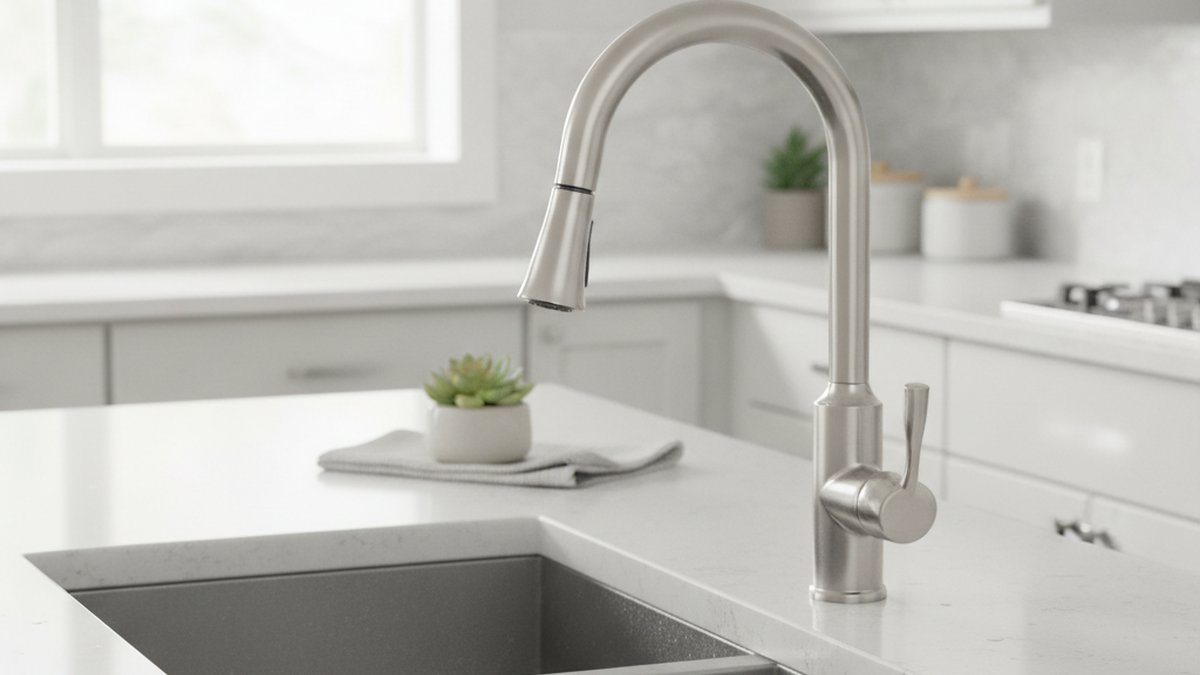
If you’ve been reading Pfister Zanna kitchen faucet reviews trying to figure out whether it’s the right faucet for your sink, here’s the honest, plain-English breakdown you actually need. We install, test, and sell kitchen faucets for a living at VIGA, so this isn’t a spec sheet copy-paste — it’s what the Zanna does well, where it falls short, and who should (and shouldn’t) buy it in 2026.
What is the Pfister Zanna kitchen faucet, and who is it for?
The Pfister Zanna is a single-handle, pull-down kitchen faucet aimed at the value-to-midrange shopper — think $130–$180 depending on finish and retailer. It’s for someone who wants a modern, high-arc faucet with a sprayer that just works, without paying $300+ for a premium designer brand.
In practical terms, it’s a “get it done” faucet. You get a gooseneck spout, a pull-down hose with a magnetic or clip-style dock, and a lever handle for single-hand temperature and flow control. It’s sold widely at big-box stores and online, which is a big part of its appeal — it’s easy to buy, easy to return, and easy to find replacement parts for.
Where does it fit? A family kitchen, a rental refresh, a builder-grade upgrade, or a first home. If you’re doing a high-end custom kitchen with an integrated look, the Zanna probably isn’t your endgame — but for everyday cooking, dish-washing, and pot-filling, it covers the bases.
Is the Pfister Zanna worth it for a family kitchen under $200?
Yes — for most family kitchens under $200, the Zanna is worth it. You’re getting a reliable pull-down with a name-brand ceramic-disc cartridge and a real lifetime warranty, which is more than a lot of no-name faucets in the same price bracket offer.
Here’s the reasoning. The two things that fail most on cheap faucets are the cartridge (drips, stiff handle) and the sprayhead hose (won’t retract, leaks at the connection). Pfister uses ceramic-disc valve technology on the Zanna, which is the industry-standard mechanism for long-term drip-free performance, and their pull-down hoses are generally well-behaved with a smooth retract.
What you’re trading off at this price is heft and finish depth. The Zanna’s body is largely metal with plastic internal and sprayhead components — normal for the segment — so it won’t feel as substantial as a solid-brass faucet. If you want to understand why some faucets cost twice as much, a lot of it comes down to brass content, cartridge grade, and finish process. It’s the same reason a good bathroom faucet aerator can quietly make a mid-priced faucet feel more premium — the details matter more than the badge.
What do real owners complain about?
The most common complaints in Pfister Zanna reviews fall into three buckets: sprayhead weight, spot-defense finish care, and occasional low water pressure out of the box. None are dealbreakers, but you should know them.
- Sprayhead feels light: Because the spray wand is plastic, some owners feel it’s less “solid” than a metal wand. Upside: it’s lighter to hold and the hose retracts easily.
- Water spots: The spot-defense stainless finish resists fingerprints well but still shows hard-water spotting if you never wipe it. A quick microfiber wipe keeps it looking new.
- Low flow on arrival: A handful of owners report weak pressure — nine times out of ten this is a clogged aerator or a partly closed supply valve, not a faucet defect. Unscrew the aerator, rinse it, and check your shutoffs.
How does the Pfister Zanna compare to other kitchen faucets in its class?
Against its direct competitors — Moen, Delta, Kraus, and value pull-downs like VIGA — the Zanna lands squarely in the middle: better warranty and finish than the cheapest options, less heft and fewer finish choices than the premium tier. Here’s a side-by-side to make it concrete.
| Faucet | Typical Price | Spout Height | Sprayhead | Cartridge | Warranty |
|---|---|---|---|---|---|
| Pfister Zanna | $130–$180 | ~15–16 in | 3-function pull-down | Ceramic disc | Lifetime (limited) |
| Moen mid pull-down | $180–$260 | ~15 in | 2-function, metal wand | Duralast ceramic | Lifetime (limited) |
| Delta mid pull-down | $160–$240 | ~15–16 in | MagnaTite dock | DIAMOND Seal | Lifetime (limited) |
| Kraus value pull-down | $120–$180 | ~16–18 in | Dual-function | Ceramic disc | Limited lifetime |
| VIGA pull-down | $110–$170 | ~16 in | 2–3 function | Ceramic disc (brass body) | Limited lifetime |
The takeaway: the Zanna’s biggest advantages are the ceramic-disc cartridge and Pfister’s lifetime coverage. Its biggest gap versus premium models is the plastic sprayhead wand and a shorter finish lineup — Moen and Delta simply offer more finishes (matte black, champagne bronze, etc.) across more models. If a specific designer finish is your priority, that’s the more important comparison than raw price.
Pfister Zanna vs. an upright / commercial-style pull-down — which suits your sink?
If your kitchen leans industrial or you cook a lot with big pots, a taller upright or spring-style faucet may serve you better than the Zanna’s standard gooseneck. The Zanna’s ~15–16 inch height is fine for everyday use, but it doesn’t have the dramatic clearance of a coil-spring “pro” faucet.
We break down that trade-off in detail in our guide to the Atom pull-down upright kitchen faucet — worth reading if you’re deciding between a classic gooseneck like the Zanna and a taller, more commercial silhouette. Height matters most if you regularly fill stockpots or wash sheet pans; for normal dishes, the Zanna’s arc is plenty.
What finishes does the Pfister Zanna come in, and which is easiest to live with?
The Zanna is most commonly sold in Spot Defense Stainless Steel, with polished chrome and (depending on year and retailer) a black or bronze option showing up in some listings. For a low-maintenance kitchen, the spot-defense stainless is the easiest to live with day to day.
Finish is genuinely the decision most people get wrong, so here’s the plain guidance:
- Spot Defense Stainless: Best all-rounder. Hides fingerprints and water spots, matches most stainless appliances, forgiving in hard-water areas.
- Polished Chrome: Cheapest and brightest, but shows every water spot and fingerprint. Great for a budget or period look if you don’t mind wiping.
- Black / Bronze (where available): On-trend and dramatic, but shows dust and hard-water buildup; needs gentle cleaners only — no abrasive pads.
If you love the warmth of a colored metal but worry about upkeep, it’s worth understanding how premium finishes are actually plated before you commit. Our explainer on the polished nickel faucet finish walks through durability, care, and why plating quality — not just color — determines how long a finish looks new.
How hard is the Pfister Zanna to install yourself?
For most sinks, the Zanna is a genuine DIY afternoon job — 45 minutes to 90 minutes if your under-sink space is reasonable. It uses a standard single-hole mount (with an included deck plate for 3-hole sinks) and Pfister’s tool-friendly mounting system, so you rarely need to be a contortionist under the cabinet.
Here’s the realistic sequence:
- Shut off both hot and cold supply valves and open the old faucet to relieve pressure.
- Disconnect the supply lines and remove the old faucet’s mounting nuts.
- Clean the deck, then feed the Zanna’s hoses and shank through the hole (use the deck plate if you’re covering a 3-hole configuration).
- Tighten the mounting nut from below, connect the supply lines and the pull-down hose/weight, and hand-tighten plus a quarter turn.
- Turn water back on slowly, remove the aerator, and flush the lines for 15–30 seconds before checking for leaks.
If you’ve never swapped a faucet before, don’t sweat it — the process is very repeatable. Our step-by-step walkthrough on replacing a kitchen faucet yourself covers the exact tools and the two mistakes beginners make most (over-tightening supply lines and forgetting to flush the aerator). And if you ever notice water pooling around the base after install, our guide on fixing a sink leaking from the faucet base tells you whether it’s a loose mount, a bad gasket, or a splash issue.
What’s the water flow and efficiency like?
The Pfister Zanna typically runs at a 1.8 GPM (gallons per minute) flow rate, which is WaterSense-friendly and meets strict standards like California’s, without feeling weak for everyday tasks. That’s a sensible middle ground — high enough to fill a pot quickly, low enough to save water and pass code in strict jurisdictions.
Flow rate is where a lot of shoppers overthink things. Anything from 1.5 to 1.8 GPM is normal and fully usable for a kitchen. If your kitchen faucet feels weak, the cause is almost always a clogged aerator or restricted supply valve — not the GPM spec itself. A quick aerator clean restores full flow more often than people expect.
Where does the Pfister Zanna fall short, and what should you buy instead?
The Zanna falls short in three areas: sprayhead heft (plastic wand), finish variety (limited compared to Moen/Delta), and that “premium feel” that comes from a full-brass body. If any of those three is a top priority for you, consider an alternative.
Buy the Zanna if you want a proven, warrantied pull-down at a fair price and don’t need a specific designer color. Look elsewhere if:
- You want a metal sprayhead and maximum heft — step up to a premium Moen/Delta or a brass-bodied VIGA pull-down.
- You need a very specific finish (matte black + a matching soap dispenser + pot filler, say) — Moen and Delta have deeper matched collections.
- You want a taller, commercial silhouette — go with an upright/spring-style faucet instead of the gooseneck.
- You want a touchless option — the Zanna is manual; if hands-free is the goal, that’s a different product category entirely. See our take on the best brushed gold touchless kitchen faucet setup for what to look for.
FAQ
Is the Pfister Zanna a good kitchen faucet?
Yes, for its price. It’s a reliable single-handle pull-down with a ceramic-disc cartridge, a WaterSense-friendly 1.8 GPM flow, and Pfister’s lifetime limited warranty. The main compromises are a plastic sprayhead wand and a limited finish selection — both normal at the $130–$180 price point.
Does the Pfister Zanna come with a deck plate for a 3-hole sink?
Yes. The Zanna is designed for single-hole installation but includes an optional deck plate (escutcheon) so it can cover a standard 3-hole, 8-inch sink configuration. That makes it a drop-in replacement for most existing kitchen sinks without any drilling.
What is the Pfister Zanna’s warranty?
Pfister backs the Zanna with a limited lifetime warranty on function and finish for the original residential owner. That covers drips, leaks, and finish defects under normal use — one of the stronger warranties you’ll find in the sub-$200 category. Keep your proof of purchase to make any claim smooth.
Why is my Pfister Zanna faucet water pressure low?
Almost always a clogged aerator or a partly closed supply valve — not a faucet defect. Unscrew the aerator at the tip of the sprayhead, rinse out any debris or mineral scale, and confirm both under-sink shutoff valves are fully open. If the pull-down hose is kinked around the weight, that can restrict flow too.
How do I clean the spot-defense stainless finish?
Use a soft microfiber cloth with warm water and mild dish soap, then dry it. Avoid abrasive pads, bleach-based cleaners, or ammonia, which can dull the finish over time. For hard-water spots, a 50/50 white-vinegar-and-water wipe followed by a clean-water rinse works well without harming the coating.
Is the Pfister Zanna better than a VIGA kitchen faucet?
They’re close competitors. The Zanna wins on brand ubiquity and warranty; VIGA’s comparable pull-downs often use a brass body at a similar or slightly lower price, which some shoppers prefer for heft and long-term durability. Choose based on the body material, finish you want, and whether you value a big-box return counter versus a specialist faucet brand.
The bottom line
The Pfister Zanna is exactly what most of these reviews conclude: a dependable, fairly priced pull-down that does the everyday job well. It’s not the heaviest or the most finish-rich faucet on the market, but for a family kitchen under $200 with a lifetime warranty behind it, it’s an easy recommendation. If you crave a metal sprayhead, a brass body, a niche finish, or a touchless setup, spend a little time comparing before you commit — the right faucet is the one that matches your sink, your water, and how you actually cook.
Author note: This review was written by the VIGA product team, drawing on hands-on installation and testing of dozens of pull-down kitchen faucets across price tiers. VIGA has manufactured and supplied faucets and bathroom fixtures for over 20 years, and we evaluate every faucet against real-world criteria — cartridge longevity, hose retract, finish durability, and compliance with standards like WaterSense and cUPC/NSF certification. We reference manufacturer warranties and published specifications; always confirm current specs and finish availability with the retailer before purchase.
WeChat
Scan the QR Code with WeChat