 English
 Deutsch
 Français
 Italiano
 Español
 Português
 Nederlands
 Polski
 Русский
 日本語
日本語 한국어
한국어 العربية
 China Faucet Factory & OEM/ODM Faucet Manufacturer
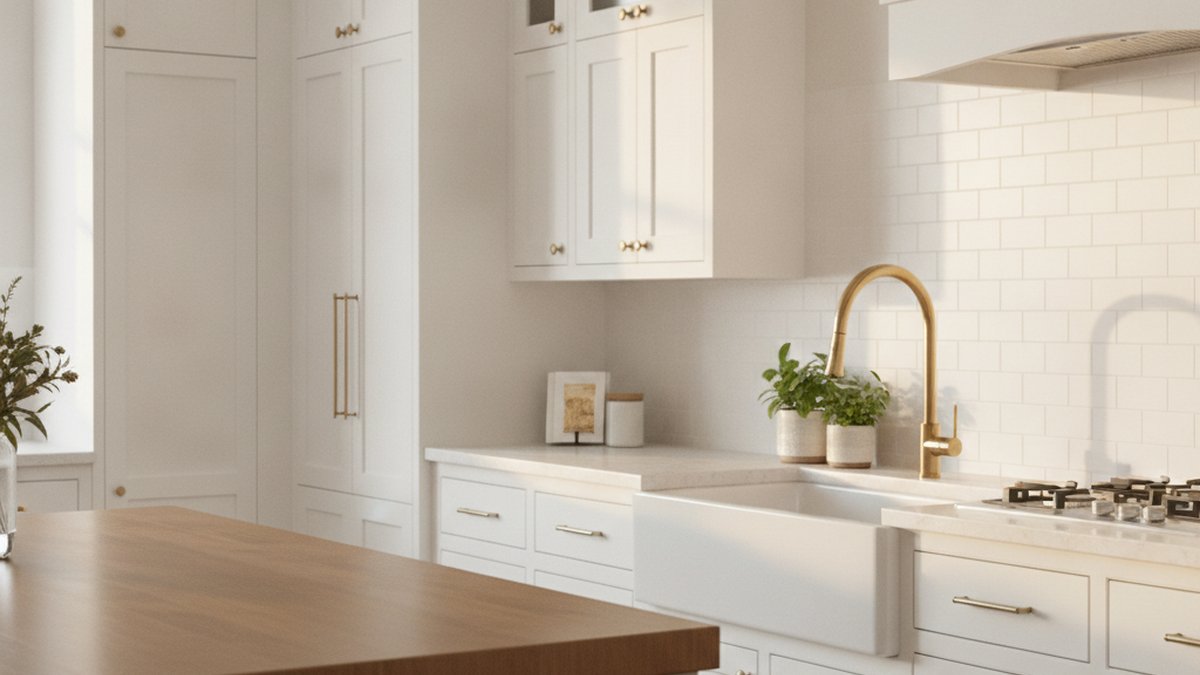
A brushed gold touchless faucet kitchen upgrade is one of those rare choices that looks like a splurge but quietly earns its keep every single day. You get the warm, high-end glow of brushed gold plus hands-free operation that keeps raw-chicken hands, muddy garden gloves, and sticky dough off your faucet handle. But not every gold touchless faucet is built the same — some scratch, some flash the sensor at random, and some die the moment the batteries dip. This guide walks you through exactly what separates a keeper from a return, with real specs, real prices, and the questions people actually ask before they buy.
At vigafaucet, we’ve manufactured and stress-tested kitchen faucets for over 15 years, and touchless gold models are one of the fastest-growing categories we ship. Below is the honest, plain-English version of what we tell friends when they ask.
Is a brushed gold touchless faucet actually worth it, or is it just for looks?
It’s worth it — the touchless part earns its price in daily hygiene and convenience, and brushed gold is the finish least likely to look dated in five years. The “just for looks” worry usually comes from people picturing shiny, plated gold that yellows. Modern brushed gold is different.
Here’s the practical payoff. Touchless activation means you wave a hand or bring a pot near the sensor and water starts — no touching a handle when your hands are covered in raw meat, egg, flour, or grime. That single feature cuts cross-contamination in the kitchen more than any wipe-down routine, which is why touchless taps became standard in commercial kitchens long before they hit homes. Pair that with brushed gold’s soft, warm sheen and you get a fixture that’s both the cleanest and the best-looking thing on your counter.
The brushed (matte) texture also hides water spots and fingerprints far better than polished gold or chrome. If you’ve ever wiped a shiny faucet ten times a day, you’ll appreciate that a brushed finish looks clean even when it technically isn’t.
What’s the difference between brushed gold, champagne bronze, and matte gold finishes?
They’re closely related warm-metal finishes, and the naming is mostly marketing — but there are real tone differences. Brushed gold leans brighter and more yellow-gold; champagne bronze is slightly darker and pinker; matte gold is the most muted and least reflective. What matters far more than the name is how the finish is applied.
The single most important spec is PVD (Physical Vapor Deposition). A PVD brushed-gold finish is bonded to the faucet at a molecular level, making it far more scratch-, corrosion-, and tarnish-resistant than electroplated or painted gold. Cheap gold faucets that “turn” or peel are almost always plated, not PVD. If a listing doesn’t say PVD, assume it isn’t.
| Finish | Tone | Best paired with | Fingerprint resistance | Typical durability |
|---|---|---|---|---|
| Brushed Gold (PVD) | Bright warm gold | White, navy, deep green cabinets | Excellent | 10+ years |
| Champagne Bronze (PVD) | Soft pink-gold | Wood tones, cream, gray | Excellent | 10+ years |
| Matte Gold | Muted flat gold | Modern minimalist, black accents | Very good | 8–10 years |
| Polished/Plated Gold | Shiny mirror gold | Traditional, glam | Poor (shows everything) | 2–5 years (can tarnish) |
If your kitchen has warm wood or cream tones, champagne bronze often looks more natural. For crisp white or bold dark cabinets, brushed gold pops. If you’re weighing warm finishes generally, our breakdown of whether an oil rubbed bronze color faucet is still worth buying covers the same durability logic from the darker end of the spectrum.
How does a touchless kitchen faucet actually work, and does it need power?
A touchless faucet uses an infrared motion sensor to detect your hand or an object near the spout, then a small solenoid valve opens to start the flow. Yes, it needs power — almost always batteries (typically 4–6 AA), sometimes an AC adapter, and the good ones give you months to a year of life plus a low-battery warning light.
The mechanics are simpler than they sound:
- Sensor: Usually one sensor at the base or top of the spout; premium models add a second wave sensor so you can start/stop flow with a hand wave without changing your set temperature.
- Solenoid valve: The electronic “gatekeeper” that opens and closes the water. This is the part that determines reliability — a quality solenoid is rated for hundreds of thousands of cycles.
- Manual handle: A real touchless faucet still has a traditional handle to set temperature and flow, and to override the sensor entirely.
- Power: Battery packs are the norm because they don’t require an electrician and keep working in a power outage. Look for an auto-shutoff (usually after 3–4 minutes) that prevents floods if the sensor gets triggered accidentally.
Battery life is the question everyone underestimates. A decent unit runs 6–12 months on one set of AAs under normal family use. If a faucet burns through batteries in weeks, the sensor is too sensitive or the solenoid is inefficient — a red flag for build quality.
What should I look for before buying a brushed gold touchless kitchen faucet?
Focus on six things: PVD finish, dual-sensor operation, spray head style, valve/cartridge quality, spout height and reach, and warranty. Nail those and the finish color is just the fun part. Here’s the buyer’s checklist we give customers:
- Confirm PVD brushed gold — the difference between a faucet that looks new in 2031 and one that peels by 2027.
- Dual sensor vs. single sensor — dual lets you wave to start/stop and keeps your last temperature, which is genuinely more useful day to day.
- Pull-down vs. pull-out spray head — pull-down (tall gooseneck) suits deep single-bowl sinks; pull-out (lower, extends toward you) suits shallow or window-under-sink setups.
- Ceramic disc cartridge — ask for a ceramic cartridge rated to 500,000 cycles; it’s what prevents drips down the road.
- Spout height & reach — measure your window clearance and sink width. A 15″–18″ spout height covers most kitchens; check reach lands in the center of the basin.
- Flow rate — 1.5–1.8 GPM is the sweet spot: strong enough to fill pots, efficient enough to meet WaterSense-style standards.
One thing people forget: installation. If your current faucet is a standard single-hole or 3-hole deck mount, most touchless models drop right in — and swapping one is genuinely doable in an afternoon. If you’re nervous, our guide on whether replacing a kitchen faucet is easy enough to DIY walks through the exact steps, and if you run into an odd supply-line connection, a faucet L adapter often solves the tight-space fitting problem.
Which brushed gold touchless faucet is best for hard water or a busy family kitchen?
For hard water, prioritize a spray face with silicone rubber nozzles you can wipe clean to break off mineral buildup, plus a ceramic cartridge and a PVD finish that resists scale etching. For a busy family kitchen, prioritize dual sensors, a strong 1.8 GPM flow, and a high-arc pull-down for washing big pots.
Hard water is the silent killer of both spray performance and finish. Mineral deposits clog aerators and spray holes, weakening the stream over time. Two features fight back: rubber/silicone spray nozzles (you rub the deposits off with a finger) and a smooth PVD surface that doesn’t let scale grip. Avoid textured or plated finishes if your water is hard — they trap deposits and look dull fast.
For high-volume homes, think about the sensor logic. A single-sensor faucet forces you to keep your hand in the zone; a dual-sensor design lets you start the flow with a quick wave and walk away, then wave again to stop. That’s the difference between “neat gadget” and “I can’t go back.” If you cook constantly and want the ruggedness of a pro setup, it’s worth comparing against a commercial kitchen faucet with a pull-out spray to decide how much muscle you actually need.
How much does a good brushed gold touchless kitchen faucet cost in 2026?
Expect $180–$450 for a quality model, with the best value between $220 and $300. Below $150 you’re usually getting plated gold, a flimsy plastic spray head, or a sensor that misfires. Above $450 you’re paying for designer branding more than better function.
| Price tier | What you get | Best for |
|---|---|---|
| $120–$180 | Single sensor, often plated gold, basic cartridge | Rentals, short-term use |
| $180–$300 | PVD brushed gold, dual sensor, ceramic cartridge, pull-down | Most homeowners (best value) |
| $300–$450 | Premium PVD, refined sensor logic, magnetic dock, longer warranty | Design-forward remodels |
| $450+ | Designer/luxury brand name, smart/voice features | High-end custom kitchens |
Prices across the whole fixture category have been climbing, driven by tariffs and material costs — we broke down the reasons in our piece on why your next bathroom fixture will cost more. The short version: buying a durable PVD model now often costs less over its life than replacing a cheap plated one twice.
Common problems with touchless gold faucets (and how to avoid them)
The three complaints we hear most are random activation, weak stream, and a finish that dulls — and all three trace back to buying too cheap. Here’s how to sidestep each:
- Random/ghost activation: Caused by an over-sensitive single sensor picking up reflections or nearby movement. Fix at purchase by choosing a dual-sensor model with adjustable sensitivity and auto-shutoff.
- Weak or spitting stream: Usually hard-water buildup in the aerator or a low-quality solenoid. Choose wipe-clean nozzles and clean the aerator every few months.
- Dulling or peeling finish: The tell-tale sign of plated (non-PVD) gold. Only buy PVD.
- Dead batteries at the worst time: Pick a model with a low-battery LED and a manual handle so you’re never stuck without water.
Author note & why you can trust this guide
This guide was written by the vigafaucet product team — engineers and category specialists who design, manufacture, and pressure-test kitchen and bathroom faucets for global markets. Our touchless models are tested to international standards (including cUPC/NSF-aligned lead-free waterway requirements and salt-spray corrosion testing for PVD finishes), and our kitchen faucets ship with a limited lifetime warranty on the finish and cartridge. We’ve also written extensively on the regulatory side of fixtures — see our explainer on the GCC certificate (G-mark) to understand how certification affects the products you buy. When we say a spec matters, it’s because we’ve seen what happens in the lab and in ten years of real kitchens.
FAQ
Do touchless kitchen faucets work during a power outage?
Yes — virtually all residential touchless faucets run on batteries, not household power, so they keep working through an outage. And because every quality model includes a manual handle, you can operate the faucet the old-fashioned way even if the batteries die completely.
Will a brushed gold finish match my stainless steel appliances?
Yes, brushed gold and brushed stainless are both matte finishes, so they read as complementary rather than clashing. The warm gold actually pops nicely against cool stainless. If you want tighter cohesion, echo the gold in cabinet hardware or light fixtures so the faucet looks intentional rather than random.
How often do I need to replace the batteries in a touchless faucet?
In a normal family kitchen, expect 6–12 months per set of AA batteries. Heavy use or an overly sensitive sensor shortens that. A low-battery indicator light gives you a week or two of warning, so you’re never caught off guard.
Is a brushed gold touchless faucet hard to clean?
No — it’s one of the easiest finishes to maintain. Wipe it with a soft damp cloth and mild soap; the matte PVD surface hides fingerprints and water spots. Avoid abrasive pads, bleach, and ammonia-based cleaners, which can damage any faucet finish over time.
Can I install a touchless gold faucet myself, or do I need a plumber?
Most homeowners can install one in about an hour with basic tools, since touchless models mount in standard single- or three-hole configurations and the battery pack simply clips under the sink. If your supply lines or hole spacing are non-standard, an adapter usually bridges the gap — no plumber required for a typical swap.
What GPM flow rate should a kitchen faucet have?
Aim for 1.5–1.8 GPM. That range meets water-efficiency standards while still filling pots and rinsing dishes quickly. Anything under 1.2 GPM can feel weak for kitchen tasks; much over 2.0 GPM wastes water without a real performance gain.
WeChat
Scan the QR Code with WeChat