 English
 Deutsch
 Français
 Italiano
 Español
 Português
 Nederlands
 Polski
 Русский
 日本語
日本語 한국어
한국어 العربية
 China Faucet Factory & OEM/ODM Faucet Manufacturer
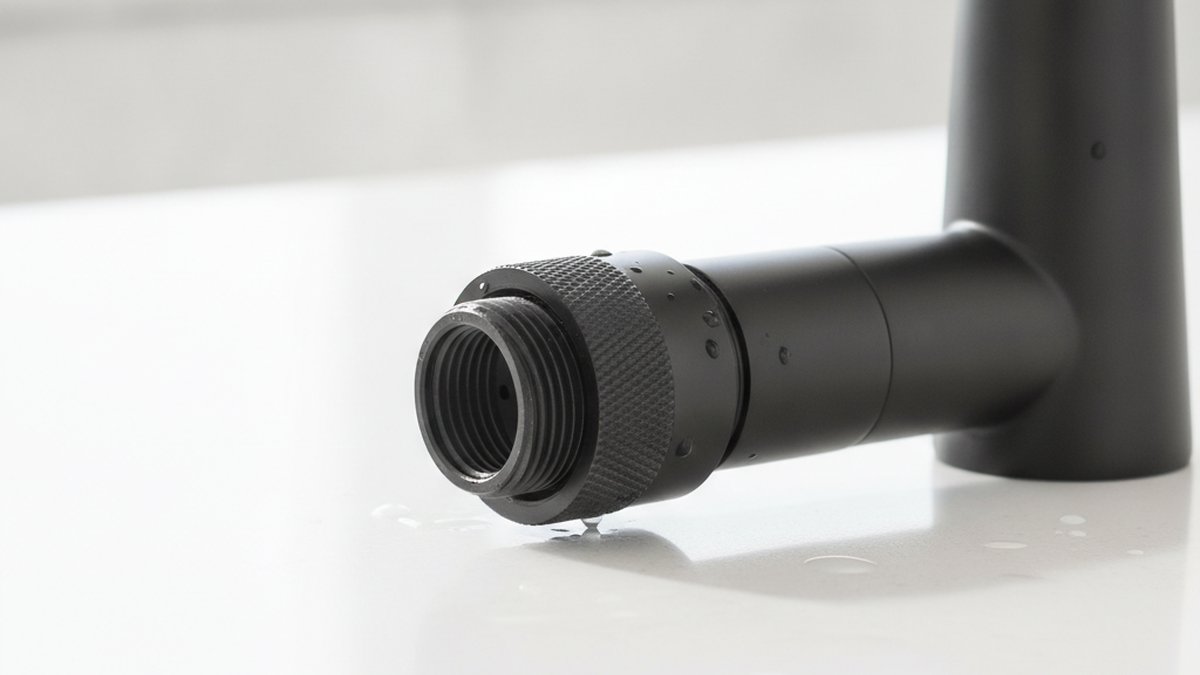
If you’ve searched for a faucet adapter black fitting, you’re almost always trying to solve one small but annoying problem: your faucet spout won’t connect to the thing you need it to connect to — a portable dishwasher, a water filter, a pull-out sprayer, a garden hose, or an RV fill line — and you want the adapter to blend in with a black or matte-black faucet instead of sticking out as a shiny chrome mismatch. This guide answers exactly that, in plain language, with the thread sizes, materials, and finish types that actually matter.
At VIGA, we’ve manufactured and tested faucets and fixture accessories for over 20 years, and adapters are one of the most returned items in the entire plumbing aisle — almost always because of a thread mismatch, not a quality problem. So the goal here is simple: help you buy the right one once.
What is a faucet adapter, and why would you want one in black?
A faucet adapter is a small threaded connector that screws into or onto the tip of your faucet spout — the same spot where your aerator lives — and converts that thread into a different connection, most often a garden-hose thread (GHT), a quick-connect coupler, or a filter fitting. You’d want it in black for one reason: to match a black, matte-black, or oil-rubbed-bronze faucet so the adapter looks intentional instead of like a hardware-store afterthought.
Here’s the part most product pages skip. The threads inside your faucet spout are usually one of two standard sizes in North America, and the adapter has to match the opposite gender. Aerators (and the adapters that replace them) come as either male threads (the threads are on the outside) or female threads (the threads are on the inside). Your faucet has one; your adapter needs the mate.
- Regular male: 15/16″-27 — the most common kitchen/bath spout thread in the U.S.
- Regular female: 55/64″-27 — pairs with a male faucet spout.
- Junior/small male: 13/16″-27 — found on some bathroom faucets.
- Junior/small female: 3/4″-27 — the small-thread female counterpart.
- Garden hose thread (GHT): 3/4″-11.5 — the output side if you’re connecting a hose.
That “-27” or “-11.5″ number is threads per inch, and it matters just as much as the diameter. A 15/16”-27 will not thread cleanly into a garden-hose fitting even though the diameters look close, because the thread pitch is completely different. This single detail is behind the vast majority of “it doesn’t fit” reviews you’ll read online.
How do I know which faucet adapter size I actually need?
The fastest way is to unscrew your current aerator and take it to the store — or measure it with a caliper and count the threads. If you can’t remove the aerator, look at whether the threads are visible on the outside of the spout tip (that’s male) or hidden inside the spout (that’s female), then buy the opposite.
Three concrete methods, from easiest to most precise:
- Bring the old aerator. Unthread it (righty-loosey when you’re looking up at it), drop it in a bag, and match it to the adapter’s gender and diameter at the store or against the product photos.
- The coin test. A U.S. nickel is about 15/16″ (regular size); a penny is about 3/4″ (junior size). Hold the coin over the spout opening — if it’s roughly nickel-width, you likely need a regular-thread adapter.
- Caliper + thread gauge. Measure the outside diameter of male threads or the inside diameter of female threads, then use a thread pitch gauge to confirm 27 TPI. This is the only foolproof method for oddball imported faucets.
If your faucet already has a hidden or “cache” aerator (a smooth spout with no visible threads and a tiny pinhole key slot), you’ll need a key to remove it first, and you may need a specialty low-profile adapter. When in doubt, a good tap extender or adapter guide walks through the same thread-matching logic and is worth a read before you buy — the sizing rules are identical whether you’re extending reach or changing the connection type.
Matte black vs. glossy black vs. oil-rubbed bronze: which black finish should you get?
Match the adapter finish to your faucet’s exact black, not just “black” in general — because matte black, glossy piano black, and oil-rubbed bronze read as three different colors in real bathroom and kitchen light. The safest bet for a modern faucet is a matte black adapter with a PVD or baked powder-coat finish, since that’s the finish most black faucets sold since about 2020 actually use.
Finish also predicts how long the adapter stays looking good. Cheap spray-painted black adapters chip within weeks where the wrench grabs them; electroplated or PVD (physical vapor deposition) finishes resist chipping, hard-water spotting, and cleaner chemicals far better. Here’s how the common options compare.
| Black finish type | Look | Durability | Best match for |
|---|---|---|---|
| Matte black (PVD) | Flat, soft, non-reflective | Excellent — resists chips, spots, chemicals | Modern matte-black faucets |
| Matte black (powder-coat) | Flat, slightly textured | Very good — tough but can chip on hard impact | Budget matte-black setups |
| Glossy/piano black | Shiny, mirror-like | Good — shows water spots and fingerprints | High-gloss designer faucets |
| Oil-rubbed bronze (ORB) | Dark brown-black with highlights | Very good — living finish, ages over time | Traditional/farmhouse fixtures |
| Spray-painted black | Varies, often uneven | Poor — chips and fades fast | Nothing; avoid for daily use |
One quick tip: if your faucet is oil-rubbed bronze, don’t buy a “matte black” adapter expecting a match. ORB has warm brown undertones and often shows copper highlights on edges, while matte black is a true neutral black. Side by side, the mismatch is obvious. Buy ORB-to-ORB.
What can you actually connect with a black faucet adapter?
A black faucet adapter lets you turn an ordinary indoor faucet into a hookup point for hoses, filters, sprayers, and appliances — without permanent plumbing changes. The most common real-world uses are portable dishwashers and washing machines, countertop and reverse-osmosis water filters, pull-down sprayer add-ons, and connecting a garden hose to an indoor faucet for filling buckets, aquariums, or car-wash lines.
Some concrete scenarios where people search for this exact part:
- Portable dishwasher hookup: A quick-connect black adapter clicks onto the faucet so you can attach and remove the dishwasher line in seconds.
- Countertop or RO water filter: A diverter-style adapter sends water either to the tap or to the filter with a small pull tab.
- Indoor-to-garden-hose: A faucet-to-GHT adapter lets a standard 3/4″-11.5 hose thread onto your kitchen or laundry faucet.
- RV and van life: Filling fresh-water tanks from an indoor faucet with a food-safe hose.
- Aquarium and hydroponics: Attaching fill and drain lines without splashing.
If your end goal is a hose connection specifically, it’s worth understanding the garden-hose thread side of things too. Our breakdown of a garden hose faucet Y splitter covers the 3/4″-11.5 GHT standard in detail, and if you’re outfitting a laundry or garage sink, the guide to a utility sink faucet with garden-hose thread shows how some faucets skip the adapter entirely by building the hose thread right into the spout.
Are black faucet adapters worth it, or should you just replace the whole faucet?
For 90% of situations, a black faucet adapter is the smart, cheap fix — it costs $8 to $25 versus $120+ for a new faucet, installs in under two minutes with no tools, and solves the exact connection problem without touching your plumbing. You’d only replace the whole faucet if the spout threads are stripped, corroded, or a non-standard imported size that no adapter fits.
That said, adapters have real limits worth knowing before you buy:
- Flow restriction: Adding an adapter and a filter or long hose can noticeably drop your flow rate, especially on faucets already limited to 1.5 GPM for water conservation.
- Aesthetics: A permanent adapter that stays on 24/7 adds length and bulk to your spout. Quick-connect versions that pop off are less obtrusive.
- Thread wear: Repeatedly screwing and unscrewing an adapter can wear soft faucet threads over time. Quick-connect couplers avoid this.
- Seal issues: A missing or misseated rubber washer is the #1 cause of adapter leaks — always check the gasket before blaming the product.
If you’re chasing better splash-free flow rather than a hose connection, an adapter isn’t your answer at all — an aerator is. Our guide to the best bathroom faucet aerator explains how the right insert controls splash and saves water without changing your spout’s connection at all.
How do you install a black faucet adapter without leaks?
Installing a faucet adapter takes about two minutes: unscrew the old aerator, seat the adapter’s rubber washer, hand-tighten the adapter onto the spout, and snug it a quarter turn with a soft cloth or strap wrench so you don’t scratch the black finish. Do not overtighten — you’ll crush the washer and cause the exact leak you’re trying to avoid.
- Remove the old aerator. Turn by hand; if it’s stuck, wrap a cloth around it and use pliers gently. Note the thread gender as it comes off.
- Check the washer. Confirm a rubber or fiber washer is seated flat inside the female threads. This is what actually seals — not the threads.
- Thread on the adapter. Start by hand to avoid cross-threading. It should turn smoothly for several full turns before it snugs up.
- Snug, don’t crank. A cloth-protected quarter to half turn past hand-tight is plenty. Black finishes scratch easily, so cover any wrench jaws.
- Test. Run the water and watch the joint. A drip means back off, reseat the washer, and retry — it almost never means you need it tighter.
If water sprays sideways from the connection or drips even after reseating the washer, the issue is usually a cracked washer, a cross-threaded start, or a thread-size mismatch. If your faucet is leaking somewhere else entirely — like the base or handle — that’s a different repair; our walkthrough on how to fix a leak on a faucet yourself covers those cases step by step.
What should you look for in a quality black faucet adapter?
Prioritize solid brass construction, a durable PVD or powder-coat black finish, a standard 27-TPI thread that matches U.S. faucets, and a genuine rubber washer included in the box. Avoid all-plastic adapters for anything you’ll use daily or under pressure — they crack at the threads and strip out fast.
A short buyer’s checklist that separates good adapters from returns-bin junk:
- Material: Solid brass body (heavier, threads last) over zinc or plastic.
- Finish: PVD matte black or baked powder-coat, not spray paint.
- Thread spec listed: A trustworthy listing states the exact thread, e.g. “15/16″-27 male / 55/64″-27 female,” not just “fits most faucets.”
- Washer included: Rubber gasket in the box, ideally a spare.
- Lead-free rating: For drinking-water use, look for compliance with lead-free standards (U.S. faucets must meet a weighted-average lead content of ≤0.25% under the Safe Drinking Water Act).
- Knurled grip: A textured collar you can tighten by hand without tools.
VIGA’s black adapters and fixtures are machined from lead-free brass and finished with PVD coatings that we salt-spray test for corrosion resistance and cycle-test on the threads, and our fixtures are backed by a manufacturer’s warranty against finish defects. If you care about a black finish holding up over years rather than months, that testing-and-warranty combination is exactly the signal to look for — from us or any reputable brand.
FAQ
What size is a standard faucet adapter thread?
In the U.S., the two most common are 15/16″-27 male and 55/64″-27 female (both “regular” size), plus 13/16″-27 male and 3/4″-27 female for “junior/small” faucets. Garden-hose thread on the output side is 3/4″-11.5. Always match diameter and thread pitch (the “-27” or “-11.5”), because close diameters with different pitches will not seal.
Will a black faucet adapter match my matte black faucet?
Usually yes, if you buy a matte black PVD or powder-coat adapter — that’s the same finish most black faucets use. Be careful with oil-rubbed bronze, though: ORB has warm brown undertones and won’t match true neutral matte black side by side. When possible, match finish type to finish type.
Why is my faucet adapter leaking?
The leading cause is a missing, cracked, or improperly seated rubber washer — not insufficient tightness. Reseat the washer flat, hand-tighten plus a quarter turn, and re-test. If it still leaks, you likely have a thread-size or thread-pitch mismatch, or cross-threaded the adapter when starting it.
Can I connect a garden hose to my kitchen faucet with a black adapter?
Yes. A faucet-to-garden-hose adapter converts your spout’s 15/16″-27 (or 55/64″-27) aerator thread to standard 3/4″-11.5 garden-hose thread, letting a normal hose thread on. Choose a quick-connect version if you’ll attach and remove the hose often, and use a food-safe hose if the water is for drinking, aquariums, or RV tanks.
Are plastic faucet adapters okay, or do I need brass?
For occasional, low-pressure use a plastic adapter is fine, but for anything daily — a portable dishwasher, a filter, a hose you leave connected — choose solid brass. Plastic threads crack and strip under repeated tightening and pressure, while brass threads seal reliably for years and the black finish sits on a more durable base.
Do I need to remove my aerator to install an adapter?
Almost always yes. The adapter threads into the same spot the aerator occupies, so you unscrew the aerator first. Many diverter and filter adapters have a built-in aerator or screen so you don’t lose splash control. Keep your old aerator in a drawer in case you ever remove the adapter and want to restore the original spout.
Author note: This guide was written and reviewed by the VIGA product team, faucet and fixture manufacturers with 20+ years of experience designing, machining, and durability-testing kitchen and bathroom hardware. We test finishes for corrosion and abrasion resistance and validate thread compatibility against U.S. aerator standards before a product ships. Always confirm your specific faucet’s thread size before purchasing, and follow local plumbing codes for any drinking-water connection.
WeChat
Scan the QR Code with WeChat