 English
 Deutsch
 Français
 Italiano
 Español
 Português
 Nederlands
 Polski
 Русский
 日本語
日本語 한국어
한국어 العربية
 China Faucet Factory & OEM/ODM Faucet Manufacturer
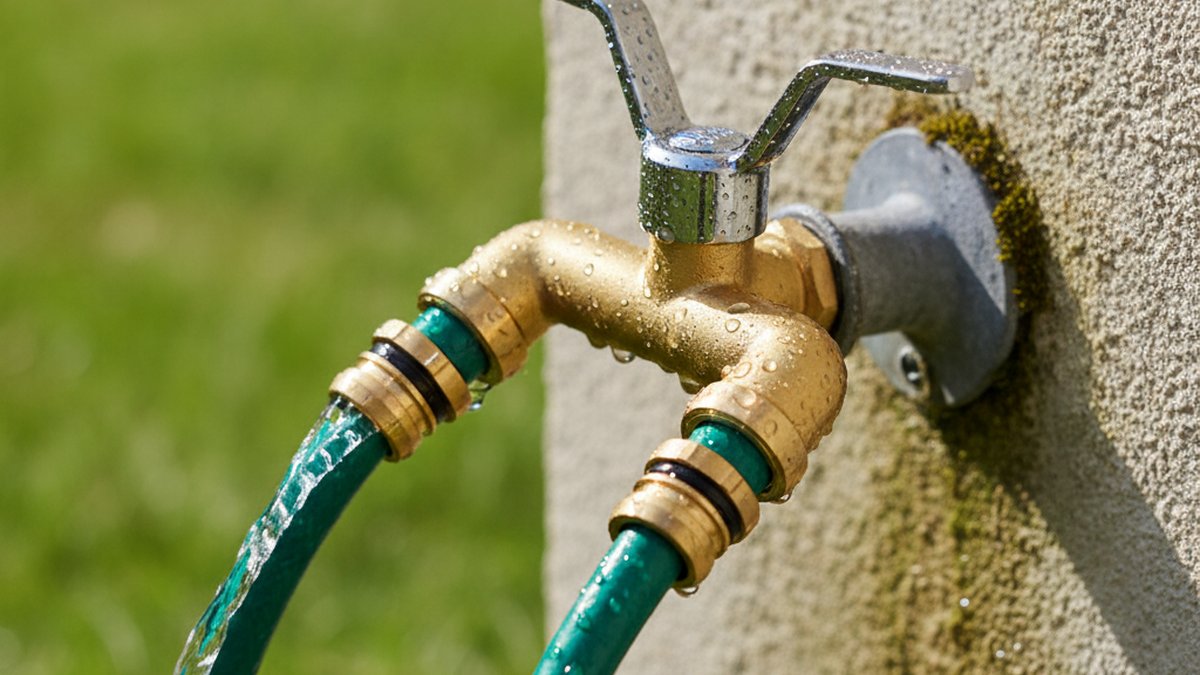
A garden hose faucet y — often called a “Y splitter,” “hose bib Y,” or “two-way faucet manifold” — is one of those tiny fixtures that quietly saves you a hundred trips back to the tap. Instead of unscrewing one hose to attach another, you connect both to a single spigot and turn each on or off independently. It threads directly onto a standard 3/4-inch garden hose thread (GHT), the same thread you’ll find on nearly every outdoor faucet, wall hydrant, and hose bib in North America. Below, I’ll walk you through exactly what to look for, where cheap ones fail, and how to match the right splitter to how you actually use water outside.
What does a garden hose faucet Y actually do?
It turns one outdoor faucet into two independently controlled outlets. Water enters through the female inlet that screws onto your spigot, splits inside the body into two channels, and exits through two male-threaded outlets — each gated by its own valve. That “each with its own valve” part is the whole point: you can leave a soaker hose running to the garden while grabbing the second line to rinse the dog, then shut off just the dog line without touching the garden.
Practically, that means you stop doing the annoying dance of swapping hoses at the spigot. A Y splitter is the cheapest way to double your outdoor water access without paying a plumber to add a second hose bib. If you’ve ever run a drip system on a timer and still wanted a hose for washing the car, this is the part you were missing.
- Run two hoses at once — e.g., a lawn sprinkler on one side, a hand hose on the other.
- Independent shut-off — kill one line without shutting the main spigot, so your timer or drip line keeps flowing.
- Flow control — quality valves throttle pressure, not just on/off, which is handy for gentle watering.
- Reduce wear on the spigot — you leave the Y on and stop cranking the spigot handle a dozen times a day.
Is a 2-way, 3-way, or 4-way splitter better for a normal backyard?
For a typical single-family backyard, a 2-way (Y) splitter is the sweet spot; step up to a 4-way manifold only if you’re running multiple timers, drip zones, and a hand hose from one tap. More outlets sound better, but every extra port shares the same incoming pressure from one faucet — so if you open four lines at once, each gets a weaker stream.
Here’s the honest breakdown. A 2-way covers “one automated line + one manual hose,” which is 80% of homes. A 4-way earns its keep on a property with a vegetable garden on a timer, a lawn drip zone, a pond top-off line, and a general-purpose hose. Beyond four, you’re usually better off installing a real distribution manifold on a stake in the ground rather than hanging everything off the spigot threads, which puts a lot of leverage — and stress — on your wall hydrant.
| Splitter type | Best for | Typical price | Watch-out |
|---|---|---|---|
| 2-way Y (brass) | Most homes: one timer + one hand hose | $12–$30 | Confirm 3/4″ GHT thread |
| 2-way Y (plastic/zinc) | Light, seasonal use | $6–$12 | Cracks in freeze; valves strip |
| 4-way manifold (brass) | Multiple drip zones + timers | $25–$50 | Pressure drops if all open |
| Y with built-in shut-off + swivel | Tight spigots against a wall | $18–$35 | Swivel washer wears faster |
Why do cheap plastic Y splitters keep cracking and leaking?
Because thin plastic and pot-metal zinc can’t handle two things: freezing water and repeated valve torque. Water expands about 9% when it freezes, and a splitter left outside over winter with even a little trapped water will split its body or blow out a valve. Meanwhile, the plastic threads on a $6 splitter round off after a season of hand-tightening onto a metal spigot.
Solid brass solves both. It flexes slightly instead of shattering, its threads bite cleanly onto the spigot without cross-threading, and the internal ball or lever valves seat against a rubber or PTFE washer that you can replace instead of tossing the whole part. If you live anywhere with frost, brass isn’t a luxury — it’s the difference between one purchase and buying a new splitter every spring. And if a hard freeze is already a worry at your house, the splitter is only half the battle; the spigot itself matters too, which is why it’s worth knowing how to repair a frozen outdoor faucet before it bursts and floods your wall.
How do I know if a Y splitter will fit my outdoor faucet?
Almost certainly it will — U.S. outdoor faucets and garden hoses use a standard 3/4″ GHT (11.5 threads per inch), and Y splitters are built to match. The only real fit questions are thread condition, thread type, and clearance around the spigot.
Check three things before you buy. First, confirm the label says 3/4″ GHT (sometimes written 3/4″-11.5NH) — this is different from pipe thread (NPT), so don’t grab a plumbing-aisle brass fitting by mistake; the taper is wrong and it’ll leak. Second, look at whether your spigot threads are chewed up or corroded; if they are, a Y with a rubber washer and a swiveling collar will seat better than a rigid one. Third, measure clearance: a spigot mounted tight to a brick wall may not leave room to turn two valve levers, so a Y with a swivel inlet or a slim profile helps. If your thread is a nonstandard size or a foreign fitting, you may need an intermediary — the same logic that applies when picking a faucet L adapter for an awkward setup.
Does the washer matter, and how often do I replace it?
Yes — the rubber washer inside the inlet is the single most common leak point, and you should expect to replace it every 1–3 seasons. It’s a 20-cent flat rubber ring; keep a few spares. When your Y starts weeping at the spigot connection, don’t over-tighten it (that just deforms the washer faster) — pop the old washer out with a screwdriver tip and drop a fresh one in. A worn washer, not a bad splitter, is behind most “leaky Y” complaints online.
What makes a good garden hose faucet y worth paying a bit more for?
The valves and the metal. A good garden hose faucet y uses a quarter-turn ball or lever valve with a stainless or brass stem, a full-brass body (not brass-plated zinc), and replaceable washers. Those three things determine whether it lasts five years or fails in one.
Cheaper Ys use plastic gate-style knobs that you twist several times to open — they feel flimsy, clog with grit, and the knob eventually spins freely without closing. Lever valves snap open and shut in a quarter turn, tell you at a glance which line is on, and are far easier to work with wet or gloved hands. Look for these signals of quality:
- Weight in the hand — real brass feels dense; hollow, light bodies are usually zinc that corrodes.
- Lever (not multi-turn knob) valves — quarter-turn ball valves last longer and are easier to read.
- Comfort grips or wide levers — you’ll thank yourself turning these with wet hands in cold weather.
- Replaceable washers — a fixture you can service beats a sealed unit you throw away.
- A stated warranty and pressure rating — good makers publish a max PSI (often 100–150 PSI) and back the part.
How do I install and winterize a garden hose faucet Y?
Installation takes 30 seconds: hand-thread the Y’s female inlet onto your spigot, snug it a quarter-turn past finger-tight, and attach a hose to each outlet. Winterizing is what actually protects your investment — remove the Y before the first hard freeze, drain it, and store it indoors.
Don’t use thread tape or a wrench on the inlet — the connection seals on the rubber washer, not the threads, so tape just makes a mess and over-cranking crushes the washer. (Thread sealant logic is different for tapered pipe connections; if you’re ever puzzling over when sealant actually belongs on a fitting, our guide on what to use for tub spout installation — sealant, thread tape, or nothing explains the washer-vs-thread distinction clearly.) For freeze protection, follow these steps each fall:
- Shut off and drain the outdoor line at the interior shut-off if you have one.
- Open both Y valves to let trapped water run out.
- Unscrew the Y from the spigot, tip it to drain, and shake it dry.
- Store it inside — a garage shelf is fine — and keep spare washers with it.
If leaving the tap unlocked outdoors is a concern in your neighborhood — say a shared driveway or a rental — pairing your splitter with a locking device is smart; here’s the rundown on the best outdoor faucet lock to stop people from using your water.
Which garden hose faucet Y should you buy for your situation?
Match the splitter to your use, not to the lowest price. Here’s the quick decision guide most buyers actually need:
- You water a garden on a timer + want a hand hose: a 2-way brass Y with lever valves. This is the default best buy.
- You’re in a hard-freeze climate: brass only, and plan to remove it each winter. Skip plastic entirely.
- Your spigot is jammed against a wall: a Y with a swivel inlet or slim body so both levers clear the bricks.
- You run several drip zones: jump to a 4-way brass manifold, but don’t open all lines at once.
- Light, seasonal, low-budget use: a zinc/plastic Y is fine if you’ll baby it and store it indoors — just expect a shorter life.
One more upgrade worth considering: if your existing hose is stiff, kinked, or leaking at the collar, the Y won’t fix the flow — the hose will. A quality supply line makes a real difference, and our piece on choosing a copper faucet hose covers how material and diameter affect pressure and longevity.
FAQ
Will a garden hose faucet Y reduce my water pressure?
Only if you open both outlets at the same time. With one side closed, the open line delivers essentially full spigot pressure. Run both at once and the available flow splits between them, so each stream is softer — normal physics, not a defect. For pressure-sensitive tasks like a pressure washer, close the other side.
What size thread does a garden hose Y splitter use?
Standard 3/4-inch GHT (garden hose thread, 11.5 TPI) in North America — the same thread on your hoses and outdoor faucets. It is not the same as 3/4″ NPT pipe thread, so buy a fitting labeled GHT/NH, not a plumbing pipe fitting, or it will leak.
Can I leave a Y splitter on the faucet all year?
In frost-free climates, yes. Anywhere that freezes, no — remove and drain it before the first hard freeze, because trapped water expands and can crack even a brass body’s valves or split a plastic one. Take it off, dry it, and store it indoors over winter.
Why is my Y splitter leaking where it meets the faucet?
Almost always a worn or missing rubber washer inside the female inlet, not a faulty splitter. Replace the 20-cent washer and hand-tighten a quarter-turn past snug. Don’t add thread tape or crank it with a wrench — the seal is made by the washer, and over-tightening deforms it and makes the leak worse.
Is brass or stainless steel better for a garden hose Y?
Solid brass is the practical best choice for most buyers — it resists corrosion, tolerates freeze-flex better than zinc or plastic, and is easy to service. Stainless-steel Ys exist and are extremely durable, but they cost more and are overkill for typical residential outdoor use. Avoid brass-plated zinc, which looks like brass but corrodes from the inside.
How long should a good Y splitter last?
A quality solid-brass Y with lever valves, properly winterized, commonly lasts 5–10 years — you’ll replace the rubber washers periodically but not the body. Plastic and zinc units often fail within one to three seasons, especially in freezing climates or if left on the spigot year-round.
A note on testing, standards, and who wrote this
Reputable brass fittings are made from low-lead brass that meets standards like the U.S. Safe Drinking Water Act (≤0.25% weighted lead content) and are pressure-tested to a rated PSI before shipping — look for a stated pressure rating and a warranty, which serious manufacturers publish and back. When you buy from a maker that documents its brass alloy, valve life-cycle testing, and warranty terms, you’re buying a part that was verified, not just molded.
About the author & VIGA: This guide was written by the product team at VIGA (vigafaucet.com), a manufacturer and exporter of faucets and bathroom fixtures with more than 20 years of experience supplying brass valves, faucets, and outdoor fittings to distributors and contractors worldwide. Our engineers work with the same brass casting, machining, and pressure-testing processes described above, so the recommendations here reflect what we actually build and test — not marketing copy. If you’re sourcing splitters or fittings in volume and want to understand quality and pricing signals, our buyer’s resources on faucet specification and quotations are a good next read.
WeChat
Scan the QR Code with WeChat