 English
 Deutsch
 Français
 Italiano
 Español
 Português
 Nederlands
 Polski
 Русский
 日本語
日本語 한국어
한국어 العربية
 China Faucet Factory & OEM/ODM Faucet Manufacturer
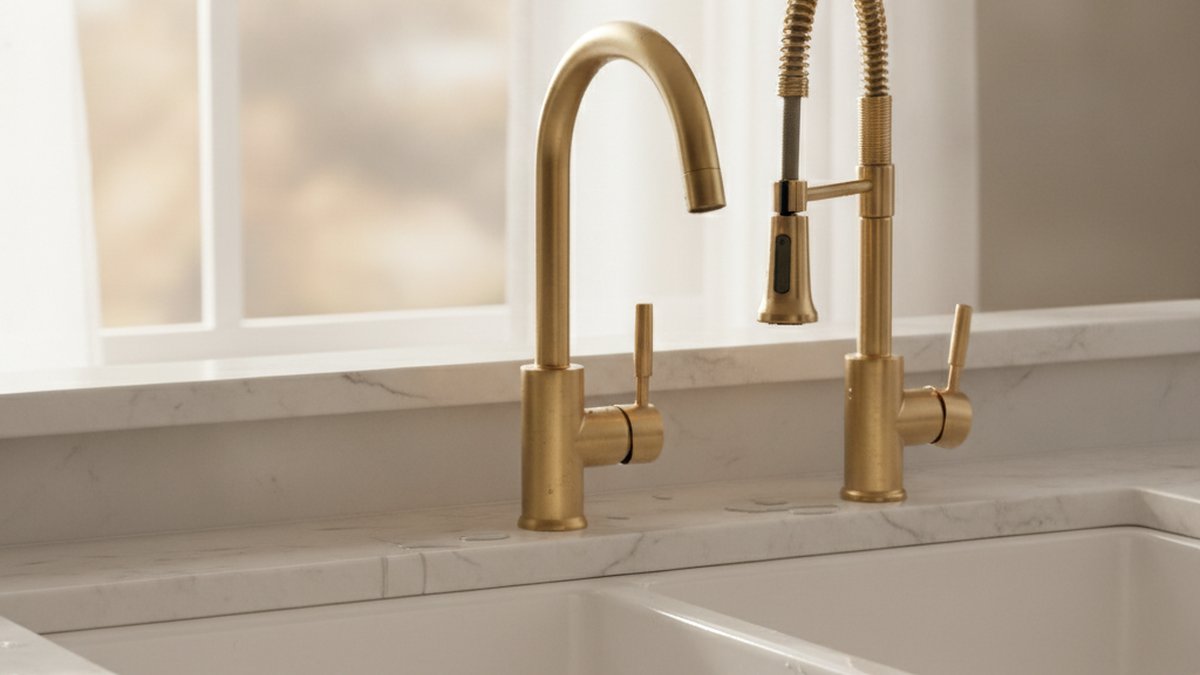
A brushed gold reverse osmosis faucet is the small, separate spout that sits next to your main kitchen faucet and delivers filtered water straight from your under-sink RO system — finished in a soft, satin gold (sometimes labeled champagne gold or brushed brass) instead of the usual chrome. It’s a low-flow tap, it’s cosmetic-plus-functional, and picking the wrong one usually comes down to three things people skip: the tubing connection, whether the system needs an air gap, and whether the “gold” is real PVD plating or a cheap coating that peels. Below is exactly how to get it right the first time.
What exactly is a reverse osmosis faucet, and why is it a separate tap?
A reverse osmosis faucet is a dedicated, low-pressure spout that dispenses only the purified water your under-sink RO system produces — it is separate from your main faucet because RO water travels slowly and at low pressure, and mixing it into your high-pressure hot/cold lines would ruin both the flow and the filter membrane’s job. Think of it as the delivery point for a whole treatment system hidden in your cabinet.
RO systems push tap water through a semipermeable membrane that strips out dissolved solids — lead, chlorine byproducts, fluoride, sodium, and the minerals behind hard-water scale. That clean water collects in a small tank, then flows up a 1/4″ or 3/8″ line to this dedicated faucet. Because the water is stored at only 5–8 psi, an RO faucet is engineered for that gentle flow, which is why you can’t just run it off any spare hole with a regular tap.
The brushed gold part is purely aesthetic — but it matters more than people admit. If you’ve already invested in a warm-metal kitchen (say, a brushed gold touchless kitchen faucet as your main workhorse), a chrome RO spout sitting two inches away looks like an afterthought. Matching the finish is the whole point.
Is a brushed gold reverse osmosis faucet actually worth it, or just for looks?
It’s worth it for two concrete reasons beyond looks: brushed (satin) finishes hide water spots and fingerprints far better than polished gold or chrome, and a properly plated gold RO faucet costs only $15–$45 more than a chrome equivalent — a small premium for a fixture you’ll look at every day for a decade. The function is identical; you’re paying for finish durability and a coordinated kitchen.
Here’s the honest catch: not all “gold” is equal. The finish is where cheap RO faucets fail. A quality brushed gold faucet uses PVD (physical vapor deposition) plating, which bonds the color at a molecular level and resists tarnishing, scratching, and cleaning chemicals. A cheap one uses a sprayed lacquer or thin electroplate that starts flaking around the spout tip within a year — right where your fingers and water hit it most.
- PVD brushed gold: warranty typically 5+ years on finish, won’t discolor from RO water or citrus cleaners.
- Electroplated / lacquered gold: cheaper up front, but prone to peeling, yellowing, and water-spot etching within 12–24 months.
- “Champagne gold” vs “brushed brass”: mostly marketing names for the same warm satin tone — always judge by a real product photo, not the label.
So: worth it, yes — but only if you verify PVD and a real finish warranty. Skip that, and you’ll be replacing a peeling faucet in two years, which erases the savings.
How do I know if a brushed gold RO faucet will fit my system?
Check three specs: the tubing size (almost always 1/4″ push-connect for RO), whether your system is air-gap or non-air-gap, and your countertop or sink hole diameter (typically 1/2″ for the faucet shank). Match those three and nearly any RO faucet will bolt right on — the finish is independent of fit.
The single biggest mistake is the air-gap question. An air-gap RO faucet has an extra hole and a third tube; it’s a code requirement in some areas (notably parts of California) to prevent drain water from siphoning back into your clean water. A non-air-gap faucet is simpler, quieter, and easier to install, but you must confirm your local plumbing code and your RO system’s design allow it. They are not interchangeable — an air-gap system needs an air-gap faucet.
| Feature | Air-Gap RO Faucet | Non-Air-Gap RO Faucet |
|---|---|---|
| Tubes to faucet | 3 (supply, drain in, drain out) | 1 (supply only) |
| Countertop hole size | 1/2″ (needs clearance for 3 lines) | 1/2″ |
| Backflow protection | Built-in (meets strict codes) | Relies on system check valve |
| Noise | Occasional gurgle at the spout | Silent |
| Install difficulty | Moderate | Easy |
| Best for | Code-required regions | Most homes, simplest setup |
For the physical hole, an RO faucet shank fits a standard 1/2″ (about 12–13 mm) opening. If you’re drilling a new hole in granite or quartz, that’s a job for a diamond bit and a pro. If you have a spare sprayer or soap-dispenser hole, it’s usually 1–1.5″ and you’ll need a base plate or reducer. The logic here is the same one that trips people up with vessel sinks — it’s always worth confirming exactly what faucet hole size you need before you buy, not after.
What’s the difference between a brushed gold RO faucet and a regular kitchen faucet?
An RO faucet is low-flow (about 0.5 GPM), single-lever or single-handle for cold filtered water only, and has a food-grade waterway; a regular kitchen faucet is high-flow (1.5–2.2 GPM), handles hot and cold, and is built for dishwashing and pot-filling. Never substitute one for the other — a standard faucet will damage the RO membrane, and an RO faucet can’t supply your everyday cooking flow.
A few practical differences that matter when you’re shopping:
- Flow rate: RO faucets run slow on purpose. If yours “trickles,” that’s usually the RO tank pressure or a clogged filter — not a faulty faucet.
- Waterway material: Good RO faucets use a lead-free brass or food-grade PEX/PP internal waterway, certified to NSF/ANSI 372 and 61. You’re drinking straight from this tap, so the internal path matters more than on a normal faucet.
- Handle action: most are a simple lever or a non-air-gap ceramic-disc cartridge. There’s no mixing valve because there’s no hot side.
- Spout height/reach: lower and more compact than a main faucet, sized to fill a glass or bottle, not a stockpot.
If you’re weighing warm finishes in general — gold versus bronze versus nickel — it’s the same decision you’d make for any fixture. Plenty of buyers cross-shop brushed gold against darker tones like an oil rubbed bronze finish before landing on the warm satin look; the deciding factor is usually whether the rest of your hardware leans warm-bright (gold) or warm-dark (bronze).
Does a brushed gold RO faucet help with hard water and scale?
The faucet itself doesn’t treat water — the RO membrane behind it does — but a brushed gold finish is genuinely better at hiding the white, chalky spots that hard water leaves on a spout. So while the RO system removes the dissolved minerals from what you drink, the satin gold surface keeps the visible tap looking clean between wipes.
That’s the real-world reason satin finishes win in hard-water homes: polished gold and chrome show every mineral droplet mark, while the microscopically textured brushed surface diffuses them. Pair that with RO-purified water (which has almost no dissolved solids to leave spots in the first place) and you get a tap that stays looking new with minimal effort.
One tip that applies to any low-flow tap: if flow ever feels weak, check the small aerator or outlet screen at the spout tip for sediment before blaming the system. The same maintenance habit that keeps a bathroom faucet aerator flowing clean applies here — a two-minute rinse often restores full flow.
How do you install a brushed gold reverse osmosis faucet yourself?
Most people can install a non-air-gap brushed gold reverse osmosis faucet in 30–45 minutes with no special tools beyond an adjustable wrench — you drop the shank through a 1/2″ hole, tighten the mounting nut from below, and push the 1/4″ supply tube onto the quick-connect fitting until it clicks. Air-gap versions add two drain tubes and take a bit longer.
Here’s the basic sequence:
- Shut off the RO system at the tank valve and relieve pressure by opening the old faucet (if replacing).
- Mount the faucet: insert the shank through the sink or countertop hole, seat the decorative base with its gasket, then thread the lock nut and washer up from underneath and snug it down. Don’t overtighten — you can crack a ceramic base plate.
- Connect the tubing: for a push-connect fitting, cut the 1/4″ line square, push it in firmly a good half-inch until it seats, then tug to confirm it’s locked. For compression fittings, hand-tighten plus a quarter turn.
- Attach the air-gap drain lines (air-gap models only), matching the labeled ports on the faucet body.
- Turn on the system, let the tank fill, then run the faucet 2–3 full tanks to flush the new membrane and clear any manufacturing residue before drinking.
If you’re comfortable swapping a standard faucet, this is easier — there’s no hot line and no heavy pull-down hose. Anyone who’s tackled replacing a kitchen faucet in an afternoon will find an RO faucet a lighter version of the same job. The only spot to slow down is the push-connect fitting: a tube that isn’t fully seated is the number-one cause of under-sink drips.
What should I look for on the spec sheet before buying?
Look for four things: PVD brushed gold finish, a lead-free certified waterway (NSF/ANSI 372/61), the correct connection type (1/4″ push-connect for most systems), and a written finish warranty of at least 5 years. If a listing hides any of these, treat it as a red flag — reputable makers publish all four.
A quick buyer’s checklist:
- Finish: “PVD brushed gold” or “PVD champagne” — not just “gold colored.”
- Certification: lead-free waterway, ideally NSF-listed; look for cUPC/UPC compliance for North American plumbing code.
- Connection: confirm 1/4″ (or 3/8″) to match your system, and quick-connect vs compression.
- Air-gap or not: match your existing RO unit and local code.
- Warranty: separate finish and function warranties are a good sign a brand stands behind the plating.
- Handle & cartridge: ceramic-disc cartridge lasts far longer than rubber-washer designs.
FAQ
Will a brushed gold reverse osmosis faucet tarnish or turn colors over time?
A PVD-plated brushed gold faucet should not tarnish — PVD bonds the finish at the molecular level and resists RO water, citrus cleaners, and daily wiping for many years. Cheaper electroplated or lacquered “gold” finishes, however, can yellow or peel within a year or two. Always confirm PVD plating and a finish warranty before buying.
Can I use any RO faucet with any reverse osmosis system?
Mostly yes, as long as the tubing size matches (typically 1/4″) and you match air-gap to air-gap or non-air-gap to non-air-gap. The finish — brushed gold, chrome, black — is independent of compatibility. The two specs that must line up are tube diameter and whether your system requires an air gap.
Why is the water from my RO faucet slow?
Slow flow from an RO faucet is normal to a point — these taps run around 0.5 GPM by design. If it’s slower than a steady stream, the usual causes are a low-pressure or waterlogged storage tank, a clogged filter or membrane near end of life, or a kinked 1/4″ line under the sink. Check tank air pressure and the spout screen first.
Is a brushed gold RO faucet safe for drinking water?
Yes, provided it has a lead-free waterway certified to NSF/ANSI 372. Because you drink directly from this tap, the internal waterway material matters — quality RO faucets use lead-free brass or food-grade polymer internals. The PVD gold finish is only on the exterior and never contacts your water.
Do I need an air-gap brushed gold faucet or a non-air-gap one?
It depends on your local plumbing code and your RO system. Some jurisdictions require an air gap to prevent drain backflow; most homes can use the simpler, quieter non-air-gap style. Check your municipal code and your RO unit’s design — if the system is built for an air gap, you must use an air-gap faucet.
How much should I expect to pay for a good brushed gold RO faucet?
A quality PVD brushed gold RO faucet typically runs $35–$90 on its own — about $15–$45 more than a comparable chrome model. Below roughly $25, you’re usually looking at lacquered finishes that won’t hold up. The mid-range is the sweet spot for a certified, PVD-plated tap with a real warranty.
About the author: This guide was written by the product team at Vigafaucet, drawing on hands-on testing of RO and dedicated drinking-water faucets across finishes and connection types. About Vigafaucet: Vigafaucet is a manufacturer and online retailer of kitchen and bathroom fixtures, and every faucet we produce is built with lead-free, code-compliant waterways and PVD finishes tested against salt-spray and abrasion standards, backed by a written finish warranty. For related finish and installation guidance, our editorial library covers everything from finish selection to under-sink fittings.
WeChat
Scan the QR Code with WeChat