 English
 Deutsch
 Français
 Italiano
 Español
 Português
 Nederlands
 Polski
 Русский
 日本語
日本語 한국어
한국어 العربية
 China Faucet Factory & OEM/ODM Faucet Manufacturer
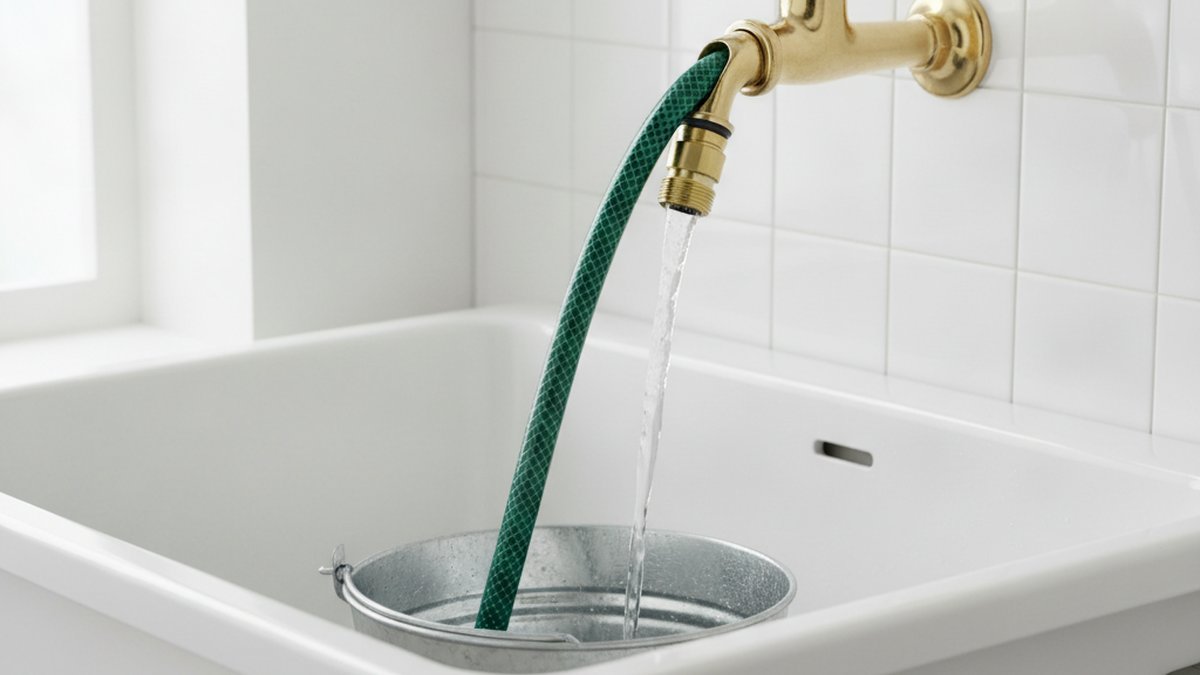
If you’ve ever tried to hook a garden hose to your laundry-room tap and found the threads just won’t grab, you’re in exactly the right place. A utility sink faucet garden hose connection is one of those small details that quietly makes or breaks a workshop, garage, laundry room, or mudroom. Get it right and you can fill buckets, run a hose out to the driveway, connect a portable dishwasher, or blast mud off boots without hauling water around. Get it wrong and you’re standing there with a hose that spins uselessly, dripping on your shoes. This guide breaks down exactly what to look for, how the threads actually work, and which type of faucet fits your setup.
At vigafaucet, we manufacture and pressure-test utility and commercial faucets for exactly these jobs, so below you’ll get straight, practical answers — not a spec-sheet dump.
What does “garden hose thread” actually mean on a utility faucet?
Garden hose thread (GHT) means the spout ends in a 3/4-inch male thread that matches any standard US garden hose — technically 3/4″-11.5 NH (National Hose) thread. That’s the key spec. A true utility sink faucet garden hose spout lets you screw a hose, sprayer nozzle, or hose splitter straight onto the tap with zero adapters.
Here’s where people get tripped up: not every “utility faucet” has hose threads, and not every threaded spout is hose thread. There are three thread situations you’ll run into:
- Male GHT (3/4″): The spout has external threads sized for a garden hose. This is what you want. A hose or nozzle screws right on.
- Aerator thread (15/16″-27 male or 55/64″-27 female): This is a standard kitchen/bathroom faucet tip. A garden hose will NOT thread onto it — the pitch and diameter are different. You’d need a faucet-to-hose adapter.
- No thread / smooth spout: Common on cheap laundry taps. Nothing screws on at all.
A quick way to tell them apart: garden hose threads are coarse and chunky (you can count roughly 11–12 threads per inch and they look deep), while aerator threads are fine and shallow. If your existing tap has the fine aerator-style tip, don’t panic — an inexpensive brass adapter converts it. We cover that below and in our full guide to the faucet L adapter, which is the same family of fittings.
Do I need a special faucet, or can I just adapt my existing utility tap?
You have two paths: buy a faucet with GHT built in, or adapt the tap you already have. If you’re installing fresh or replacing a leaky tap anyway, buy the dedicated hose-thread faucet — it’s cleaner, stronger, and won’t drip at a bolted-on adapter. If your current tap works fine and just lacks threads, a $6–$12 brass faucet-to-hose adapter is the smart, five-minute fix.
The adapter route only works if your spout tip has standard aerator threads. Unscrew the aerator, check whether the threads are inside (female) or outside (male), and match the adapter accordingly. Snug it on with a little plumber’s tape and you’ve got hose threads.
That said, adapters have real downsides for heavy hose use. They add a joint that can weep under pressure, they stick out and get bumped, and cheap chrome-plated-zinc ones corrode. If you’re going to leave a hose connected most of the time — say, a portable washer in a laundry room or a spray hose in a garage — a purpose-built utility sink faucet garden hose model with the thread cast into the spout is the better long-term buy.
Which type of utility sink faucet garden hose setup fits my space?
The right type depends on how your utility sink is plumbed. Wall-mounted faucets are the classic laundry-tub choice; deck-mounted (sink-mounted) faucets suit freestanding utility sinks and workbenches; and single-hole commercial styles fit mop basins and slop sinks. Match the faucet to your existing water supply lines first — that decides most of it.
Here’s a side-by-side to make it concrete:
| Faucet type | Best for | Mounting / inlets | Typical price (2026) | Hose-ready? |
|---|---|---|---|---|
| Wall-mount laundry faucet | Laundry-room tubs, basement utility sinks | Two wall inlets, usually 8″ centers | $25–$55 | Yes — most have 3/4″ GHT spout |
| Deck-mount utility faucet | Freestanding utility sinks, garages, workshops | Sink-top, 4″ or 8″ holes | $35–$80 | Often, but check the spout tip |
| Single-hole commercial / mop sink faucet | Mop basins, janitor closets, slop sinks | Wall or floor-service, single body | $45–$120 | Yes — GHT is standard here |
| Standard tap + hose adapter | Anyone keeping their existing faucet | Whatever you already have | $6–$12 (adapter only) | Only with the right adapter |
If you’re outfitting a commercial mop station rather than a home laundry room, the install details differ — supply-line rough-in height, backflow rules, and mounting all change. We walk through that specific job in our guide to commercial mop sink faucet installation, which pairs naturally with any GHT utility faucet.
Why does my utility faucet need a vacuum breaker or backflow preventer?
Because the moment you connect a hose to your faucet, you create a backflow risk — and most plumbing codes require a vacuum breaker on any hose-threaded tap. If a hose end sits in a bucket of dirty water (or worse, connects to a chemical sprayer) and your home’s water pressure suddenly drops, contaminated water can get siphoned back into your drinking supply. A vacuum breaker stops that.
Many quality utility sink faucet garden hose models have an anti-siphon vacuum breaker built into the body. If yours doesn’t, you can add a small brass hose-bib vacuum breaker to the spout threads for a few dollars — it’s the same device you see on outdoor sillcocks. This matters more than people think: it’s not just a code box to tick, it’s genuine drinking-water safety, and it’s usually required by the IPC and UPC for any threaded hose connection indoors.
- Chemical use? If you’ll ever run fertilizer, cleaner, or a pressure-sprayer through the hose, a vacuum breaker isn’t optional — install one.
- Portable appliances? Portable dishwashers and washing machines usually have their own backflow protection, but a faucet-side breaker adds a safe second layer.
- Freezing risk? For unheated garages, drain the hose and faucet before hard freezes — a burst hose bib is a classic winter callout.
What should I actually look for when buying — brass, flow, and finish?
Prioritize a solid brass body, a 3/4″ GHT spout, and a ceramic-disc cartridge — in that order. Brass resists corrosion and holds threads under repeated hose changes; ceramic-disc valves outlast rubber-washer valves by years and won’t drip. Finish and looks come last on a utility tap, but a chrome or brushed-nickel coat over brass does resist rust in a damp laundry room.
Run through this quick checklist before you buy:
- Body material: Solid brass or stainless. Avoid plastic and unlabeled “metal” (usually pot-metal zinc that corrodes).
- Spout thread: Confirm it says 3/4″ GHT or “garden hose thread,” not just “threaded spout.”
- Valve type: Ceramic-disc cartridge for drip-free service; quarter-turn handles are a bonus.
- Vacuum breaker: Built-in preferred; otherwise budget for an add-on.
- Reach and height: Make sure the spout clears a tall mop bucket or 5-gallon pail — 8″–10″ of clearance is ideal.
- Mounting match: Wall vs. deck, and inlet spacing (8″ centers is the laundry standard).
- Warranty: Look for at least a limited lifetime warranty on the finish and cartridge from a real manufacturer.
On flow: a bare hose-thread spout has no aerator, so it puts out serious volume — great for filling buckets fast. If you also want a normal, splash-free stream for handwashing, look for a model with a removable aerator insert, or keep a screw-on aerator handy. Our breakdown of the best bathroom faucet aerator explains how aerators change flow and splash if you want that softer stream sometimes.
How do I install and connect the hose without leaks?
Shut off the water, mount the faucet to your existing supply lines, wrap the spout threads with plumber’s tape, then hand-tighten the hose plus a quarter turn with pliers. Ninety percent of “leaky hose faucet” complaints come from over-tightening (which cracks the washer) or a missing hose gasket — not a bad faucet.
Step by step for the hose connection itself:
- Confirm there’s a rubber hose washer seated inside the female hose coupling. No washer = guaranteed drip.
- Wrap 2–3 turns of PTFE plumber’s tape clockwise around the spout’s male threads (skip this if the connection seals on the washer only — check your model).
- Thread the hose on by hand until snug. Cross-threading is the #1 mistake — if it resists early, back off and restart straight.
- Give it a quarter turn with pliers or a hose wrench. Don’t crank it.
- Turn the water on and watch the joint for 30 seconds. A weep means re-seat the washer, not more force.
If the leak is coming from the base of the faucet instead of the hose joint, that’s a different problem — usually a worn O-ring or loose mounting nut. We diagnose that exact issue in our guide on a sink leaking from the faucet base, which is worth a read if your tap weeps where it meets the wall or deck.
Can I split the line or lock the hose so nobody else uses it?
Yes on both. A brass Y-splitter on the spout lets you run two hoses (or a hose plus a bucket-fill line) with independent shutoffs, and a faucet lock stops unauthorized use in shared garages or rental utility rooms. Both screw onto the same 3/4″ GHT threads.
A Y-splitter is genuinely useful on a utility sink: keep a wash hose on one side and a quick-connect on the other, each with its own valve. If you want the details on choosing one, see our guide to the garden hose faucet Y. And if water theft or unauthorized use is a concern — common in shared basements, small businesses, or rentals — a hose-bib lock is cheap insurance; our outdoor faucet lock guide covers the same locks that fit indoor GHT taps.
How much should I spend, and where’s the sweet spot?
For a home laundry or garage utility sink, the sweet spot is $35–$60 for a solid brass, hose-threaded faucet with a ceramic cartridge and vacuum breaker. Below $15 you’re almost always getting plastic that cross-threads and cracks; above $80 you’re paying for commercial-grade duty you probably don’t need at home.
| Budget tier | What you get | Good fit for |
|---|---|---|
| Under $15 | Plastic body, no vacuum breaker, rubber-washer valve | Very light, occasional use only |
| $25–$40 | Brass or stainless, GHT spout, basic cartridge | Most home laundry rooms and garages |
| $45–$70 | Solid brass, ceramic disc, built-in vacuum breaker, better finish | Daily use, portable washers, workshops |
| $80–$120 | Commercial body, floor/service rating, heavy-duty cartridge | Mop stations, small businesses, janitor closets |
The false economy is buying twice. A $10 plastic tap that cross-threads and drips within a season costs you more than the $40 brass one you eventually replace it with. Spend once on brass.
FAQ
Will any garden hose fit a utility sink faucet with hose threads?
Yes — as long as the faucet has a standard 3/4″-11.5 NH (garden hose thread) spout, any standard US garden hose, nozzle, or hose accessory will screw right on. Just make sure the hose coupling has its rubber washer seated so the joint doesn’t drip.
My utility faucet has a regular aerator tip — can I still connect a hose?
Yes, with an adapter. Unscrew the aerator and thread on a brass faucet-to-garden-hose adapter that matches your tip (male 15/16″-27 or female 55/64″-27). Wrap the threads with plumber’s tape and hand-tighten. For heavy or permanent hose use, though, a dedicated GHT faucet is more reliable than an adapter.
Do I really need a vacuum breaker on an indoor utility sink faucet?
In most jurisdictions, yes — plumbing codes (IPC/UPC) require backflow protection on any hose-threaded tap, indoors included. It prevents contaminated water from being siphoned back into your drinking supply if pressure drops. Many quality utility faucets include one; if not, add a small brass hose-bib vacuum breaker to the spout.
Why does my hose leak where it screws onto the faucet?
Almost always a missing or damaged rubber hose washer, or over-tightening that deformed it. Replace the washer, seat it flat, hand-tighten plus a quarter turn — no more. If it still weeps, add plumber’s tape to the male threads. If water comes from the faucet base rather than the hose joint, that’s a worn O-ring, not the hose connection.
Can I connect a portable washing machine or dishwasher to a utility sink faucet garden hose spout?
Yes — most portable washers and dishwashers use a garden-hose-thread inlet, so they connect directly to a GHT utility faucet. Confirm your faucet delivers both hot and cold if the appliance needs it, and keep the vacuum breaker in place for backflow safety during the fill cycle.
What’s the difference between a mop sink faucet and a laundry utility faucet?
Both usually have garden hose threads, but mop/service sink faucets are commercial-grade — heavier brass bodies, integral vacuum breakers, wall or floor-service mounting, and higher duty ratings for constant bucket-filling. A home laundry faucet is lighter and cheaper. Pick the mop-sink style if you’re outfitting a janitor closet or small business.
About the author: This guide was written by the product team at vigafaucet, drawing on hands-on testing of utility, laundry, and commercial service faucets. We manufacture and quality-check faucets in-house, pressure-testing valve bodies and thread fittings against standard hose couplings before they ship.
Why trust vigafaucet: We’ve supplied faucets and bathroom fixtures internationally for years, and our products are built to recognized standards with cartridge and finish warranties. Every hose-thread spout we ship is checked against a real garden hose coupling, not just a spec sheet — because a thread that “measures right” but won’t grab a hose helps no one.
WeChat
Scan the QR Code with WeChat