 English
 Deutsch
 Français
 Italiano
 Español
 Português
 Nederlands
 Polski
 Русский
 日本語
日本語 한국어
한국어 العربية
 China Faucet Factory & OEM/ODM Faucet Manufacturer
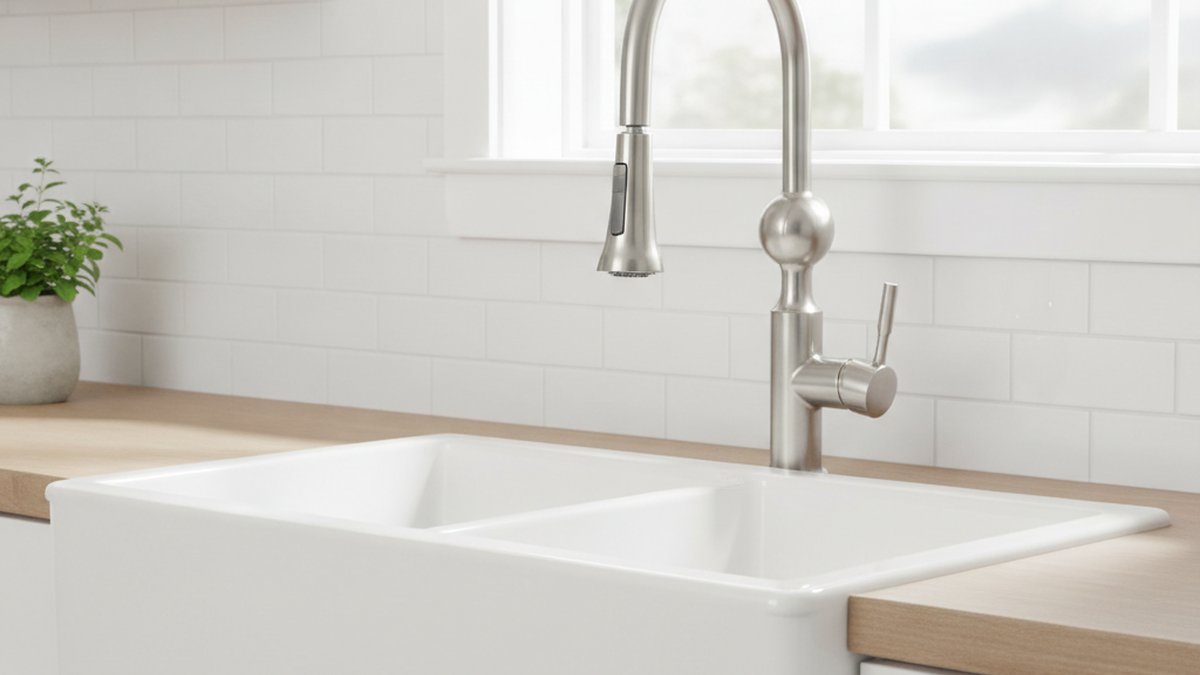
The atom pull down kitchen faucet upright design has become one of the most-searched modern faucet shapes because it hits the sweet spot between the industrial spring-coil “professional” look and a plain low-arc faucet. It gives you a tall, sculptural gooseneck arch with a spray head that pulls straight down and clicks back into place with a magnet — no drooping wand, no sagging hose. Below, I’ll walk you through exactly who this faucet is for, how much clearance you actually need, how it compares to other pull-down and pull-out styles, and what to check before you buy so you don’t end up returning it.
What exactly is an “atom pull down kitchen faucet upright”?
It’s a single-handle, high-arch kitchen faucet with a pull-down spray head, built in a smooth “upright” gooseneck shape rather than the exposed metal spring coil you see on commercial-style faucets. “Atom” refers to the compact, rounded, minimalist styling — a tight, geometric arch that reads modern rather than industrial.
Three features define this category:
- Upright gooseneck spout: a tall, continuous curve (usually 8–10 inches of arch height) with no visible spring or braided coil.
- Pull-down spray head: the sprayer pulls straight down toward the basin and retracts on a weighted or magnetic hose.
- Magnetic docking: the wand snaps firmly back into the spout collar so it never sags over time — the single biggest complaint people have about cheap pull-downs.
If you’ve ever looked at a spring-coil pro faucet and thought “great function, too much visual noise,” the upright atom shape is the answer. You keep the pull-down convenience and lose the busy metal spring.
How is “upright” different from a standard pull-down?
The difference is the arch geometry and the docking mechanism. A standard pull-down often has a wider, more relaxed curve and relies on a counterweight to retract. The upright atom style uses a tighter, taller vertical arch and almost always adds magnetic docking, so the spray head sits flush and locked instead of loosely resting. In practice, that means a cleaner silhouette on the counter and a spray head that won’t slowly drift out of the spout after six months of use.
Do I have enough clearance for an upright pull-down faucet?
You need at least 24–26 inches of vertical clearance from the countertop to any cabinet, shelf, or window above the sink, plus a few extra inches of swing room. Upright faucets are tall by design, so this is the number-one thing to measure before you buy.
Here’s the quick check: measure from the top of your countertop (not the sink bottom) straight up to the nearest obstruction. Most upright atom-style faucets have an overall height around 16–18 inches. You want clearance above that so you can actually lift a stockpot or watering can under the spout. If you have an upper cabinet or a window sill 20 inches above the counter, a tall upright faucet will look cramped and you’ll bang the handle every time you open it.
Also confirm your hole configuration. Almost every upright pull-down mounts in a single hole. If your sink or countertop has three holes (from an older faucet with side sprayer and soap dispenser), you’ll want a matching deck plate — most quality faucets include one. If you’re not sure whether swapping is a big job, it usually isn’t; our guide on whether replacing a kitchen faucet is easy enough to do yourself in an afternoon walks through the whole thing with the exact tools you’ll need.
Atom upright vs. pull-out vs. spring-coil: which pull faucet should I actually buy?
Buy the upright atom style if you want a tall modern look with docking convenience; buy a pull-out if you have low overhead clearance; buy a spring-coil pro faucet if you cook heavily and want maximum reach and flow. Here’s the honest side-by-side.
| Feature | Atom Upright Pull-Down | Pull-Out Faucet | Spring-Coil Pro Faucet |
|---|---|---|---|
| Spout height | High arch (8–10 in) | Low/medium (4–7 in) | Very high (10–12 in) |
| Clearance needed | 24–26 in + | Works under cabinets/windows | 26–30 in + |
| Spray direction | Pulls straight down | Pulls out horizontally | Pulls down, long reach |
| Docking | Magnetic (locks flush) | Weighted, into spout | Magnetic or spring return |
| Look | Clean, minimalist | Compact, understated | Industrial / restaurant |
| Best for | Modern kitchens, deep sinks | Windows over sink, low cabinets | Serious home cooks |
The short version: the upright atom is the “does almost everything well and looks great” option. A pull-out wins only when you physically can’t fit a tall faucet. A spring-coil pro faucet wins on sheer power and reach — if you run a busy household or a small commercial line, compare it against a heavy-duty commercial kitchen faucet with sprayer pull-out spray before you decide.
Is a pull-down or pull-out better for a shallow sink?
For a shallow sink, a pull-out is usually the safer bet, but an upright pull-down still works if you get one with an adjustable spray head angle. The reason: a tall arch over a shallow basin can cause splashing when the water falls a long way. If you love the upright look but have a shallow (6–7 inch deep) sink, look for a spray head that toggles to an aerated stream and a spout that positions the water toward the drain, not the front lip.
What finishes does the atom upright faucet come in, and which lasts longest?
The most durable everyday finishes are brushed/spot-resist stainless and matte black; polished chrome shows water spots and fingerprints the fastest. The atom upright style is typically offered across the full modern finish range, and finish choice affects both looks and how much you’ll wipe it down.
- Brushed nickel / spot-resist stainless: the low-maintenance winner. Hides water spots and fingerprints, matches most appliances.
- Matte black: bold and very on-trend, hides fingerprints well, but shows dried mineral (hard water) spots more if you don’t wipe it.
- Brushed gold / champagne bronze: warm, premium look; pairs beautifully with white and navy kitchens.
- Polished chrome: brightest shine, lowest cost, but shows everything — best for low-use kitchens.
If you’re leaning toward a warmer metal and also want hands-free operation, it’s worth seeing how these finishes look in a full setup — our breakdown of the best brushed gold touchless faucet kitchen setup for a modern home in 2026 shows how finish, sink color, and hardware come together.
How do I install an atom pull down kitchen faucet upright myself?
You can install an upright pull-down in about 45–90 minutes with basic tools — shut off the water, mount the faucet through the sink hole, connect the supply lines and the spray hose, then attach the weight and test for leaks. It’s a genuinely DIY-friendly job.
- Shut off the supply valves under the sink and open the old faucet to release pressure.
- Disconnect and remove the old faucet (a basin wrench makes this far easier).
- Feed the new faucet’s hoses down through the mounting hole and secure the faucet from below with the included mounting nut. Use the deck plate if you’re covering extra holes.
- Connect the supply lines to the 3/8-inch valves — hand-tight plus a quarter turn with a wrench. Don’t overtighten.
- Attach the pull-down hose to the spray head connector, then clip on the docking weight (skip this on fully magnetic-dock models).
- Turn the water back on slowly, remove the aerator, and run water for 15 seconds to flush debris before reinstalling it.
- Check every connection for leaks and confirm the spray head docks and locks cleanly.
One tip specific to upright faucets: because they’re tall, tighten the base mounting nut firmly so the faucet doesn’t rock. A wobbly tall faucet is almost always a loose base nut, not a defect. And if you ever notice water pooling around the bottom, don’t panic — our guide on why a sink leaks from the faucet base and how to fix it yourself covers the usual O-ring and gasket culprits.
How much should I pay, and is the atom upright worth it?
Expect to pay roughly $90–$250 for a quality atom-style upright pull-down; under $70 you start losing the magnetic dock, ceramic valve quality, and finish durability. For most kitchens, the $120–$180 range is the value sweet spot.
What you’re actually paying for as the price climbs:
- Ceramic disc valve instead of a cheaper rubber seal — this is what determines drip-free life. Look for a valve rated to 500,000+ cycles.
- Braided, kink-resistant PEX or nylon hose that retracts smoothly for years.
- Solid brass body vs. zinc alloy — brass resists corrosion and holds finish longer.
- True magnetic docking rather than a loose plastic collar.
- Real spray/stream toggle and a pause button on the wand.
Is it worth it? For most modern kitchens, yes — the upright shape looks like a much more expensive faucet, and the docking sprayer solves the sagging-hose problem that plagues budget pull-downs. If you specifically want a designer-brand comparison to benchmark against, see how a premium option stacks up in our look at the best kitchen tap Grohe makes and whether it’s worth buying in 2026.
What are the downsides I should know before buying?
The main trade-offs are height clearance, potential splashing in shallow sinks, and the fact that magnetic docking strength varies a lot between brands. None are dealbreakers if you plan around them.
Tall faucets don’t fit under low windows or cabinets — measure first. High-arch spouts can splash if your basin is shallow, so choose an aerated-stream default. And on cheaper units, the “magnetic” dock is weak, letting the head sag; that’s exactly why the valve and dock spec matter more than the sticker price. Finally, if your home has hard water, plan to wipe the finish and occasionally clean the aerator — mineral buildup is the enemy of any faucet’s spray pattern, upright or not.
Author note & why trust this guide
This guide was written by the VIGA product team, drawing on hands-on testing of pull-down and upright kitchen faucets across brushed, matte, and gold finishes. VIGA (vigafaucet.com) has manufactured and exported kitchen and bathroom fixtures for over 20 years, and our faucets are built with solid brass bodies and ceramic disc cartridges tested to industry cycle standards, backed by manufacturer warranty coverage. We recommend always choosing faucets that meet recognized water-safety and flow standards (such as cUPC/WaterSense-style certifications) and that carry a clear warranty — spec sheets and third-party testing tell you far more about real durability than marketing photos do.
FAQ
Does an atom upright pull-down faucet work with low water pressure?
Yes, but you may want to remove or swap the flow restrictor in the aerator if your home has very low pressure. Upright pull-downs are designed for standard residential pressure (around 45–60 psi). If your pressure is below 40 psi, the spray mode can feel weak — a plumber can check whether the issue is the faucet or a pressure problem in the line.
How tall is a typical upright kitchen faucet?
Most atom-style upright faucets stand about 16–18 inches overall, with an arch (spout) height of 8–10 inches and a spout reach of 8–9 inches. Always compare these three numbers to your sink and overhead clearance before ordering.
Will the spray head sag over time?
Not if it has true magnetic docking. Cheap pull-downs use a plastic collar and a hanging weight that loosens, causing the head to droop. A strong magnetic dock pulls the wand flush and holds it, which is one of the biggest reasons to spend a little more on this style.
Can I use an upright pull-down faucet with a water filter or reverse osmosis system?
Yes — the main faucet doesn’t interfere with an under-sink filter feeding a separate dispenser. If you want filtered water through the main faucet itself, you’ll need a faucet specifically built with a dedicated filtered-water channel; a standard pull-down mixes filtered and unfiltered water in one line.
What size supply lines and connections do I need?
Standard 3/8-inch compression supply lines fit almost all upright pull-down faucets, connecting to the shut-off valves under your sink. The faucet’s own inlet hoses are usually 3/8-inch as well, and most kits include the adapters you need. If your valves are 1/2-inch, an inexpensive adapter solves it.
Is matte black or brushed nickel better for hard water?
Brushed nickel is generally easier to live with in hard-water areas because it hides both fingerprints and light mineral spotting. Matte black hides fingerprints beautifully but shows dried white mineral deposits more clearly, so you’ll wipe it down a bit more often. Either finish is fine if you dry the faucet occasionally.
WeChat
Scan the QR Code with WeChat