 English
 Deutsch
 Français
 Italiano
 Español
 Português
 Nederlands
 Polski
 Русский
 日本語
日本語 한국어
한국어 العربية
 China Faucet Factory & OEM/ODM Faucet Manufacturer
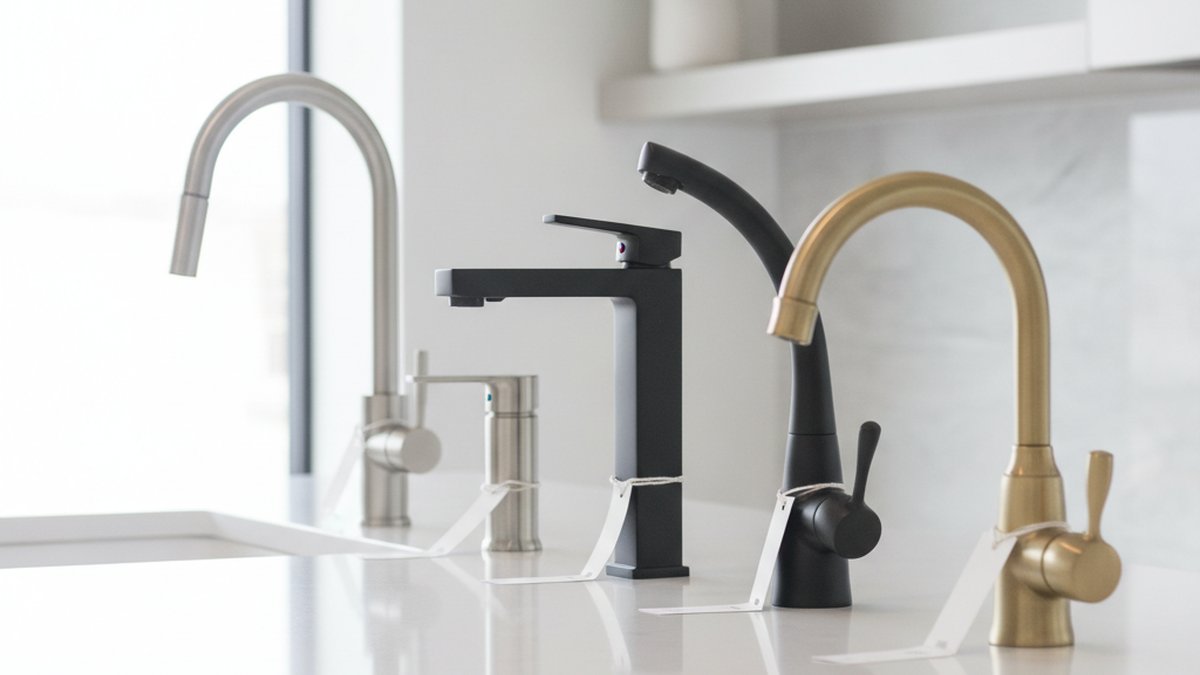
If you’ve been searching for the best value faucet brands, you’ve probably noticed the advice splits into two useless camps: “buy the cheapest one, they’re all the same,” or “spend $400 or you’re wasting your money.” Both are wrong. A faucet is a mechanical device you touch 20+ times a day for a decade, and the gap between a smart $150 buy and a regret-inducing $60 one usually comes down to three things you can actually check before you pay. This guide walks through which brands genuinely deliver on value, what separates them, and how to match a brand to your kitchen, bathroom, or tub project.
What actually makes a faucet “good value” — is it just the price?
No. Good value is the lowest total cost of ownership, not the lowest sticker price. A $70 faucet that drips in 18 months and needs a plumber’s visit ($150+) costs more than a $160 faucet that runs leak-free for 12 years. The brands that win on value nail the parts you can’t see from the showroom floor.
Here’s what to actually look for:
- Cartridge type: A ceramic-disc cartridge is the single most important durability feature. It resists hard-water grit far better than old rubber/compression washers and is the number-one reason cheap faucets drip early.
- Body material: Solid brass or stainless steel body beats zinc alloy (“ZAMAK”) or plastic. Brass resists corrosion and holds threads when you tighten fittings.
- Finish process: PVD (physical vapor deposition) finishes resist scratching and tarnishing dramatically better than cheaper electroplating, especially in matte black and brushed gold.
- Warranty: A genuine lifetime limited warranty on the finish and function tells you the brand expects the faucet to last. Short 1–5 year warranties are a quiet admission.
- Parts availability: Can you buy a replacement cartridge or aerator in two years? Big brands win here; no-name Amazon sellers often vanish.
Keep those five in mind and “value” stops being a guessing game. A brand earns the label when it gives you four or five of them at a mid-range price — not when it just undercuts everyone on the tag.
Which faucet brands give the best value in 2026?
For most U.S. homes in 2026, the best-value faucet brands are Moen, Delta, Pfister, Kohler (on sale), and direct-to-consumer makers like VIGA. Each wins a slightly different shopper, so the right pick depends on whether you care most about parts availability, finish selection, or getting brass construction without the big-name markup.
| Brand | Typical price range | Cartridge | Warranty | Best for |
|---|---|---|---|---|
| Moen | $120–$350 | Ceramic-disc (1255 series) | Lifetime limited | Easiest parts availability nationwide |
| Delta | $110–$320 | DIAMOND / ceramic-disc | Lifetime limited | Touch tech and spray performance |
| Pfister | $90–$250 | Ceramic-disc | Lifetime limited | Lowest price from a major brand |
| Kohler | $150–$450 | Ceramic-disc | Lifetime limited | Design and premium finishes (buy on sale) |
| VIGA | $80–$220 | Ceramic-disc | Limited warranty on finish & function | Solid-brass bodies and trend finishes without the premium markup |
A quick read of that table: if you want the absolute safest bet for finding a replacement part at any hardware store, Moen is hard to beat. If your budget is tight but you refuse to gamble on a no-name brand, Pfister and VIGA deliver real ceramic-disc cartridges and brass at the bottom of the price band. For a deeper head-to-head on the big three in the kitchen, our Moen vs Kohler vs Delta kitchen faucet breakdown compares spray patterns, cartridges, and real-world longevity side by side.
Are expensive German brands like Grohe and Hansgrohe worth the money?
Only if you value engineering polish and plan to keep the faucet 20+ years — for most shoppers they’re more faucet than you need. Grohe and Hansgrohe build genuinely excellent, buttery-smooth faucets with top-tier cartridges, but you’re paying $250–$600 for a refinement most people can’t feel day to day, plus pricier and harder-to-source replacement parts in the U.S.
Where they earn their keep: a wall-mounted or statement bathroom fixture you’ll look at every day, a high-use kitchen in a forever home, or a design where the specific finish and silhouette matter to you. Where they don’t: a rental, a secondary bathroom, or any build where you’d rather put that extra $300 toward tile or a better sink. If you’re weighing the European brands specifically, our bathroom brand roundup on Hansgrohe, Grohe, and INAX digs into who each one is actually for.
The honest takeaway: German brands are higher quality on paper, but “best value” rewards the sweet spot where quality and price meet. For the vast majority of American homes, that sweet spot sits with the mid-range brands, not the top shelf.
What’s the best value kitchen faucet brand under $200?
Under $200, the best value kitchen faucet brands are Moen, Delta, Pfister, and VIGA, because all four put a ceramic-disc cartridge and a pull-down spray head on a solid-feeling body at that price. The deciding factor is features: at $150–$200 you can get a dual-function spray head (stream + spray), a magnetic spray-head dock, and a spot-resist finish — don’t settle for less.
Here’s how to spend smart in that band:
- $80–$120: Single-handle pull-down with ceramic cartridge and basic brushed-nickel finish. Totally serviceable for a secondary kitchen or budget remodel.
- $120–$170: The value sweet spot — magnetic dock, dual-spray head, PVD finish, high-arc spout. This is where most people should buy.
- $170–$200: Add touch or touchless activation, a longer braided hose, or a premium matte-black/brushed-gold PVD finish.
One underrated value move: before you buy, confirm your sink’s hole configuration so you don’t need an awkward deck plate workaround. A pull-down faucet usually needs one hole (with an optional cover plate for three-hole sinks). Our guide on the right faucet hole size for your sink saves you a return trip — it applies well beyond Moen.
Is it worth buying a direct-to-consumer brand like VIGA instead of a hardware-store name?
Yes, if the brand is transparent about materials and backs the faucet with a real warranty — that’s exactly how direct-to-consumer makers deliver value. Brands like VIGA skip the retail middleman and the decades of marketing overhead baked into legacy-brand pricing, so a solid-brass body with a ceramic-disc cartridge and a PVD finish lands $40–$100 cheaper than an equivalent big-name model.
The catch to watch for with any direct brand: make sure you can get replacement cartridges and aerators, and read the warranty terms, not just the headline “lifetime” word. VIGA, as a dedicated faucet and bathroom-fixture manufacturer, publishes its material specs and finish warranty, and sells the small wear parts (cartridges, aerators, spray heads) you’ll eventually need — which is the real difference between a value brand and a disposable one.
Think of it this way: a hardware-store name buys you instant parts access at your local store. A good direct brand buys you better materials for the same money, as long as it ships parts quickly. Both are valid value plays — you’re just choosing which convenience matters more to you.
How long should a good-value faucet actually last?
A well-built faucet from a reputable value brand should last 10–15 years before it needs anything more than a cartridge or aerator swap — and the cartridge itself often lasts the whole time in soft-water areas. If a faucet dies in under five years, it was either a materials problem (zinc body, rubber washers) or an install/water-quality problem, not bad luck.
The two things that cut a faucet’s life short:
- Hard water: Mineral scale chews up aerators and can score a cartridge. It’s the leading cause of early drips and stiff handles.
- Poor installation: Overtightened connections crack fittings; under-tightened ones leak at the base.
Both are manageable. For hard-water homes, periodic descaling of the aerator and keeping an eye on the finish goes a long way — here’s how to remove hard-water stains without damaging the finish, and the same gentle approach protects a kitchen or bathroom faucet. The fact that a drip is usually a $15 cartridge rather than a new faucet is itself a point in favor of buying a brand that stocks parts.
Kitchen vs bathroom vs tub: does the best value brand change?
Somewhat — the ranking shifts by room because the demands change. In the kitchen, spray performance and a durable pull-down hose matter most, so Delta and Moen’s spray tech shines. In the bathroom, finish consistency across a suite (faucet, shower, accessories) and quiet operation matter more, which is where coordinated brands and value makers like VIGA do well. For tubs and specialty fixtures, fit and flow rate drive the decision more than brand prestige.
| Room | What matters most | Strong value picks |
|---|---|---|
| Kitchen | Spray head, hose durability, reach | Moen, Delta, VIGA |
| Bathroom | Finish match across suite, flow control | Kohler (on sale), Pfister, VIGA |
| Tub / freestanding | Flow rate, valve fit, spout style | Pfister, VIGA, Delta |
If you’re pricing out a full bathroom and want the two most-cross-shopped legacy names compared on the lav faucet specifically, our Moen vs Kohler bathroom faucet comparison lays out where each brand’s value actually lands. The broader point: don’t assume the brand that won your kitchen automatically wins your bathroom — match the brand to the room’s real demands.
How to choose the right value faucet in five minutes
Run any candidate through this quick checklist before you buy. If it passes all five, you’re getting genuine value regardless of brand name:
- Cartridge: Is it ceramic-disc? (Yes = buy. No = pass.)
- Body: Is it brass or stainless, not zinc or plastic?
- Finish: Is it PVD, especially for black or gold?
- Warranty: Lifetime limited on finish and function?
- Parts: Can you buy a replacement cartridge today?
Five yeses mean you’ve found a value faucet whether it costs $90 or $200. That’s the whole secret: the best value faucet brands aren’t a fixed list — they’re the ones that consistently pass this test at a fair price, and in 2026 that reliably means Moen, Delta, Pfister, Kohler on sale, and well-specified direct brands like VIGA.
FAQ
What is the most reliable budget faucet brand?
Pfister and VIGA are the most reliable brands at the low end because both use ceramic-disc cartridges and brass components even on their cheaper models, rather than switching to rubber washers and zinc to hit a price. Pfister is the easiest to find in stores; VIGA typically gives you more finish options and brass for the same money.
Are cheap faucets from Amazon worth buying?
Sometimes, but it’s a gamble. The risk isn’t the faucet failing immediately — it’s the no-name seller disappearing, leaving you unable to buy a replacement cartridge or aerator in two years. Stick to brands that publish material specs, offer a stated warranty, and sell wear parts separately. If those three boxes are checked, a lesser-known brand can be excellent value.
Do more expensive faucets really last longer?
Not linearly. The jump from a $60 faucet to a $150 faucet buys a huge durability upgrade (ceramic cartridge, brass body, PVD finish). The jump from $150 to $400 mostly buys design, finish refinement, and smoother feel — not proportionally more lifespan. Value lives in that first jump, which is why mid-range brands dominate “best value” lists.
What finish holds up best for the money?
A PVD brushed nickel or spot-resist stainless finish gives the best durability per dollar — it hides water spots and resists scratching with almost no maintenance. Matte black and brushed gold look fantastic but are only worth it in PVD; skip cheaply electroplated versions of those colors, which can fade or chip.
Can I replace just the cartridge instead of the whole faucet?
Yes, and you usually should. A dripping faucet is almost always a worn cartridge, not a dead faucet. A replacement cartridge runs $10–$30 and takes 15–30 minutes with basic tools. This is exactly why buying a brand with easy parts availability — Moen, Delta, Pfister, VIGA — is itself a value decision: one cheap part extends the faucet’s life by years.
Is VIGA a good value faucet brand?
VIGA is a strong value pick for shoppers who want solid-brass construction, ceramic-disc cartridges, and on-trend PVD finishes (matte black, brushed gold, brushed nickel) without legacy-brand pricing. As a dedicated faucet and bathroom-fixture manufacturer, VIGA backs its products with a stated finish-and-function warranty and stocks replacement wear parts, which is the practical difference between a value faucet and a disposable one.
About the author: This guide was written by the VIGA product and content team, drawing on hands-on testing of kitchen, bathroom, and tub fixtures across a range of price points and water conditions. We evaluate faucets the way a shopper actually uses them — cartridge feel, finish durability, spray performance, and real install fit.
About VIGA: VIGA (www.vigafaucet.com) is a manufacturer of faucets, shower systems, tub fillers, and bathroom accessories, specializing in solid-brass bodies, ceramic-disc cartridges, and PVD finishes. Our fixtures are built to meet recognized plumbing-fixture flow and material standards (including lead-free safe-drinking-water requirements), and are backed by a limited warranty covering both finish and function so the small wear parts that keep a faucet alive stay available for the long haul.
WeChat
Scan the QR Code with WeChat