 English
 Deutsch
 Français
 Italiano
 Español
 Português
 Nederlands
 Polski
 Русский
 日本語
日本語 한국어
한국어 العربية
 China Faucet Factory & OEM/ODM Faucet Manufacturer
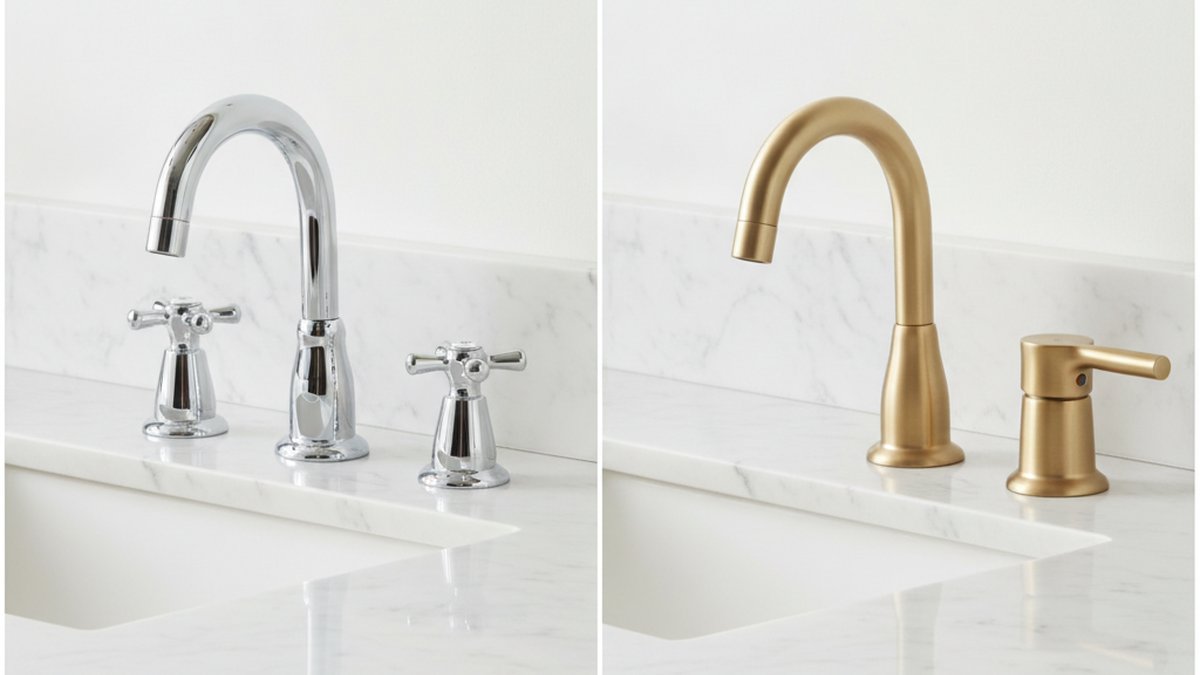
If you’re standing in the plumbing aisle — or scrolling three tabs deep — trying to settle the Moen vs Kohler bathroom faucet question, here’s the honest truth: you cannot buy a bad faucet from either brand. Both are U.S. household names, both meet the same safety and flow standards, and both will outlast the trends in your bathroom. The real decision comes down to five practical things: how easy it is to install and repair, how the valve cartridge is built, how long the finish lasts, how the styling fits your space, and what you actually get for the money. Let’s walk through each one like we’re standing at your sink together.
What’s the real difference between Moen and Kohler bathroom faucets?
The short answer: Moen is the serviceability and value leader, while Kohler is the design and build-quality leader. Moen builds faucets to be installed and fixed by ordinary homeowners, with tool-free connections and cartridges you can swap in ten minutes. Kohler builds faucets to feel like furniture — heavier metal, tighter tolerances, and a design catalog that architects and interior designers reach for.
Both brands cover the full price spectrum, from roughly $80 spec-grade faucets at the home center up to $600+ designer pieces. So this isn’t a “cheap vs premium” fight. It’s a difference in philosophy. Moen’s engineering answers the question “how do we make this dead-simple to live with?” Kohler’s engineering answers “how do we make this the nicest object on the vanity?” Neither answer is wrong — they’re just aimed at different buyers.
Here’s a way to think about it. If you’re the kind of person who wants to fix a drip on a Saturday morning without calling anyone, Moen is quietly built for you. If you’re renovating a primary bath, obsessing over the exact warmth of a brass finish, and want the faucet to match a curated suite of towel bars and drawer pulls, Kohler gives you more to work with.
Which brand is easier to install yourself?
Moen is easier to install for a first-time DIYer, full stop. Its Duralock and push-fit quick-connect systems on many models let you attach supply lines and secure the faucet with minimal tools, and the instructions are written for someone who has never done this before. Most people can set a Moen single-hole lavatory faucet in 30–45 minutes.
Kohler faucets aren’t hard to install — they’re just a little more traditional. You’re more likely to be tightening mounting nuts by hand up under the sink and threading standard compression connections. The payoff is a rock-solid, no-wobble mount, but the process assumes you’re comfortable working blind in a tight cabinet. Budget an hour for a first Kohler install, plus a basin wrench you’ll be glad you own.
A few install realities that apply to both brands:
- Match the hole configuration first. A single-hole faucet won’t cover a 3-hole (8-inch widespread) sink without a deck plate, and a widespread set needs three separate cutouts. Measure your sink’s hole spacing before you buy anything.
- Check your supply line length. Both brands sometimes ship with shorter braided lines; a $6 pair of 20-inch braided stainless connectors saves a second trip to the store.
- Don’t overtighten plastic mounting nuts. Snug plus a quarter turn is plenty — cranking them cracks the housing.
If your project involves getting a faucet to seat correctly on an existing sink, it’s worth understanding hole sizing in general — our guide on the right Moen faucet hole size for your sink explains the standard 1-3/8″ openings and deck-plate math that apply to bathroom faucets too.
How do the valve cartridges compare — and which lasts longer?
Both brands use durable ceramic-disc cartridges rated for hundreds of thousands of on/off cycles, so drips are rare on either. The practical difference is repairability: Moen’s 1225/1255-style cartridges are famously easy to source and replace, while Kohler’s ceramic valves are extremely reliable but a bit more model-specific when you do need a part.
This matters more than people expect. A faucet’s lifespan is really the lifespan of its valve. When a bathroom faucet finally drips after a decade, you almost never replace the whole fixture — you replace a $15–$40 cartridge. On that front:
- Moen: Cartridges are stocked at virtually every hardware store, and Moen will often mail you a replacement free under warranty. The pull-and-swap job is genuinely beginner-friendly with the plastic removal tool that ships in the kit.
- Kohler: The ceramic valves are excellent and rarely fail, but when you do need one you’ll usually order the specific part for your model. Availability is good, just not “grab-it-off-the-peg-tonight” good.
A dripping faucet isn’t always the cartridge, either — sometimes it’s a worn seat, a loose packing nut, or debris. If you’re troubleshooting before you buy a part, our walkthrough on how to fix a leak on a faucet yourself covers the diagnosis order so you don’t replace the wrong thing.
Moen vs Kohler bathroom faucet: side-by-side spec comparison
Here’s the quick, scannable version of how a Moen vs Kohler bathroom faucet stacks up on the factors that actually change your day-to-day experience. Treat these as brand tendencies across their mainstream lines, not absolutes for every single SKU.
| Factor | Moen | Kohler |
|---|---|---|
| Best for | Easy DIY, value, quick repairs | Designer styling, heft, finish depth |
| Typical build | Brass core with some engineered plastic | Heavier, more all-metal construction |
| Install ease | Excellent (quick-connect on many models) | Good (more traditional hardware) |
| Cartridge/parts access | Outstanding — stocked everywhere | Good — often model-specific |
| Signature finishes | Spot Resist Brushed Nickel, Matte Black, Chrome | Vibrant Brushed Moderne Brass, Polished Nickel, Titanium |
| Design range | Broad, mainstream-friendly | Broadest, most design-forward |
| Warranty | Lifetime limited (finish + function) for residential | Lifetime limited for residential |
| Typical price | ~$80–$400 | ~$120–$600+ |
Which finishes last longest, and do they really resist water spots?
Both brands offer PVD-coated finishes that resist tarnish and corrosion for the life of the faucet, but they market them differently. Moen’s headline feature is Spot Resist — a surface treatment that genuinely hides water spots and fingerprints, which is a real quality-of-life win in a hard-water bathroom. Kohler leans into finish beauty and range, with standouts like Vibrant Brushed Moderne Brass and Vibrant Polished Nickel that use a physical vapor deposition process for long-term durability.
What this means practically:
- If you have hard water, Moen’s Spot Resist Brushed Nickel is one of the easiest finishes to keep looking clean — a dry microfiber wipe usually does it.
- If you want a warm metallic like brushed brass or polished nickel, Kohler’s Vibrant range tends to have more depth and a slightly richer tone, and it pairs cleanly with matching accessories in the same suite.
- Matte black is offered by both and looks great, but it shows dried mineral spots faster than brushed finishes regardless of brand — plan on wiping it more often.
One thing people underestimate: the finish on the handle gets touched constantly, so handle material and coating matter as much as the spout. If you’re weighing warmer metals, our piece on whether a polished nickel faucet handle is worth it breaks down how these finishes wear at the highest-contact point.
No finish is truly immune to neglect, though. Hard water will eventually leave scale on any faucet if you let it sit. If your bathroom already fights mineral buildup, the same gentle, no-abrasive cleaning approach in our guide on removing hard water stains without damaging the finish applies directly to your Moen or Kohler lavatory faucet.
Are Moen and Kohler bathroom faucets water-efficient enough for a small bathroom?
Yes — both brands sell bathroom faucets that meet or beat the federal 1.2 GPM max for lavatory faucets, and many carry the EPA WaterSense label. For a powder room or a kid’s bath, either brand’s standard 1.2 GPM aerator gives you plenty of flow while cutting water use versus the old 2.2 GPM standard.
A few numbers to anchor this:
- Standard U.S. lavatory faucet flow is capped at 1.2 GPM at 60 psi; WaterSense models often run 1.0–1.2 GPM.
- Some California-compliant models drop to 0.5 GPM — great for saving water, but the stream feels noticeably softer.
- The aerator is a $5–$12 swappable part, so you’re not locked into whatever flow rate the faucet ships with.
If flow feel matters to you — say the faucet splashes in a shallow vessel sink, or the stream feels weak — the fix is almost always the aerator, not the faucet. Our roundup of the best bathroom faucet aerator for water savings and splash-free flow shows how to dial in a soft, non-splashing stream on any Moen or Kohler faucet you buy.
Which brand is the better value for the money?
For a straightforward, reliable bathroom faucet at the best price, Moen usually wins on value; for a statement fixture where the look and feel justify the spend, Kohler earns its premium. At the $80–$150 tier, Moen tends to give you more faucet — solid function, easy service, lifetime warranty — for fewer dollars. At the $250+ designer tier, Kohler’s heft, finish depth, and coordinated suites are what you’re paying for, and they deliver.
Think about it in three budget bands:
- Under $150 (rental, guest bath, budget remodel): Moen is the safe, smart pick. Easy install, easy repairs, spot-resist finishes, and parts on every shelf.
- $150–$300 (primary bath refresh): It’s a true toss-up. Pick on styling. If a specific Kohler design speaks to you, buy it; if not, Moen matches it on function.
- $300+ (designer renovation): Kohler’s catalog gives you more to fall in love with, plus matching accessories that make the room feel intentional.
One value factor people forget: total cost of ownership. Because Moen cartridges are so cheap and available, a Moen faucet is often cheaper to keep running for 20 years even if the sticker price is similar. Kohler closes that gap with sheer reliability — its valves just don’t fail often — but when you do need a specialty part, you’ll usually wait for shipping.
Where does VIGA fit into the Moen vs Kohler decision?
Straight answer: VIGA isn’t trying to sell you against Moen or Kohler — we manufacture and supply faucets and bathroom fixtures, and we’d rather you buy the right faucet than the loudest brand name. The reason we can compare these two fairly is that we live in the same world they do: the same ceramic-disc cartridge technology, the same PVD finishing processes, the same ASME/ANSI and NSF/ANSI 61 standards for drinking-water safety that any reputable bathroom faucet has to pass.
That production background is exactly why our advice above is specific instead of generic. We know why a heavier all-brass body feels more solid, why Spot Resist actually works, and why cartridge availability quietly decides a faucet’s real lifespan. If you want a sense of how the broader industry — including Kohler — is moving on design and sustainability, our ongoing coverage in bathroom brands in the news tracks where these companies are headed.
So which should you buy — Moen or Kohler?
Buy Moen if any of these sound like you: you’re installing it yourself, you want the least drama over the next 20 years, you have hard water and hate spotting, or you just want a great faucet at a fair price. Buy Kohler if you’re designing a room around the fixtures, you want the heaviest, most substantial faucet in your budget, or you’ve fallen for a specific finish like Vibrant Brushed Moderne Brass and want matching accessories to complete the look.
And if you’re truly torn between two similar models at a similar price? Go stand at a display and touch them. Turn the handle. The faucet whose action feels right to your hand is the one you’ll be happy with every morning for a decade — and both brands earn that daily satisfaction more often than not.
FAQ
Is Moen or Kohler better for a bathroom faucet overall?
Neither is universally “better” — Moen wins on easy installation, cheap and available repair parts, and value, while Kohler wins on build heft, finish depth, and designer styling. For a DIY-friendly, low-maintenance choice, pick Moen; for a statement fixture in a design-led remodel, pick Kohler.
Do Moen and Kohler bathroom faucets use the same size mounting holes?
Yes, both follow U.S. standards. Single-hole faucets fit a standard 1-3/8″ sink opening, and widespread sets use three holes spaced 8 inches apart (center to center). Always confirm your sink’s hole count and spacing before buying, since a single-hole faucet needs a deck plate to cover a 3-hole sink.
Which brand’s faucet is easier to repair when it drips?
Moen is easier to repair. Its 1225/1255-style cartridges are stocked at nearly every hardware store and are often replaced free under warranty, and the swap takes about ten minutes. Kohler’s ceramic valves rarely fail, but replacement parts are more model-specific and usually ordered rather than bought off the shelf.
Do both Moen and Kohler bathroom faucets come with a lifetime warranty?
Yes. Both offer a limited lifetime warranty covering finish and function for residential, non-commercial use, which is the industry standard for reputable brands. Keep your model number and proof of purchase, since both companies use those to ship replacement cartridges and parts quickly.
Are Moen and Kohler bathroom faucets WaterSense certified?
Many models from both brands are WaterSense certified, typically flowing 1.0–1.2 GPM versus the older 2.2 GPM standard. If a specific model isn’t labeled WaterSense, you can usually swap in a low-flow aerator for a few dollars to cut water use without replacing the faucet.
Is a Moen or Kohler faucet worth it over a cheaper brand?
For a faucet you’ll use daily for 15–20 years, yes — the durable ceramic cartridges, corrosion-resistant PVD finishes, and lifetime warranties from Moen and Kohler make them worth the modest premium over bargain fixtures. The biggest long-term advantage is parts availability and warranty support, which keeps the faucet running long after a no-name unit would be in a landfill.
Author note: This guide was written by VIGA’s product team, drawing on hands-on faucet manufacturing and finishing experience and on installing and servicing hundreds of bathroom faucets across different water conditions. VIGA designs and produces faucets and bathroom fixtures built to the same NSF/ANSI 61 drinking-water-safety and ASME/ANSI performance standards referenced above, and every finish we ship is PVD-tested for long-term durability. We recommend the brand that fits your project — not the one with the biggest ad budget.
WeChat
Scan the QR Code with WeChat