 English
 Deutsch
 Français
 Italiano
 Español
 Português
 Nederlands
 Polski
 Русский
 日本語
日本語 한국어
한국어 العربية
 China Faucet Factory & OEM/ODM Faucet Manufacturer
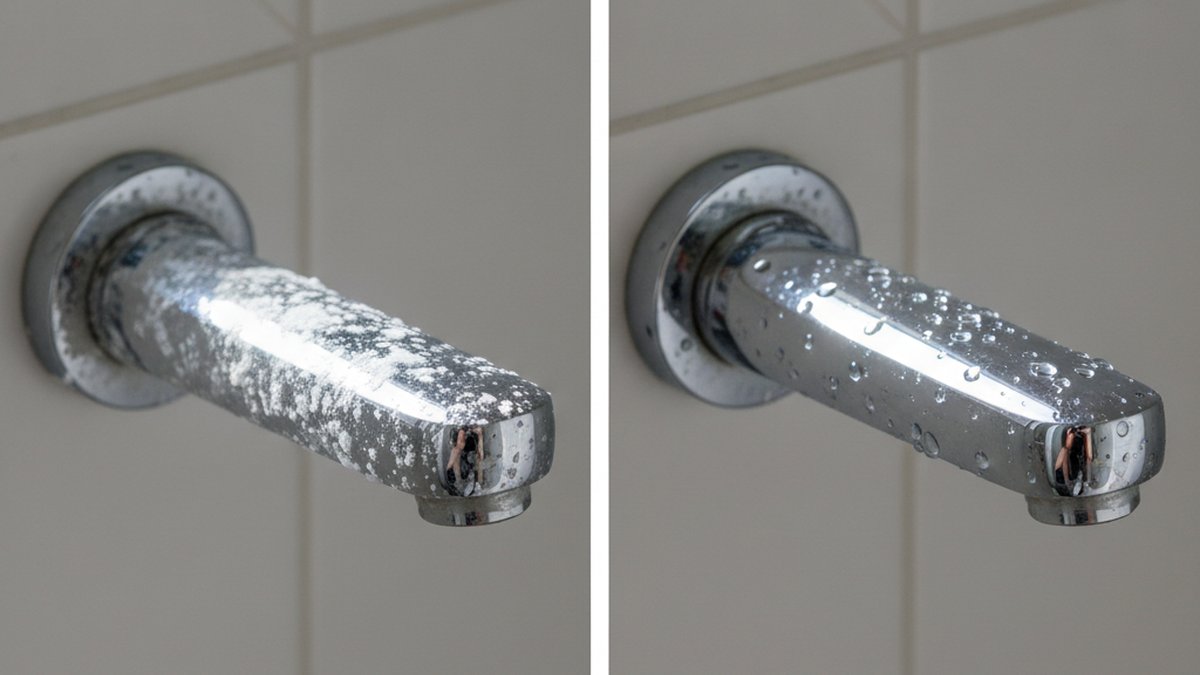
If you’ve been wondering how to remove hard water stains from a shower faucet, the honest answer is that it’s usually a 30-minute job with stuff already in your kitchen — not a call to the plumber and not a reason to replace the fixture. Those chalky white crusts, the cloudy film over your chrome, the greenish-white gunk around the base of the spout: that’s limescale, a buildup of calcium and magnesium left behind when hard water evaporates. It looks permanent. It almost never is. Below, I’ll walk you through exactly what to use, what to never use, and how to keep it from coming back — the way I’d explain it to a friend standing in their bathroom holding a spray bottle and looking defeated.
What Actually Causes Those White Crusty Stains on My Shower Faucet?
Hard water stains are mineral deposits — mostly calcium carbonate and magnesium — that get left behind every time hard water dries on your faucet. The water evaporates; the dissolved minerals don’t. Over weeks they harden into that stubborn white or greenish crust called limescale.
Here’s the part most people miss: the stain isn’t on the finish so much as it’s a rocky mineral layer sitting on top of it. That’s good news, because it means you’re dissolving a deposit, not repairing damaged metal. The trick is using a mild acid — vinegar or citric acid — that reacts with the alkaline minerals and breaks them apart, without being strong enough to eat the faucet’s protective coating.
How fast it builds depends on your water hardness. If your area runs above about 7 grains per gallon (roughly 120 mg/L), you’re in “hard water” territory and you’ll see spotting within days of cleaning. Above 10 grains, you’re fighting it constantly. Knowing your number tells you whether this is a monthly wipe-down or a reason to think about a whole-house softener down the line.
What’s the Fastest Way to Remove Hard Water Stains From a Shower Faucet?
The fastest reliable method is a warm white vinegar soak. Heat white vinegar until it’s warm (not boiling), soak a microfiber cloth or paper towels in it, wrap the cloth tightly around the stained faucet, and leave it for 30–60 minutes. The warmth and acidity dissolve the limescale so it wipes away instead of needing to be scraped.
For handles, spouts, and anything with an awkward shape, the plastic-bag trick beats a cloth. Fill a sturdy sandwich bag with warm vinegar, slip it over the faucet or handle so the stained parts are fully submerged, and secure it with a rubber band. Now the entire fixture — including the underside you can’t reach with a rag — is soaking at once.
Here’s the step-by-step I use:
- Warm the vinegar. 30–60 seconds in the microwave. Warm acid works two to three times faster than cold.
- Wrap or bag the faucet. Cloth for flat surfaces, a bagged soak for handles and spouts.
- Wait 30–60 minutes. Heavy buildup may want a full hour; check progress at 30.
- Scrub gently. A soft-bristle toothbrush lifts loosened deposits out of grooves and around the base.
- Rinse and dry. Rinse thoroughly with clean water, then buff dry with a microfiber cloth so no new spots form.
Nine times out of ten, that’s the whole job. The one time it isn’t, you move up to a paste — which is the next section.
How Do I Get Rid of Stubborn, Caked-On Limescale That Won’t Wipe Off?
For thick, caked-on limescale that survives a vinegar soak, make a paste of baking soda and white vinegar, apply it directly to the buildup, let it sit 10–15 minutes, then scrub with a soft toothbrush. The paste clings to vertical and curved surfaces where liquid vinegar just runs off, giving the acid time to work.
Mix about three parts baking soda to one part vinegar until it’s a thick, spreadable paste (it’ll fizz — that’s normal and harmless). Smear it onto the worst spots, wait, then work it with the brush in small circles. For deposits packed into the gap where the spout meets the wall, an old toothbrush or even a wooden toothpick gets into the seam without scratching.
If you’d rather buy something, a dedicated limescale remover like CLR or Lime-A-Way works too — but read the label first. Many commercial descalers are explicitly not rated for brushed nickel, bronze, matte black, or gold-tone finishes, and they’ll dull or discolor them fast. When in doubt, vinegar and citric acid are the gentler, finish-safe choice.
Whatever you do, do not reach for a metal scouring pad, a Magic Eraser on brushed finishes, or a knife to scrape. You’ll win the battle against the stain and permanently scratch the faucet’s protective clear coat, which just means it stains faster next time.
Which Cleaner Is Right for My Faucet’s Finish?
The single most important rule: match the cleaner to the finish. A chrome faucet shrugs off vinegar all day; a matte black or brushed gold faucet can be permanently dulled by the wrong acid or an abrasive pad. Here’s a quick reference before you spray anything.
| Finish | Safe cleaner | Avoid | Notes |
|---|---|---|---|
| Polished chrome | White vinegar, citric acid | Steel wool, harsh scrubbing | Most forgiving; hides spots least, so wipe dry |
| Brushed nickel | Diluted vinegar, mild soap | Ammonia, abrasive pads | Wipe along the grain, not across it |
| Matte black | Mild soap, water, soft cloth | Vinegar, CLR, Magic Eraser | Acids and abrasives cause blotchy fading |
| Brushed/champagne gold | Mild soap, water | Vinegar, commercial descalers | PVD coating scratches; test hidden spot first |
| Oil-rubbed bronze | Damp cloth, tiny bit of soap | Any acid, any abrasive | Living finish — cleaning can strip patina |
For matte black and gold especially, when vinegar is off the table, lean on a longer soak with plain warm water and a little dish soap, plus patience and a soft toothbrush. It’s slower, but it won’t wreck a finish you paid extra for. If you’re unsure what finish you actually have, our guide on whether a polished nickel faucet handle is worth it and how to choose one walks through how different finishes behave day to day.
Why Does My Shower Faucet Still Feel Rough or Clogged After Cleaning?
If the surface looks clean but water still sputters or the faucet feels gritty, the limescale has moved inside — into the aerator, the handle, or the valve. Surface cleaning won’t fix flow problems, because the deposits are clogging the small internal openings the water passes through.
Start with the aerator if your fixture has one. Unscrew it (usually by hand or with a cloth-wrapped wrench so you don’t scratch it), drop the parts in a cup of warm vinegar for 30 minutes, brush out the loosened bits, and reassemble. A clogged aerator is the number-one cause of weak, uneven flow, and it’s a five-minute fix. Our rundown of the best bathroom faucet aerator for water savings and splash-free flow covers what to look for if yours is beyond saving.
If flow is still bad after descaling the aerator, or the handle grinds and drips, the mineral buildup has likely reached the cartridge or valve — and at that point you’re doing a repair, not a cleaning. That’s not scary; it’s a common DIY job. If you’re seeing drips as well as buildup, our guide on how to fix a leak on a faucet yourself without calling a plumber and the walkthrough on installing a Moen shower valve extension the right way will take you the rest of the way.
How Do I Stop Hard Water Stains From Coming Back So Fast?
The only real way to stop hard water stains is to remove the water before it can dry and leave minerals behind. A 15-second squeegee-and-wipe after your shower does more than any monthly deep clean, because it eliminates the evaporation step where limescale forms in the first place.
A few habits that genuinely move the needle:
- Keep a microfiber cloth in the shower and wipe the faucet dry after the last person uses it. This alone can cut visible spotting by most of what you’re seeing.
- Do a light vinegar wipe weekly (on vinegar-safe finishes) so deposits never get a chance to harden into crust.
- Apply a car wax or dedicated fixture polish to chrome once a season — it creates a slick barrier that water beads off instead of clinging to.
- Consider a shower head filter or whole-house softener if your water is very hard. It’s the only fix that treats the cause, not the symptom, and it protects your water heater and pipes too.
Think of it like teeth: a quick daily habit prevents the buildup that would otherwise need aggressive scrubbing later. Two minutes a week beats an hour of scraping every few months.
When Is a Stain Actually Permanent Damage — and Time to Replace the Faucet?
Most of the time the finish underneath is fine — but if you see pitting, flaking, or dull patches that stay even after the mineral crust is gone, the protective coating itself has been etched, and no cleaner will bring it back. That’s usually the result of harsh chemicals or abrasive scrubbing over time, not the hard water itself.
Signs you’re looking at replacement, not cleaning:
- Rough or flaking finish that persists after descaling
- Green or dark corrosion at the base that returns within days
- Constant dripping plus visible buildup — the internal seals are shot
- Discoloration under a brushed or matte finish that won’t buff out
If it’s time for a new fixture, this is the moment to buy quality — a solid brass body with a proper PVD or triple-plated finish resists scaling far better than a cheap zinc-alloy faucet, and it’ll survive years of the exact cleaning you’re doing now. VIGA’s shower and bathroom fixtures are built around solid brass bodies and tested finishes for exactly this reason.
FAQ
Can I use vinegar on a brushed nickel or matte black shower faucet?
On brushed nickel, yes — but dilute it (half vinegar, half water), wipe along the grain, and rinse well. On matte black or brushed gold, no. Acids can leave blotchy, faded patches on those coatings. Use mild dish soap and warm water instead, and give it a longer soak to make up for the gentler cleaner.
Will hard water stains ruin my faucet permanently?
Not the stains themselves — limescale sits on top of the finish and comes off with the right acid. Permanent damage usually comes from the wrong cleaning: steel wool, harsh descalers on delicate finishes, or scraping with metal tools. Those scratch the protective coating, and that’s what’s actually permanent.
How long should I let vinegar sit on hard water stains?
Warm vinegar needs about 30 minutes for typical buildup and up to an hour for heavy, caked-on limescale. Check at the 30-minute mark: if deposits wipe away with a soft brush, you’re done; if they still resist, re-wet the cloth and give it another 20–30 minutes rather than scrubbing harder.
What’s the best cleaner for hard water stains if I don’t want to use vinegar?
Citric acid powder dissolved in warm water is an excellent, nearly odorless alternative that’s gentler on finishes than commercial descalers. For finishes that can’t take any acid, a paste of baking soda and water plus patience and a soft toothbrush is the safest route.
How often should I clean my shower faucet to prevent buildup?
A quick dry-wipe after showers plus a light weekly cleaning keeps limescale from ever hardening. If your water is very hard (above 10 grains per gallon), bump the wipe-down to a habit after every use — it’s faster than the deep scrub you’d otherwise need monthly.
Does a water softener really stop faucet stains?
Yes — it’s the only method that treats the cause. A softener removes the calcium and magnesium before the water ever reaches your faucet, so nothing is left behind to dry into scale. It also protects your water heater, shower head, and pipes, which makes it worth considering if you’re fighting hard water everywhere in the house.
A Note on Expertise, Testing, and Warranty
Author note: This guide was written by VIGA’s product and after-sales team, who field real customer questions about finish care and limescale every week and test cleaning methods on the same chrome, brushed nickel, matte black, and PVD gold finishes we manufacture. The advice here reflects what actually holds up on real fixtures — not just what sounds good on paper.
About VIGA: VIGA is a manufacturer of faucets, shower systems, and bathroom fixtures built around solid brass bodies and durability-tested finishes. Our finishes are salt-spray and abrasion tested to international standards so they resist the corrosion and scaling that hard water accelerates, and our fixtures are backed by a manufacturer’s warranty on finish and function. If a stain ever turns out to be a finish defect rather than surface limescale, that’s exactly what the warranty is there for — reach out to our support team at www.vigafaucet.com before assuming a fixture is beyond saving.
WeChat
Scan the QR Code with WeChat