 English
 Deutsch
 Français
 Italiano
 Español
 Português
 Nederlands
 Polski
 Русский
 日本語
日本語 한국어
한국어 العربية
 China Faucet Factory & OEM/ODM Faucet Manufacturer
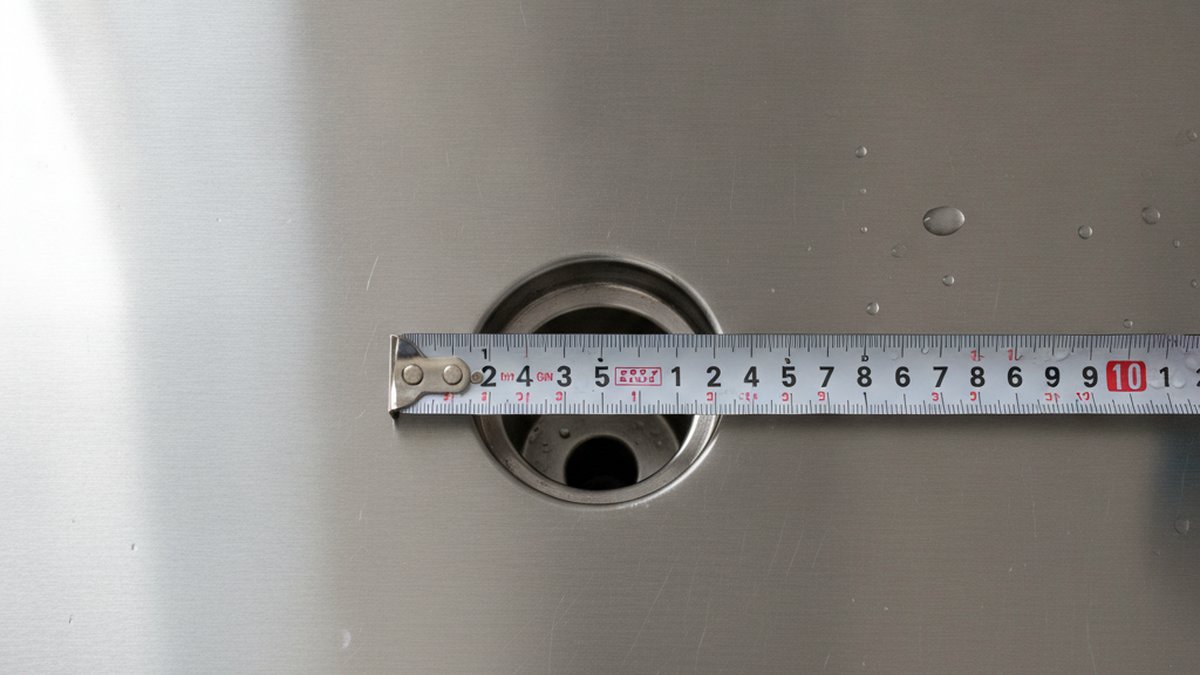
If you’re staring at your sink wondering about the Moen kitchen faucet hole size you actually need, here’s the short version: the mounting hole diameter should be 1-3/8″ to 1-1/2″, and the number of holes in your sink or countertop determines whether you install the faucet as a sleek single-hole unit or dress it up with a deck plate. Get those two measurements right and installation is a 30-minute job. Get them wrong and you’re either drilling porcelain or shopping for a plumbing part on a Sunday afternoon.
This guide walks through the exact numbers, how to measure, what to do if your holes don’t match, and the small install details that trip people up. It’s written the way I’d explain it to a friend leaning over their kitchen sink — no fluff, just the specs and the reasoning behind them.
What size hole does a Moen kitchen faucet need?
A Moen kitchen faucet needs a mounting hole that is 1-3/8″ (1.375″, ~35 mm) at minimum and up to 1-1/2″ (1.5″, ~38 mm) at maximum. That’s the diameter of the round cutout the faucet body drops through — not the spacing between holes, and not the number of holes.
Moen states this range in the spec sheet for virtually every modern kitchen faucet they sell, from the budget single-handle models to the high-arc pull-downs. The reason for the range is simple: the threaded shank and the mounting hardware are engineered to clamp onto a deck (sink or countertop) whose hole falls anywhere in that window. A 1-3/8″ hole is the tightest acceptable fit; a 1-1/2″ hole gives you a little wiggle room to seat the faucet before you tighten the mounting nut underneath.
Here’s the practical takeaway: if your sink already has holes drilled by the manufacturer, they’re almost certainly within this range already, because 1-3/8″ is the North American standard for kitchen faucet cutouts. Where people run into trouble is with custom countertops (granite, quartz, butcher block) drilled by a fabricator, or old sinks where a previous faucet used a non-standard base.
Why is the standard 1-3/8 inch and not something round like 1-1/4?
The 1-3/8″ standard exists because it comfortably clears the threaded shank plus the supply lines and the pull-down hose that now run through the same hole on most kitchen faucets. Older two-handle faucets from decades ago sometimes used narrower holes, but once single-handle and pull-down designs became the norm, the industry settled on 1-3/8″ as the minimum that lets the hose and quick-connect fittings pass through cleanly. Moen, Delta, Kohler, and most major brands all publish the same 1-3/8″–1-1/2″ range, which is why faucets are largely cross-compatible on hole diameter.
How many holes do I need for a Moen kitchen faucet?
You need anywhere from 1 to 4 holes, and most Moen kitchen faucets adapt to all of them thanks to an included deck plate (also called an escutcheon). A single-hole faucet installs cleanly in one hole; if your sink has 3 or 4 holes, you snap on the deck plate to hide the unused ones.
Kitchen sinks are typically pre-drilled in one of these configurations, and the hole count is really about what accessories you want to keep:
- 1 hole: Just the faucet. Cleanest, most modern look. Common on newer sinks and undermount installs.
- 2 holes: Faucet + one accessory (usually a side sprayer or a soap dispenser).
- 3 holes: The old-school standard — faucet in the center, plus two side holes for a sprayer and/or soap dispenser, usually on 4″ or 8″ centers.
- 4 holes: Faucet, side sprayer, soap dispenser, and an air gap or hot/cold filtered water tap.
The genius of the deck plate is that it lets a modern single-hole faucet retrofit into an old 3-hole sink without any drilling or patching. You mount the faucet through the center hole, lay the deck plate over all three, and the extra holes disappear. If you’d rather keep the extra holes open for a soap dispenser or a filtered-water tap, you just skip the deck plate and use them.
Can I put a single-hole Moen faucet on a 3-hole sink?
Yes — this is one of the most common upgrades people make, and it’s straightforward. Use the deck plate that comes with (or is available for) your Moen faucet: it’s typically a 10″ escutcheon designed to span the standard 8″ three-hole spread. Mount the faucet in the center hole, set the deck plate over the top, and the outer two holes are covered. No plumbing skill beyond basic faucet install is required. If your faucet didn’t include a deck plate, Moen sells them as a separate accessory sized to match — just confirm it fits the 8″ spread most kitchen sinks use.
How do I measure my sink’s faucet hole size correctly?
Measure the inside diameter of the mounting hole with a tape measure or calipers, edge to edge across the widest point. You’re looking for a number between 1-3/8″ and 1-1/2″. Then measure the center-to-center distance between holes if you have more than one — that’s your “spread,” and it’s usually 4″ or 8″.
Do it in this order and you won’t miss anything:
- Clear the deck. Remove any existing faucet or plug so you can see the bare hole.
- Measure the hole diameter. Lay a tape measure across the opening at its widest point. Record it in inches — most will read right around 1-3/8″.
- Count the holes. One, two, three, or four. Look closely — some sinks have holes hidden under a metal cap or a soap dispenser you forgot about.
- Measure the spread. If you have multiple holes, measure center-to-center between the outermost ones. 4″ spread = centerset territory; 8″ spread = widespread.
- Check deck thickness. Measure how thick your countertop or sink deck is. Moen mounting hardware typically handles up to about 2-1/2″ of combined deck thickness — thick granite or a mounting ring can eat into that.
That last point matters more than people expect. On a thick stone countertop, the threaded shank has to be long enough to reach through the stone and still let the mounting nut grab. Most Moen faucets accommodate standard counters fine, but if you’re mounting on 3 cm granite plus a sink deck, double-check the spec sheet’s maximum deck thickness.
What if my hole is too small or too big for the faucet?
If your hole is too small (under 1-3/8″), you’ll need to enlarge it; if it’s too big (over 1-1/2″), you cover the excess with a deck plate or a base-plate gasket. Neither is a dealbreaker, but they require different fixes.
Hole too small: This usually happens with old sinks or fabricator-drilled countertops. For stainless steel sinks, a step drill bit (unibit) opens the hole cleanly. For porcelain, cast iron, granite, or quartz, you need a diamond hole saw and a steady, water-cooled hand — or, honestly, a call to a countertop pro, because cracking a stone counter is an expensive mistake. Never force a faucet into an undersized hole.
Hole too big: Far more forgiving. If the hole is oversized or the countertop cutout got a little generous, a deck plate covers it visually, and the faucet’s own base gasket plus a mounting bracket underneath still clamp securely. Many pull-down Moen faucets include an oversized escutcheon for exactly this reason.
| Situation | What you’re measuring | Target number | Fix if it’s off |
|---|---|---|---|
| Faucet won’t drop in | Hole diameter | 1-3/8″ to 1-1/2″ | Enlarge with step bit (steel) or diamond hole saw (stone/porcelain) |
| Faucet base wobbles / gap shows | Hole diameter vs. base | Hole ≤ 1-1/2″ | Add deck plate or larger base gasket |
| Extra holes in sink | Hole count | Match faucet config | Cover with deck plate or hole cover cap |
| Deck plate doesn’t span holes | Center-to-center spread | 4″ or 8″ | Buy escutcheon sized to your spread |
| Mounting nut won’t reach | Deck thickness | Under ~2-1/2″ | Confirm shank length on spec sheet before buying |
Does Moen hole size differ from Delta, Kohler, or VIGA faucets?
No — the mounting hole size is essentially the same across all major brands. Moen, Delta, Kohler, and VIGA kitchen faucets all target the 1-3/8″ to 1-1/2″ hole diameter and the standard 1-, 3-, or 4-hole sink layouts. That’s what makes swapping brands so painless.
This industry-wide standardization is deliberate. Because the plumbing rough-in and sink hole standards are shared, you can pull out a 15-year-old Moen and drop in a new faucet from a different brand without touching the sink. The differences between brands show up in the mounting hardware design, the finish options, the spray head technology, and the warranty — not in whether the faucet physically fits the hole.
| Brand | Standard hole diameter | Hole configs supported | Deck plate included? |
|---|---|---|---|
| Moen | 1-3/8″ – 1-1/2″ | 1 to 4 holes | Usually, on single-hole models |
| Delta | 1-3/8″ – 1-1/2″ | 1 to 4 holes | Often included |
| Kohler | 1-3/8″ – 1-1/2″ | 1 to 4 holes | Model-dependent |
| VIGA | 1-3/8″ – 1-1/2″ | 1 to 3 holes | Included on single-hole models |
So if you’ve measured your sink for a Moen and later decide you’d rather have a different look or a better price, your measurements still hold. That flexibility is worth keeping in mind — the hole size research you do now applies to whatever faucet you eventually buy. If you’re weighing pull-out versus pull-down styles for that same hole, our breakdown of the Atom pull-down kitchen faucet upright style walks through how the spray-head design affects clearance, and our guide to buying a pull-out kitchen faucet covers where those single-hole models make the most sense.
What install mistakes cause leaks even when the hole size is right?
The most common leaks after a correct-hole-size install come from a poorly seated base gasket, an under-tightened mounting nut, or supply line connections that weren’t hand-tightened plus a quarter turn. Hole size gets you the fit; the seal comes from the assembly underneath.
Here’s where people slip up, even with a perfect 1-3/8″ hole:
- Skipping or misaligning the base gasket. That rubber or silicone ring under the faucet base is what keeps water from seeping down into the cabinet. If it’s pinched, folded, or missing, you’ll get water pooling around the base.
- Not fully tightening the mounting nut. A loose faucet body rocks over time, breaking the seal and eventually the supply connections. Snug it firmly, but don’t crank plastic nuts to the point of cracking.
- Over- or under-tightening supply lines. Braided stainless supply lines need to be hand-tight plus about a quarter turn with a wrench. Gorilla-tightening strips the fitting; too loose weeps.
- Forgetting thread tape where it’s called for. Most modern quick-connects don’t need it, but any tapered pipe thread joint benefits from a few wraps of PTFE tape.
If you do spot water later, don’t panic — base leaks are usually a re-seat-and-tighten job, not a full re-install. Our walkthrough on why a sink leaks from the faucet base traces the exact causes, and if the drip is coming from the faucet itself rather than the deck, the guide to fixing a faucet leak without calling a plumber covers cartridge and O-ring fixes step by step.
Do I need a plumber to change the hole size or install the faucet?
For a standard faucet swap where the hole size already matches, no — it’s a confident DIY job with an adjustable wrench and basin wrench, usually under an hour. You’d want a pro only if you’re enlarging a hole in stone, quartz, or porcelain, where cracking the material is a real and costly risk. Enlarging a stainless steel sink hole with a step bit is DIY-friendly; drilling granite is not, unless you have a diamond hole saw and experience.
Quick buying checklist before you order
Before you click buy on any Moen kitchen faucet, confirm these five things so the faucet fits the first time:
- Hole diameter is 1-3/8″ to 1-1/2″. ✔
- Hole count on your sink matches — or the faucet includes a deck plate to cover extras. ✔
- Spread (if multi-hole) is 4″ or 8″, and any deck plate you buy matches it. ✔
- Deck thickness is within the faucet’s maximum shank reach. ✔
- Accessories (soap dispenser, filtered tap) have holes reserved if you want them. ✔
Nail those five and installation becomes the easy part. The overwhelming majority of “this faucet doesn’t fit!” complaints trace back to skipping the deck-thickness check or assuming a single-hole faucet can’t work on a multi-hole sink — both of which are solved by the notes above.
FAQ
What is the standard Moen kitchen faucet hole size?
The standard mounting hole for a Moen kitchen faucet is 1-3/8″ (1.375″, about 35 mm) in diameter at minimum, and it can go up to 1-1/2″ (1.5″, about 38 mm). This is the same standard used by Delta, Kohler, and most major brands, so faucets are broadly interchangeable on hole diameter.
Will a Moen kitchen faucet fit a 4-hole sink?
Yes. Most Moen kitchen faucets fit sinks with 1 to 4 holes. On a 4-hole sink you can use the extra holes for a side sprayer, soap dispenser, and filtered-water tap, or cover the ones you don’t need with a deck plate or individual hole cover caps.
Can I install a single-hole Moen faucet without a deck plate?
Absolutely — if your sink or countertop has just one hole, install the faucet directly with no deck plate for the cleanest modern look. The deck plate is only needed when you want to cover extra holes on a 3- or 4-hole sink.
What size hole do I drill for a Moen kitchen faucet in a new countertop?
Drill a 1-3/8″ hole for the tightest standard fit, or up to 1-1/2″ if you want a little clearance. For stainless steel sinks use a step drill bit; for granite, quartz, or porcelain use a water-cooled diamond hole saw, or hire a countertop fabricator to avoid cracking the material.
How do I cover an extra faucet hole I’m not using?
Use a deck plate that spans the holes, or install a stainless steel hole cover cap sized to your hole diameter (typically 1-3/8″). Both give a finished look and keep water and debris out of the cabinet below. A base plate is the tidier option when the extra holes sit close to the faucet.
Does a thicker granite countertop affect faucet hole fit?
The hole diameter stays the same (1-3/8″–1-1/2″), but a thick countertop affects whether the mounting hardware can reach through and clamp. Most Moen faucets handle standard deck thicknesses up to roughly 2-1/2″; on thick stone plus a sink deck, verify the maximum deck thickness on the spec sheet before buying.
About the author: This guide was written by the VIGA fixtures team, drawing on hands-on install experience across single-hole, centerset, and widespread kitchen faucet configurations. We measure, test-fit, and install these faucets ourselves before we write about them.
About VIGA: VIGA is a manufacturer and online retailer of kitchen and bathroom faucets, shower systems, and fixtures at www.vigafaucet.com. Our faucets are built to standard North American 1-3/8″ mounting specifications, pressure-tested before shipping, and backed by a manufacturer warranty. We follow the same ANSI/ASME and cUPC-aligned mounting and flow standards the major brands use, so a VIGA faucet drops into the same hole your old one came out of.
WeChat
Scan the QR Code with WeChat