 English
 Deutsch
 Français
 Italiano
 Español
 Português
 Nederlands
 Polski
 Русский
 日本語
日本語 한국어
한국어 العربية
 China Faucet Factory & OEM/ODM Faucet Manufacturer
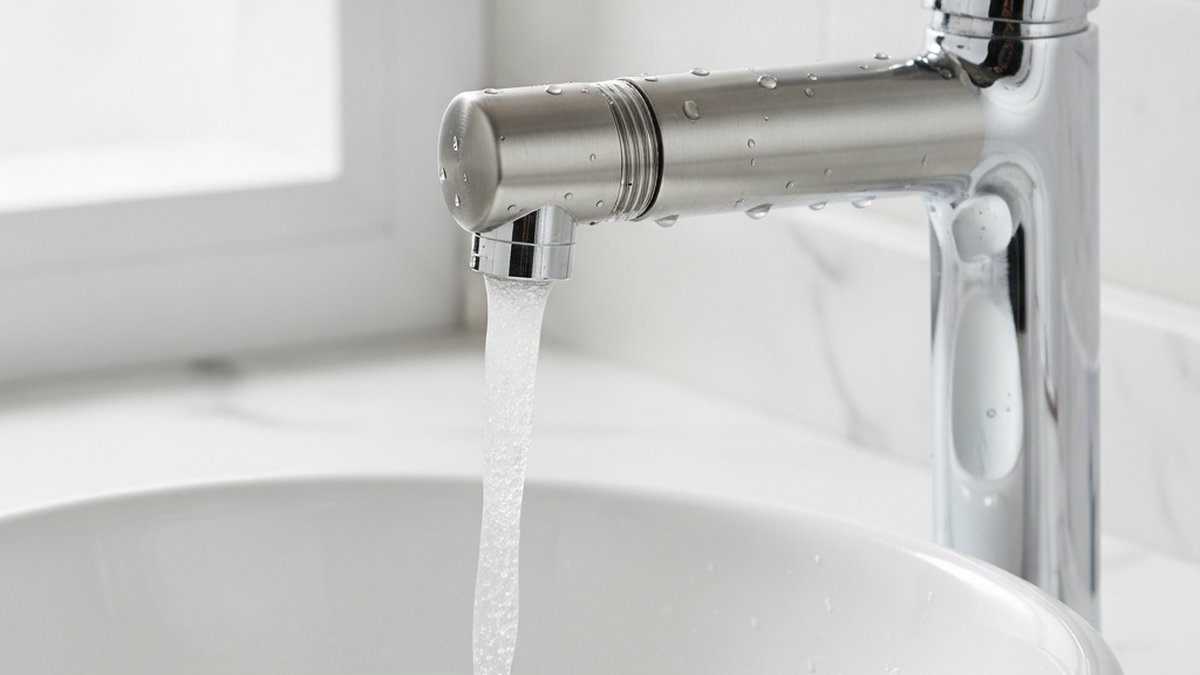
If your sink is cramped and the water pours down right at the back edge, a brushed nickel tap extender is the cheapest fix that actually works — you screw it onto the tip of your faucet and it relocates the water stream forward and up, so you’re no longer smashing your knuckles against porcelain every time you rinse. It’s the same idea as swapping an aerator, except instead of just changing the spray, it changes where the water lands. Below, I’ll walk through who genuinely needs one, how to size it, the different styles, and how to avoid the two mistakes that make people return them.
What exactly is a brushed nickel tap extender, and how does it work?
A tap extender is a small metal or metal-look tube that threads onto the end of your faucet spout, extending the water outlet outward (and usually angling it slightly downward) so the stream clears the front lip of the basin. The “brushed nickel” part just refers to the finish — a warm, satin gray that hides water spots and fingerprints far better than polished chrome, and matches the most common bathroom hardware finish sold in North America.
Mechanically, it’s dead simple. Your faucet tip has a threaded end where the aerator lives. You unscrew the aerator, screw the extender on in its place, and then screw the aerator (or the extender’s own built-in aerator) onto the front of the extender. Water now exits 2–5 inches further forward. Most extenders also add a slight bend, so the stream drops into the center of the bowl instead of hugging the back.
The key thing to understand: an extender doesn’t add water pressure and it doesn’t give you a pull-down sprayer. It solves exactly one problem — reach. If your complaint is “the water comes out too far back” or “I can’t fit a cup under my tap,” this is the right tool. If your complaint is “low pressure” or “I want a spray function,” it isn’t.
Extender vs. aerator vs. adapter — what’s the difference?
These three get confused constantly because they all screw onto the same spot. An aerator mixes air into the water to soften the stream and cut splashing; it doesn’t move the stream. An adapter changes the thread type or size so you can attach something else (a hose, a filter, a sprayer). An extender physically relocates the outlet. If you’re trying to figure out threading and connections generally, our guide to what a faucet L adapter is and how to pick the right one covers the fittings side in detail, and it’s worth a read before you buy anything that screws onto your spout — because thread size is where most people go wrong.
| Attachment | What it does | Best for | Typical price |
|---|---|---|---|
| Tap extender | Moves the water outlet 2–5″ forward/up | Shallow sinks, kids, filling bottles | $8–$30 |
| Aerator | Adds air, reduces splash & flow | Splashy taps, water saving | $4–$15 |
| Adapter | Changes thread size/type | Attaching hoses, filters, sprayers | $5–$20 |
| Swivel extender | Extends + rotates 360° | Two-sink setups, washing hair | $12–$35 |
Who actually needs one? (And who’s better off replacing the faucet)
You need a tap extender if your existing faucet works fine but sits too far back, too low, or dumps water where you don’t want it. That’s it — it’s a targeting fix, not a repair. The most common real scenarios I hear:
- Small or shallow bathroom basins where the spout barely clears the back wall and water splashes straight down the drain edge.
- Homes with small kids — an extender (especially a swivel one) brings the water forward so little hands reach it without climbing.
- Filling tall cups, water bottles, or pet bowls that won’t fit under a low spout.
- Elderly or mobility-limited users who can’t lean deep into a basin comfortably.
- Rentals, where you can’t replace the faucet but want it to work better — and can unscrew the extender and take it with you when you leave.
Who should skip it? If your faucet leaks, drips, or has genuinely weak flow, an extender won’t fix any of that — you’re better off repairing or replacing. And if you’re already unhappy with the faucet’s looks, spend the money on a new one instead of dressing up an old one. For reference on whether a full swap is realistic, our walkthrough on whether replacing a kitchen faucet is easy enough to do yourself in an afternoon gives an honest sense of the effort involved — bathroom faucets follow the same logic.
How do I know what size tap extender to buy? (The part people get wrong)
Match the extender’s thread to your faucet’s existing aerator thread — that’s the single measurement that matters, and it’s why some people’s extender “won’t fit.” Faucet spout tips come in two thread genders and a handful of sizes, and if you buy the wrong one, it either won’t grip or leaks around the joint.
Here’s how to check in 60 seconds:
- Unscrew your current aerator by hand (turn toward you / counterclockwise from above). If it’s stuck, wrap a cloth around it and use pliers gently.
- Look at the threads. If the threads are on the outside of your faucet tip, you have male threads. If they’re on the inside of the faucet tip, you have female threads.
- Measure the diameter. The two most common bathroom sizes are M22 (male, ~22mm outer) and M24 (male, ~24mm), with female versions running around M18–M20. In the US you’ll also see them labeled “regular” (15/16″-27 male) and “small/junior” (55/64″-27 female).
- Buy the matching gender + size, or buy an extender kit that ships with several washers and adapter rings — the safest choice if you’re unsure.
My advice: unless you’re certain of your thread, buy a brushed nickel tap extender that comes with an adapter set. It costs a couple dollars more and eliminates the guessing. Also confirm the extender includes a rubber washer or O-ring at the base — that gasket is what seals the joint, and a metal-on-metal connection without it will weep.
Does a brushed nickel extender match a chrome or stainless faucet?
Not perfectly, and you should know that going in. Brushed nickel is a warm satin gray; chrome is a cool bright mirror; stainless is somewhere between but usually cooler. A brushed nickel extender on a polished chrome faucet will be noticeable up close. It reads fine against stainless, satin, or other brushed finishes. If your whole bathroom is brushed nickel, an extender in the same finish disappears — which is the whole point of choosing it over a random chrome one. If you’re weighing finishes across your bathroom more broadly, our take on whether an oil rubbed bronze color faucet is still worth buying in 2026 is a useful sanity check on how finishes age and how well they hide water spots — brushed nickel and ORB both hide spotting far better than chrome.
Which type of brushed nickel tap extender is best for my situation?
Pick by the problem you’re solving: a fixed extender for pure reach, a swivel for flexibility, and an angled/gooseneck for height. Here’s the plain-language breakdown.
- Fixed straight extender — cheapest, most solid, no moving parts to leak. Best when you just need the stream a few inches forward. Great for kids’ bathrooms and rentals.
- Swivel extender (360°) — rotates so you can aim water at either side of a wide basin or a double bowl, and it’s the one people use for rinsing hair or brushing teeth on the side. Slightly more expensive and has a joint that can loosen over years.
- Angled / gooseneck extender — adds both reach and height, turning a low spout into a taller arc so tall bottles fit underneath. Best for anyone constantly filling containers.
- Extender with built-in aerator or filter screen — combines the reach fix with splash control (or basic sediment filtering). This is my default recommendation for bathroom sinks because it solves reach and splashing in one part.
If splashing is a big part of your frustration, don’t overlook the aerator side of this equation. Sometimes reach isn’t the whole story — the stream is also too hard and bounces. Our guide to the best bathroom faucet aerator for water savings and splash-free flow pairs perfectly with an extender: extender moves the water where you want it, aerator makes it land softly. Many extenders let you keep your existing aerator on the front, so you can run both.
How do you install a brushed nickel tap extender? (No plumber needed)
You install it by hand in about two minutes — unscrew the old aerator, screw on the extender with its washer, screw the aerator onto the extender’s front, and run the water to check for leaks. No tools, no shutting off water, no plumber.
Step by step:
- Unscrew the existing aerator from your faucet tip (counterclockwise when viewed from below). Set it aside — you’ll likely reuse it.
- Check the extender’s washer is seated in the base. Add an adapter ring if your kit included one and your thread needs it.
- Hand-tighten the extender onto the faucet tip. Snug, not gorilla-tight — over-tightening crushes the washer and causes leaks, not prevents them.
- Attach the aerator to the front of the extender (if the extender doesn’t have its own built in).
- Turn on the water and watch the joints. A little weep usually means the washer isn’t seated or the thread is slightly off — back it off and re-seat. If it still weeps, wrap one or two turns of plumber’s (PTFE) thread tape on the male threads and retry.
That last tip about thread tape is the same principle we cover in what to use for tub spout installation — sealant, thread tape, or nothing: a couple of wraps of PTFE tape on a threaded fixture joint solves most slow weeps without any sealant. Don’t overdo it — one or two wraps is plenty on a small aerator thread.
Are brushed nickel tap extenders any good, or are they junk?
The good ones are genuinely solid; the bad ones are hollow plastic with a nickel-look coating that flakes. The difference is material and finish, and it’s easy to spot before you buy. Look for solid brass construction with a real brushed nickel plating (often labeled PVD or electroplated), not “ABS plastic with nickel finish.” Brass extenders feel heavy for their size, won’t crack if bumped, and hold the finish for years. Plastic ones are lighter, cheaper, and the coating tends to wear at the threads first.
A quick quality checklist before you check out:
- Solid brass body, not plastic — it should feel dense in the hand.
- Included washer/O-ring and, ideally, a small adapter set for different threads.
- Lead-free / drinking-water safe rating if it’s on a tap you drink from — look for a low-lead brass callout or a certification mark.
- A warranty — even a 1-year warranty signals the maker stands behind the plating.
On safety and standards: a bathroom hand-washing tap is lower stakes than a kitchen drinking tap, but if there’s any chance you’ll drink or brush teeth from it, choose a low-lead brass extender. Reputable fixtures in North America are tested to standards like NSF/ANSI 61 and 372 for lead content and ASME A112.18.1 for faucet fittings — the same benchmarks quality faucets are held to. A no-name extender with zero labeling and a suspiciously low price is exactly the kind of unbranded part worth being skeptical of.
Brushed nickel tap extender vs. buying a new taller faucet — which is smarter?
If your faucet works and you only need more reach or height, the extender wins on every practical measure — it’s roughly one-tenth the cost, installs in two minutes, and needs no plumbing. A new faucet only makes sense if the current one is failing, dated, or you want a genuinely different function like a pull-down sprayer.
| Factor | Brushed nickel tap extender | New taller faucet |
|---|---|---|
| Cost | $8–$30 | $60–$400+ |
| Install time | ~2 minutes, no tools | 30–90 min, tools + water shutoff |
| Solves reach/height | Yes | Yes |
| Solves leaks/low pressure | No | Yes |
| Reversible (renters) | Yes — unscrews | No |
| Changes the look | Minor | Major |
My honest recommendation: try the extender first. It’s cheap enough that even if it doesn’t fully solve your problem, you’ve learned exactly what a new faucet needs to do differently — better reach, more height, a swivel, a sprayer — which makes shopping for the eventual replacement much easier.
FAQ
Will a brushed nickel tap extender reduce my water pressure?
No, not meaningfully. An extender just relocates the outlet; it doesn’t restrict flow. If anything feels weaker, it’s usually the aerator on the front of the extender doing its normal air-mixing job — swap in a higher-flow aerator if you want a stronger stream.
Can I use a bathroom tap extender on my kitchen faucet?
Sometimes, but check the thread and the spout diameter — kitchen faucets are often larger and many already reach well past the basin. Extenders are far more useful on bathroom and utility sinks. If you’re solving a kitchen reach or spray problem, a pull-out or pull-down faucet is usually the better answer.
How do I stop my tap extender from leaking at the joint?
Nine times out of ten it’s the washer. Make sure the rubber O-ring or washer is seated flat in the base, hand-tighten snugly (don’t crank it), and if it still weeps, add one or two wraps of PTFE thread tape on the male threads. Over-tightening is a more common cause of leaks than under-tightening.
Is brushed nickel a good finish for a tap extender in a hard-water area?
Yes — brushed nickel’s satin texture hides water spots and mineral film much better than polished chrome, so it looks clean longer between wipe-downs. Just avoid abrasive scrubbers, which can dull the brushed grain over time; a soft cloth and mild soap keeps it looking new.
Do tap extenders fit all faucets?
No — they fit any faucet whose spout tip has a standard removable aerator, which is the vast majority of modern taps, but they won’t fit faucets with a non-removable or laser-welded tip, or unusual proprietary threads. The safest move is to buy an extender that ships with an adapter ring set so you’re covered across the common M22/M24 and 15/16″/55/64″ sizes.
Can I take my tap extender with me when I move out of a rental?
Absolutely — that’s one of its best features. It unscrews by hand in seconds, and you can put your original aerator back exactly as it was, leaving the faucet untouched. It’s one of the few upgrades a renter can make and take.
The bottom line
A brushed nickel tap extender is the rare fix that’s cheap, tool-free, reversible, and genuinely solves a real annoyance — water landing too far back, too low, or splashing everywhere. Match the thread, choose solid brass over plastic, add a washer and a wrap of thread tape if it weeps, and you’ve turned a frustrating sink into a comfortable one for the price of lunch. If it doesn’t fully fix things, you’ve lost almost nothing and learned exactly what your next faucet needs.
Author’s note: This guide was written by the vigafaucet product team, drawing on hands-on testing of faucet fittings, aerators, and extenders across dozens of basin styles. As a manufacturer and supplier of faucets and bathroom fixtures, vigafaucet builds and tests fittings against recognized industry benchmarks — including NSF/ANSI lead-content standards and ASME A112.18.1 fitting specifications — and backs its fixtures with a warranty. We recommend parts the same way we’d advise a friend: buy the version that lasts, not just the one that’s cheapest today.
WeChat
Scan the QR Code with WeChat