 English
 Deutsch
 Français
 Italiano
 Español
 Português
 Nederlands
 Polski
 Русский
 日本語
日本語 한국어
한국어 العربية
 China Faucet Factory & OEM/ODM Faucet Manufacturer
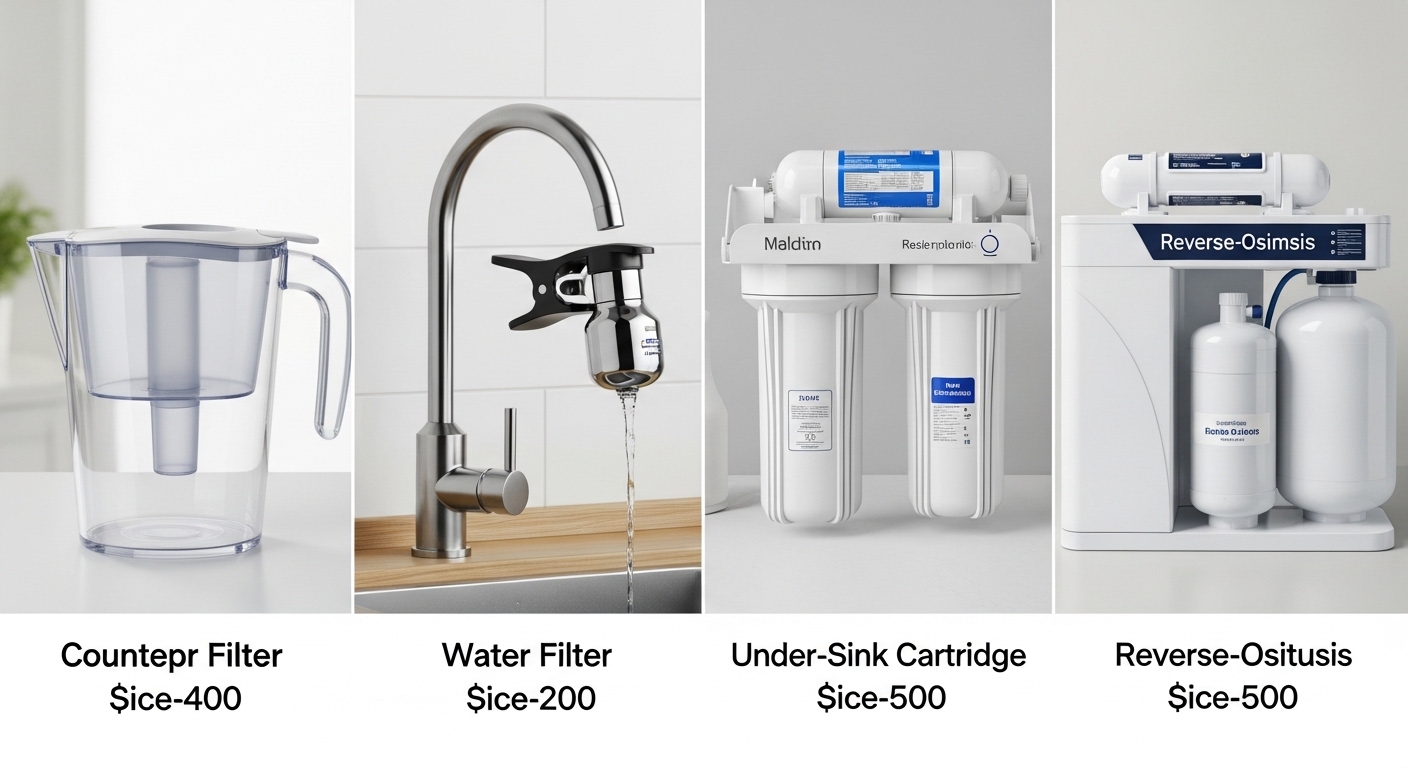
Choosing a tap water filter to drink from isn’t really about brand names — it’s about matching the filter to what’s actually in your water and how you use your sink. A carbon pitcher, a faucet-mount clip-on, an under-sink cartridge, and a full reverse-osmosis (RO) system all “filter tap water,” but they solve very different problems at wildly different price points. Pick the wrong one and you either overpay for filtration you don’t need or, worse, drink water that still carries the contaminant you were worried about. This guide walks through how to choose the right one, what the certifications actually mean, and how a filter ties into the faucet on your sink.
What’s the best type of tap water filter to drink from for most homes?
For most homes, an under-sink carbon block filter is the best all-around choice: it delivers filtered water on demand, handles the contaminants people actually care about (chlorine taste, lead, sediment, some VOCs), and doesn’t clutter your counter or slow your main faucet to a trickle. It sits in the cabinet, connects to your cold-water line, and feeds either your existing faucet or a small dedicated drinking-water faucet.
That said, “best” depends on your situation. Here’s the honest breakdown of the four main formats:
- Pitcher / carbon jug ($25–$50): Cheapest entry point, no installation, great for renters. Downsides — small capacity, slow gravity flow, and filters that need swapping every 40 gallons or roughly monthly. Best for one or two people who mostly want better taste.
- Faucet-mount filter ($30–$60): Clips onto your existing spout with a diverter, so you toggle between filtered and unfiltered. Convenient and cheap, but it can strain low-flow faucets, doesn’t fit every spout thread, and looks bulky. Cartridges last ~100 gallons.
- Under-sink carbon block ($60–$180): The sweet spot for most families — high flow, long cartridge life (6–12 months / 500–1,500 gallons), hidden install, and strong NSF-certified contaminant removal. Needs a spare hole or a dedicated faucet.
- Reverse osmosis ($180–$400+): The most thorough — strips out fluoride, nitrates, arsenic, PFAS, and dissolved solids that carbon can’t. Downsides: wastes some water, removes beneficial minerals (many units re-mineralize), needs a tank and a dedicated faucet, and is slower to fill a glass.
If your only complaint is that your water tastes like a swimming pool, a good carbon filter fixes that. If a lab test shows lead, arsenic, nitrates, or PFAS, you want a certified lead-rated carbon block at minimum, and RO for the dissolved-solid contaminants.
How do I know which tap water filter I actually need?
Start by testing your water — you can’t pick the right filter until you know what’s in it. A $15–$30 home test kit or your municipality’s free annual Consumer Confidence Report (CCR) tells you your chlorine, hardness, lead, and contaminant levels. Well water owners should get a proper lab test, since wells aren’t regulated the way city water is.
Once you know your water profile, match it to a filter using the certification standard — this is the part most people skip, and it’s the part that matters most:
| Your water problem | Look for this certification | Best filter type |
|---|---|---|
| Bad taste / chlorine smell | NSF/ANSI 42 | Any carbon filter (pitcher, faucet, under-sink) |
| Lead, cysts, VOCs, some metals | NSF/ANSI 53 | Lead-rated carbon block (under-sink) |
| Fluoride, nitrates, arsenic, TDS | NSF/ANSI 58 | Reverse osmosis |
| PFAS (“forever chemicals”) | NSF/ANSI 53 (PFOA/PFOS) or 58 | Specialized carbon block or RO |
| Bacteria / viruses (well water) | NSF/ANSI 55 (UV) or 58 | UV + RO combination |
The key thing to understand: a filter marketed to “reduce lead” isn’t the same as one certified to NSF/ANSI 53 for lead. Certification means an independent lab verified the claim on real contaminated water, over the cartridge’s full rated life — not a one-time lab-perfect test. Always check the certification listing (NSF, WQA, or IAPMO), not just the box copy.
Should I get an under-sink filter or a whole-house system for drinking water?
For drinking water specifically, an under-sink filter is almost always the smarter buy — you’re filtering the ~1% of household water you actually drink and cook with, instead of paying to filter the shower, toilet, and washing-machine water too. Whole-house systems make sense for whole-home problems (heavy sediment, high hardness protecting your plumbing and fixtures), but they’re overkill and expensive if your goal is just clean, great-tasting drinking water.
Here’s how I’d think about it:
- Get a point-of-use (under-sink) filter if your concern is taste, lead, or specific contaminants in your drinking water. Lower cost, cheaper cartridges, targeted filtration.
- Get a whole-house system if you have hard water damaging fixtures, sediment clogging every faucet, or you want filtered water at every tap. Then add a dedicated under-sink RO for the kitchen if you also want fluoride/TDS removal for drinking.
Hard water is worth a special mention. A drinking filter won’t stop the chalky white buildup on your spout and aerator — that’s a separate mineral problem. If you’re fighting that too, our guide on how to clean hard water stains on a faucet and keep them from coming back pairs well with a softening or scale-reduction approach, and it explains why filtration alone won’t fix the crusty aerator.
How does a drinking-water filter connect to my faucet?
Most under-sink filters connect to your cold-water supply line and then send filtered water to one of two places: your existing kitchen faucet (if it has a spare hole or you replace it with a filter-ready model) or a small separate drinking-water faucet mounted in a soap-dispenser hole. The dedicated-faucet route is cleanest because it keeps filtered and unfiltered water on separate spouts, so your filter cartridge only works on water you actually drink — extending its life.
The practical install questions are always about holes and threads:
- Do you have a spare hole? Standard sinks have 1–4 pre-drilled holes. A dedicated filter faucet needs one free hole (often the one hiding under a cover plate or soap dispenser). If you’re unsure how holes and spacing work, our explainer on what faucet hole size a sink needs and how to measure it before you buy applies to kitchen sinks too — same measuring logic.
- Is your shut-off valve accessible? You’ll tee off the cold line under the sink. If your valves are old or seized, budget to replace them while you’re under there.
- Do the fittings match? Most kits use 3/8″ push-connect or compression fittings. A commercial or non-standard setup may need an adapter — our piece on what a commercial kitchen faucet adapter is and how to pick the right one is useful if your threads don’t match the kit.
Installation is genuinely DIY-friendly for most people — expect 45–90 minutes with basic tools. Shut off the cold water, mount the filter housing inside the cabinet, tee into the supply line, run the tubing to your faucet, then flush the cartridge for a few minutes before drinking. If you’re replacing the whole faucet at the same time, the same removal skills apply as in any faucet swap.
How much does a good drinking-water filter cost to run per year?
The upfront price is only half the story — replacement cartridges are the real long-term cost, and it’s usually $40–$120 a year depending on the system. A cheap pitcher looks affordable at $30 but can cost more per gallon than an under-sink system once you count monthly filter swaps. Here’s a realistic annual picture for a family of four:
| Filter type | Upfront cost | Cartridge cost/year | Cartridge lifespan |
|---|---|---|---|
| Pitcher | $25–$50 | $60–$120 | ~40 gal / 1 month |
| Faucet-mount | $30–$60 | $50–$90 | ~100 gal / 2–3 months |
| Under-sink carbon block | $60–$180 | $40–$70 | 500–1,500 gal / 6–12 months |
| Reverse osmosis | $180–$400 | $60–$120 | 6–12 mo (pre/post), 2–3 yr (membrane) |
The takeaway: under-sink carbon block gives you the lowest cost-per-gallon for everyday drinking water, while RO costs a bit more to run but buys you contaminant removal nothing else matches. Whatever you choose, set a calendar reminder for cartridge changes — an expired filter doesn’t just stop working, it can start releasing trapped contaminants back into your water.
Does a drinking-water filter change my water pressure or faucet flow?
A properly sized under-sink or dedicated-faucet filter has almost no noticeable effect on your everyday faucet flow, because it only sits on the drinking-water line — your main faucet runs at full pressure. Faucet-mount clip-on filters, however, do reduce flow noticeably, since all the water is forced through a small cartridge, and RO fills slowly because it produces water into a tank first.
If you notice weak flow after installing any filter, the usual culprits are a clogged cartridge past its rated life, a partially closed shut-off valve, or sediment collecting in the aerator. Low pressure at a fixture is a common, fixable complaint — the same diagnostic logic we cover for why a large shower head has low water pressure and how to fix it applies to a filtered kitchen faucet: check the flow restrictor, the aerator, and the cartridge before assuming the filter is faulty.
What should I look for in the filter faucet itself?
Since a dedicated drinking-water filter needs its own small faucet, treat that faucet like any quality fixture — because you’ll touch it every day for years. Look for a solid brass body (not plastic), a lead-free waterway certified to NSF/ANSI 372, and a finish that matches your main faucet (brushed nickel, matte black, and chrome are the common choices). A wobbly plastic filter faucet is the part people regret most.
A few quick buying signals for the filter faucet:
- Lead-free brass or stainless waterway — required by law in the US, but verify the NSF/ANSI 372 mark.
- Ceramic disc valve — smoother action, far longer life than rubber-washer valves.
- Air-gap vs. non-air-gap — RO systems may need an air-gap faucet to meet plumbing code; check your local requirements.
- Matching finish and reach — a tall gooseneck clears tall bottles and pitchers.
If you want the same durability signals in a full kitchen faucet, our breakdown of what actually makes a kitchen faucet best quality and how to spot one before you buy covers the brass-body, ceramic-valve, and finish-durability tests that apply just as well to a small filter faucet.
Will a filter fix rusty or discolored tap water?
A sediment or carbon filter will catch loose rust particles and clear up brown, cloudy water at the tap — but it won’t fix the root cause if the rust is coming from corroded pipes or an old water heater. In that case the filter clogs fast and you’re treating a symptom. If you’re seeing rust specifically at one faucet, the problem may be the fixture or the supply line, not the whole water system.
For persistent rust issues, read our guide on why rust is clogging your faucet and how to fix it for good before you buy a filter to mask it — sometimes the real fix is replacing a galvanized supply line or aerator, not adding filtration. A drinking filter is meant to polish already-safe water to great-tasting quality, not to be a band-aid for failing plumbing.
FAQ
Is filtered tap water safer to drink than bottled water?
In most US cities, yes — filtered tap water is typically as safe as or safer than bottled water, and it’s far cheaper and greener. Municipal tap water is tested constantly under EPA standards, while bottled water is less frequently monitored. A certified carbon or RO filter removes the chlorine taste and any residual contaminants that make people reach for bottles in the first place, at a fraction of the cost per gallon.
How often do I need to replace my drinking-water filter cartridge?
It depends on the type: pitcher filters last about a month, faucet-mount about 2–3 months, and under-sink carbon block filters 6–12 months. Go by the manufacturer’s gallon rating, not just time — a big household hits the limit faster. If you notice returning taste or odor, or slower flow, replace it early. An overdue cartridge can release trapped contaminants, so don’t stretch it.
Do carbon filters remove fluoride from tap water?
No — standard carbon filters do not remove fluoride. If fluoride removal matters to you, you need reverse osmosis (NSF/ANSI 58) or a specialized activated-alumina or bone-char filter. Most carbon filters target chlorine, lead, sediment, and VOCs, which is what the majority of households actually want addressed.
Can I install an under-sink drinking filter myself?
Yes, most under-sink filters are designed for DIY installation and take 45–90 minutes with basic hand tools. You shut off the cold water, tee into the supply line, mount the housing, and connect tubing to your faucet or a dedicated filter faucet. The trickiest parts are old shut-off valves and matching fitting sizes — if your valves are seized or your threads are non-standard, a plumber makes sense.
Does a drinking-water filter remove PFAS “forever chemicals”?
Some do, but only ones specifically certified for it. Look for NSF/ANSI 53 certification for PFOA/PFOS reduction (certain high-grade carbon blocks) or NSF/ANSI 58 reverse osmosis, which is the most reliable option for PFAS. A generic carbon filter with no PFAS certification should not be trusted to remove them — check the certification listing before you buy.
The bottom line
The best tap water filter to drink from is the one matched to your tested water and your sink setup: a certified under-sink carbon block for most homes, reverse osmosis if you have dissolved contaminants like fluoride, nitrates, or PFAS, and a simple pitcher or faucet-mount if you’re renting and just want better taste. Test first, buy for the certification (NSF/ANSI 42, 53, or 58), and don’t cheap out on the little filter faucet — it’s the part you’ll touch every single day.
Author note: This guide was written by the Viga Faucet product team, drawing on years of designing and testing kitchen and bathroom fixtures — including the drinking-water faucets that pair with filtration systems. Viga manufactures faucets with lead-free brass bodies and ceramic disc cartridges, tested to international flow and durability standards and backed by our warranty. We build the faucets that carry your filtered water, so our advice here is about getting you clean, great-tasting water from a fixture that lasts — not selling you filtration you don’t need. Always verify certifications on the specific product you buy, and test your own water before choosing a system.
WeChat
Scan the QR Code with WeChat