 VIGA Faucet Manufacturer
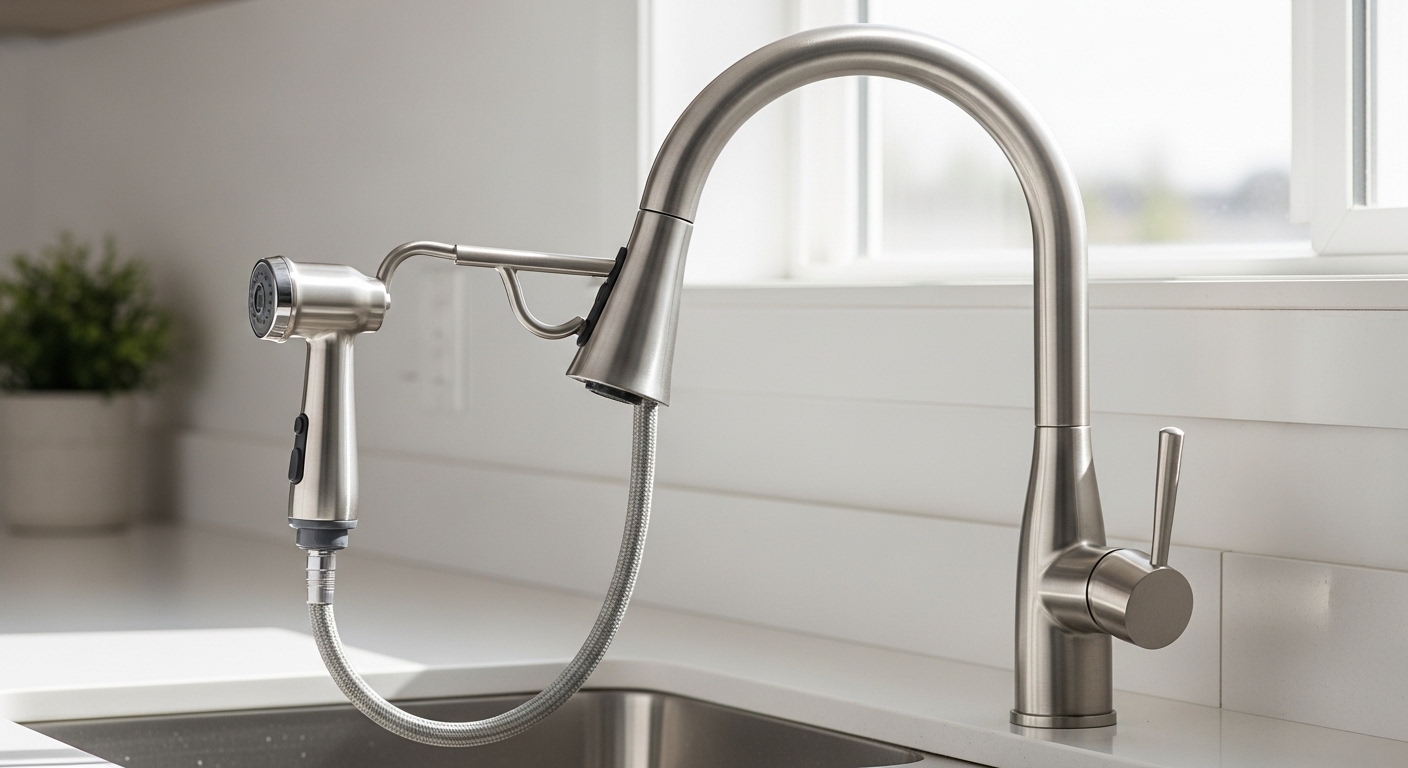
If you’ve been searching for the best kitchen tap Grohe sells, you’re really asking two things at once: which Grohe model actually performs day to day, and whether the premium is worth it versus other brands. The short version is that Grohe makes very good taps — the cartridges are smooth, the finishes hold up, and the pull-out sprays feel solid — but “best” depends entirely on your sink, your water hardness, and your budget. This guide breaks down the top Grohe kitchen taps, the specs that actually matter, and where a smart shopper spends (or saves) money.
We’ll compare the real Grohe lineup, explain the terminology so you can shop like a plumber instead of guessing, and lay out exactly when Grohe is the right call — and when a solid-brass alternative like VIGA makes more sense.
Which Grohe kitchen tap is best for most home kitchens?
For most home kitchens, the best all-around Grohe tap is the GROHE Minta pull-out (single-lever), with the GROHE Essence and GROHE Concetto close behind. The Minta hits the sweet spot: a swiveling high-arc spout, a two-function pull-out spray (aerated stream plus a punchier spray), the SilkMove ceramic cartridge, and finishes that resist fingerprints and limescale.
Here’s how the core lineup sorts out in real use:
- GROHE Minta — The default recommendation. Clean modern styling, pull-out spray, easy to match to most cabinetry. Great for busy family kitchens.
- GROHE Essence — Slimmer, more design-forward cylindrical body. Comes in trend finishes (supersteel, brushed hard graphite, warm sunset/brushed gold). Best if looks matter as much as function.
- GROHE Concetto — The value entry point. Same SilkMove feel, simpler head, often the cheapest way into the Grohe ecosystem.
- GROHE Blue / Grohe Zedra — Blue is the filtered/chilled/sparkling water system (a whole different price tier); Zedra is a robust professional-style pull-out with a spring or hidden spray.
If you cook a lot, fill big pots, and want the least fuss, the Minta or Zedra pull-out is the one to beat. If your kitchen is more about clean lines, the Essence wins on looks without giving up the cartridge quality.
What actually makes a Grohe kitchen tap good — is it worth the money?
What makes Grohe worth it is the cartridge and the finish, not the logo. The two features that genuinely justify the price are SilkMove (a high-grade ceramic disc cartridge that keeps the handle buttery-smooth for years) and StarLight (a chrome finishing process that resists scratching and water spotting). Grohe also uses solid-brass bodies on its better taps, which is what separates a tap that lasts 15 years from one that loosens and drips in three.
Here’s the honest breakdown of where your money goes:
| Feature | What it means | Does it matter? |
|---|---|---|
| SilkMove ceramic cartridge | Ceramic discs control flow; no rubber washers to wear out | Yes — this is the single biggest reliability factor |
| StarLight / supersteel finish | Scratch- and tarnish-resistant surface | Yes — especially in hard-water areas |
| Solid brass body | Corrosion resistance, sturdy feel, secure mounting | Yes — avoid zinc-alloy taps at this price |
| EcoJoy flow limiting | Reduces flow to ~5.7 L/min without feeling weak | Sometimes — great for saving water, annoying for fast pot-filling |
| Pull-out vs pull-down spray | Direction the head extends | Preference — pull-out suits shallow sinks better |
So is it worth the money? If you’re keeping the tap 10+ years and you value a handle that never gets stiff, yes — Grohe earns its price. If you’re renovating to sell, or you’re on a tight budget, you can get the same ceramic-cartridge-and-brass formula from brands like VIGA for meaningfully less. The engineering isn’t magic; it’s good materials executed carefully, and other manufacturers do it too.
Pull-out or pull-down: which Grohe spray head is right for my sink?
Choose a pull-out spray if you have a shallow or standard-depth sink, and a pull-down if you have a deep single-bowl sink and want maximum reach into the basin. Pull-out heads extend horizontally toward you and are easier to aim at the sink edges; pull-down heads drop straight into a deep bowl and give a taller, more dramatic silhouette.
A few practical pointers most product pages won’t tell you:
- Sink depth: Deep bowls (200mm+) love a tall pull-down. Shallow bowls waste that height and splash more.
- Window behind the sink: A high-arc pull-down may not clear a low windowsill — measure the height when open.
- Hose retraction: Grohe’s SpeedClean and weighted hose systems retract cleanly. If a spray head ever stops snapping back, it’s usually the weight or the hose guide — a common, fixable issue we cover in our guide on why a faucet sprayer stops retracting and how to fix it fast.
- Removing the head: For deep cleaning or descaling, you sometimes need to detach the spray head — here’s how to remove a pull-down kitchen faucet spray head without breaking it.
For most people, a pull-out is the safer, more versatile choice. Go pull-down only if your sink is genuinely deep and you want the taller look.
How does Grohe compare to Moen, Delta, and VIGA on price and value?
Grohe sits at the premium end alongside brands like Hansgrohe, generally priced above Moen and Delta on comparable pull-out models, while brands like VIGA undercut all of them on price while still using ceramic cartridges and brass bodies. The gap isn’t about whether the tap works — they all work — it’s about finish longevity, brand cachet, and how much you’re paying for the name.
| Brand | Typical price tier (pull-out kitchen tap) | Cartridge | Warranty (residential) | Best for |
|---|---|---|---|---|
| Grohe (Minta/Essence) | $$$$ | SilkMove ceramic | ~5 years | Long-term owners who want the smoothest feel |
| Hansgrohe | $$$$ | Ceramic | Limited lifetime (varies) | Design-led kitchens |
| Moen | $$$ | Duralast / ceramic | Limited lifetime | Easy US parts availability |
| Delta | $$$ | DIAMOND / ceramic | Limited lifetime | Touch/Touch2O tech fans |
| VIGA | $$ | Ceramic disc | Warranty-backed | Same core engineering, lower price |
One thing worth knowing: US brands like Moen and Delta often win on lifetime warranties and cheap, easy replacement parts — Delta, for instance, will send cartridge parts free under its warranty, which we break down in our piece on the Delta faucet cartridge replacement warranty. Grohe’s 5-year residential warranty is solid but not lifetime, so factor that in.
If you want a broader sense of which names real homeowners trust and complain about, our roundup of the bathroom faucet brands Reddit actually recommends is a useful reality check — many of the same brand patterns carry over to kitchen taps.
Which Grohe finish should I choose for a kitchen with hard water?
In a hard-water kitchen, choose a brushed or matte finish — supersteel, brushed hard graphite, or brushed gold — rather than polished chrome, because brushed textures hide limescale spotting and water marks far better. Polished chrome looks stunning when clean but shows every mineral droplet within a day in hard water.
Finish shortlist for hard-water homes:
- GROHE supersteel — The default hard-water pick. Warm stainless look, forgiving of spots, pairs with almost any sink.
- Brushed hard graphite — Dark, modern, hides limescale extremely well; wipes clean easily.
- Brushed/warm sunset (gold tones) — On-trend and surprisingly low-maintenance because the brushed texture diffuses spotting.
- StarLight chrome — Beautiful, but plan on a quick daily wipe if your water is hard.
Whatever finish you pick, hard water is the real enemy of any kitchen tap — it dulls finishes and clogs aerators over time. A simple weekly wipe and the occasional aerator descale keeps things pristine; our step-by-step on cleaning hard water stains on a faucet and keeping them from coming back works on any brand, Grohe included. Never use abrasive pads or acidic bathroom cleaners on a brushed finish — they’ll scratch or etch it.
Can I fit a Grohe kitchen tap myself, or do I need a plumber?
Most single-lever Grohe kitchen taps are DIY-friendly for anyone comfortable working under a sink — plan on 45–90 minutes. You’ll need the shutoff valves closed, flexible supply lines that match your connections, and a basin wrench. If your existing valves are old or seized, that’s the point where calling a plumber pays off.
The basic install sequence looks like this:
- Turn off both hot and cold shutoff valves under the sink and open the old tap to release pressure.
- Disconnect the supply lines and remove the old tap (loosen the mounting nut from below).
- Feed the new Grohe tap’s hoses and threaded stud through the sink hole; check you have the right hole size and, if needed, a deck plate.
- Tighten the mounting hardware from underneath until the tap is snug and won’t rotate.
- Connect the flexible supply lines (hand-tight plus a quarter turn — don’t overtighten), attach the pull-out hose and its counterweight.
- Turn the water back on slowly, run the tap, and check every joint for drips.
If you’re upgrading from a commercial-style or gooseneck setup, or your plumbing uses an unusual thread, check whether you need an adapter first — our guide to the commercial kitchen faucet adapter and how to pick the right one saves a second trip to the hardware store. The most common rookie mistakes are forgetting the counterweight on the hose (so the spray head won’t retract) and overtightening the supply lines (which cracks the fitting). Go snug, not gorilla-tight.
When should you skip Grohe and buy an alternative like VIGA?
Skip Grohe when you’re on a budget, outfitting a rental or flip, or you simply don’t want to pay a premium for a brand name — in those cases a ceramic-cartridge, solid-brass tap from VIGA gives you the daily performance without the markup. You’d stay with Grohe if you specifically want SilkMove’s signature feel, a particular Grohe finish for a design scheme, or the peace of mind of a globally recognized brand.
Think of it this way. The parts that determine whether a kitchen tap is good — the cartridge, the body material, the finish quality, the hose and spray mechanism — are all things a well-run manufacturer can execute. Grohe executes them beautifully. So does VIGA, at a lower price point, with a warranty behind it. What you don’t get from a cheaper brand is the name on the spout and, in some cases, Grohe’s specific finish shades.
Our honest recommendation:
- Buy Grohe if it’s your forever kitchen, you love the SilkMove feel in the showroom, and the budget is comfortable.
- Buy a VIGA alternative if you want 80–90% of the experience, a solid-brass body, and a ceramic cartridge for meaningfully less — ideal for renovations, rentals, or second kitchens.
- Either way, insist on a ceramic-disc cartridge and a brass (not zinc) body. That’s the line between a tap that lasts and one that doesn’t.
Whatever you choose, the search for the best kitchen tap Grohe makes usually ends with a realization: you’re not just buying a brand, you’re buying a cartridge, a finish, and a spray head. Match those to your sink and water, and you’ll be happy for years.
FAQ
Is Grohe better than Hansgrohe for kitchen taps?
They’re sister-quality brands (and were historically linked) — both use excellent ceramic cartridges and durable finishes. Grohe’s SilkMove and StarLight are its signatures; Hansgrohe leans slightly more design-forward. For pure kitchen function they’re neck and neck; choose on styling and price rather than assuming one is categorically better.
How long do Grohe kitchen taps last?
With a solid-brass body and a SilkMove ceramic cartridge, a Grohe kitchen tap commonly lasts 10–15 years or more. The cartridge is the wear part, and it’s replaceable, so even a decade in you can often refresh the tap rather than replace it. Hard water and abrasive cleaners are the main things that shorten a finish’s life.
What’s the difference between the Grohe Minta and Grohe Essence?
Both use the same core cartridge and quality. The Minta has a more traditional squared-and-rounded profile and is the everyday workhorse; the Essence has a slimmer cylindrical body and comes in more trend finishes. Pick Minta for straightforward family use, Essence when the tap’s looks are part of the kitchen’s design statement.
Does Grohe make a filtered-water kitchen tap?
Yes — the GROHE Blue range delivers filtered, chilled, and optionally sparkling water from a dedicated tap or combined unit, but it’s a significantly higher price tier and needs an under-sink cooler and filter cartridges. If you mainly want cleaner drinking water without that investment, a standard tap plus a separate filter is more economical; see our guide to the best tap water filter to drink from at home.
Do Grohe kitchen taps come with a warranty?
Grohe offers a residential warranty of around 5 years on most kitchen taps (terms vary by region and model), covering manufacturing defects. Register your purchase and keep the receipt. Note that some US competitors offer limited-lifetime warranties on the faucet and cartridge, so if long warranty coverage is a priority, compare the fine print before you buy.
Can I put a Grohe pull-out spray head in a shallow sink?
Yes — a pull-out head is actually the better choice for shallow sinks because it extends horizontally toward you rather than dropping deep into the bowl. Just check the spout height clears any window or shelf behind the sink, and make sure the hose counterweight is fitted so the head retracts smoothly.
Author note: This guide was written by the VIGA product team, who spec, test, and sell kitchen and bathroom taps daily. We evaluate cartridges, finishes, and spray mechanisms against real-world hard-water conditions and international ceramic-cartridge and flow-rate standards. VIGA manufactures solid-brass, ceramic-cartridge faucets backed by a manufacturer’s warranty — our aim here is to help you buy the right tap, whether that’s a Grohe or one of ours.
WeChat
Scan the QR Code with WeChat