 English
 Deutsch
 Français
 Italiano
 Español
 Português
 Nederlands
 Polski
 Русский
 日本語
日本語 한국어
한국어 العربية
 China Faucet Factory & OEM/ODM Faucet Manufacturer
Here is the complete, publish-ready HTML article fragment:
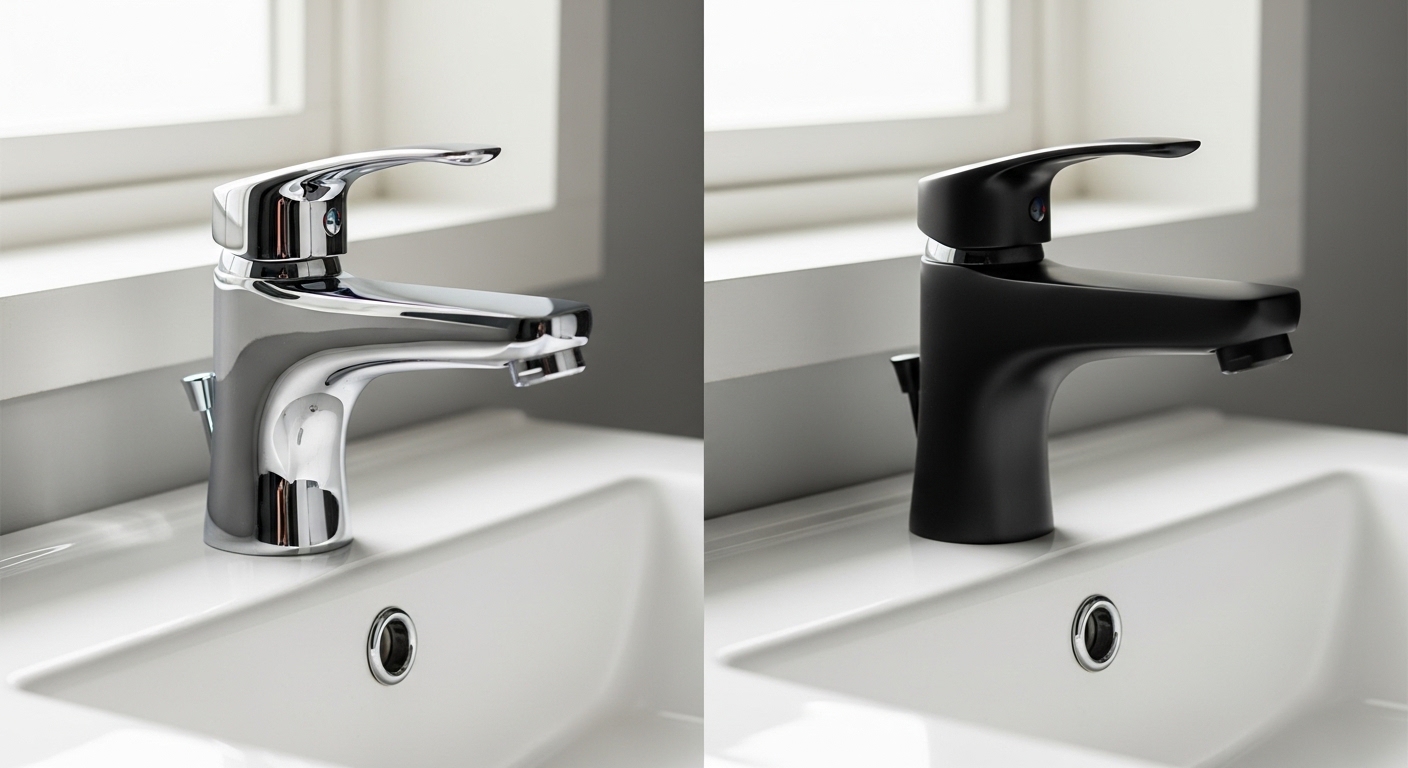
If you’ve been eyeing matte black faucet paint as a cheap way to modernize a dated chrome or brushed-nickel fixture, you’re asking exactly the right question before you spend a dime. The honest answer is that paint is a real option — plenty of people get a convincing, on-trend look for the price of a single spray can — but it’s a cosmetic refinish, not a manufacturing process, and knowing the difference is what separates a job that looks sharp for two years from one that peels in two months. Below, we’ll walk through when painting makes sense, exactly how to do it so it holds up, what products actually survive a wet bathroom or busy kitchen, and when you’re genuinely better off just buying a factory matte black faucet.
At Viga, we design and manufacture faucets in matte black every day, so we see both sides: the DIY refinish that saves a rental deposit, and the customer who tried paint first, watched it flake around the spout, and came back for a fixture that was finished right at the factory. This guide gives you the unfiltered version of both.
Can you actually paint a faucet matte black, or will it just peel off?
Yes, you can paint a faucet matte black, and it will hold up reasonably well — but only if you degrease, sand, prime, and topcoat correctly; skip any of those steps and it will peel, usually first at the handle and the base where your hand and standing water do the most damage. Paint doesn’t fail because “paint doesn’t stick to metal.” It fails because faucet surfaces are chrome-plated, ultra-smooth, and coated in invisible skin oils and mineral film that stop paint from bonding.
The physics are simple. A factory matte black faucet gets its color from either PVD (physical vapor deposition — metal vaporized and bonded in a vacuum chamber) or an electrostatically applied powder coat baked on at 350–400°F. Those finishes are molecularly or mechanically fused to the brass body. Rattle-can paint, by contrast, sits on top of the surface and relies entirely on your prep for adhesion. Get the prep right and it grips well. Get it wrong and it’s basically a sticker.
So the realistic expectation for a well-done DIY paint job is 12–24 months on a bathroom faucet that isn’t scrubbed hard, and 6–12 months on a kitchen faucet that gets constant hand contact, pull-down hose friction, and hot water. That’s not nothing — it can absolutely bridge you to a renovation or get you through a rental — but plan for it as a refresh, not a forever finish.
What’s the best paint for a matte black faucet finish?
The best paint for a matte black faucet finish is a two-part epoxy appliance spray or an automotive-grade acrylic enamel with a self-etching primer and a clear matte topcoat — not generic craft or wall paint. You want a system rated for metal, moisture, and abrasion, applied in thin coats. Here’s how the common options stack up.
| Paint type | Durability on a faucet | Best for | Rough cost |
|---|---|---|---|
| 2-part epoxy / appliance epoxy spray | Best — hardest, most water- and chemical-resistant | Kitchen faucets, high-use fixtures | $12–$25 |
| Automotive acrylic enamel + self-etching primer | Very good — flexible, chip-resistant | Bathroom faucets, tub fillers | $15–$30 |
| Rust-preventive enamel (general “matte black” metal spray) | Good with proper prep, softer finish | Low-touch accessories, towel bars | $8–$15 |
| Spray peelable coating (plasti-dip style) | Low — rubs off, not truly waterproof | Temporary, reversible looks | $8–$12 |
| Craft / latex / wall paint | Fails fast — do not use | Nothing on a faucet | — |
Whatever system you choose, three add-ons matter more than the color coat itself: a self-etching or bonding primer (this is what actually grips the slick chrome), a genuine matte or flat clear topcoat (this is your abrasion and water barrier — and it’s what keeps the finish looking flat instead of going patchy-glossy), and adequate cure time. Cure is not dry-to-touch. Epoxy and enamel can feel dry in an hour but keep hardening for 5–7 days; put the faucet back into daily service too early and you’ll leave fingernail marks in it.
Do you have to sand and prime a faucet before painting it?
Yes — sanding and priming are the two steps you cannot skip, because they’re the entire reason the paint bonds instead of peeling. Chrome and brushed finishes are too smooth for paint to key into on their own, so you have to mechanically rough them up and chemically bridge them.
- Remove the faucet, or at minimum the handles and spout. Painting in place traps overspray on your sink and guarantees soft, uneven coats. If you’re comfortable pulling the fixture, the result is dramatically better.
- Degrease hard. Wipe every surface with isopropyl alcohol or acetone until the rag comes away clean. Skin oil and mineral film are the #1 cause of adhesion failure.
- Scuff with 400-grit, then 600-grit. You’re not stripping the chrome, just dulling the shine so primer can grab. The surface should look uniformly hazy, not shiny.
- Tape off aerators, cartridge stems, threads, and O-ring seats. Paint in these spots causes leaks and rough operation. Never paint sealing surfaces.
- Apply self-etching primer in 2 light coats, then the matte black in 3–4 thin coats, then 2 coats of matte clear. Thin is the rule — thick coats sag, drip, and stay soft.
One thing worth flagging: standing mineral deposits will telegraph straight through fresh paint as bumps and adhesion gaps. If your fixture has crusty spotting, deal with that first — our guide on how to clean hard water stains on a faucet and keep them from coming back walks through the descaling step so you start with a truly clean surface.
How long does a painted matte black faucet last compared to a factory finish?
A carefully painted faucet lasts roughly 1–2 years before it needs touch-ups; a factory PVD or powder-coated matte black faucet is rated and warrantied to look the same for 10+ years, and many carry lifetime finish warranties. That gap is the single most important thing to understand before you decide.
The reason isn’t paint quality alone — it’s where faucets take abuse. Think about the exact spots your hand and water hit hardest: the handle you grab wet a dozen times a day, the base where standing water pools, the aerator you occasionally unscrew, and (on kitchen faucets) the spray head and hose that rub against the spout. Factory finishes are engineered to survive that; paint gets thinned out and chipped there first.
| Factor | DIY matte black paint | Factory PVD / powder coat |
|---|---|---|
| Expected finish life | 1–2 years (bath), 6–12 mo (kitchen) | 10+ years, often lifetime warranty |
| Scratch / chip resistance | Moderate, chips at friction points | Very high |
| Water & cleaner resistance | Good if clear-coated; avoid abrasives | Excellent |
| Upfront cost | $20–$50 in supplies | $90–$400 for the faucet |
| Touch-ups needed | Periodically | Rare to never |
| Reversible | Somewhat (peelable types) | N/A — it’s the finish |
The practical takeaway: paint is the right call when the faucet itself is mechanically sound and you just want a look change on a budget, in a rental, or as a stopgap. Buying a factory matte black faucet is the right call when you want to install once and forget it — especially in a kitchen, where finish abuse is relentless. If you’re leaning that direction, it’s worth seeing how matte black stacks up against warmer finishes; our comparison of a brushed gold faucet for a sink and how to pick the right one covers the same durability logic for a different color family.
Is painting a faucet worth it, or should you just buy a matte black one?
Painting is worth it when the math and the situation favor it: you’re spending $20–$50 versus $100–$300, the faucet works perfectly, and you can tolerate re-doing it in a year or two. Buy a new matte black faucet instead when the fixture is old, drippy, or low-flow, when it’s a kitchen faucet, or when you simply don’t want to babysit the finish.
Here’s a clean way to decide:
- Paint it if: it’s a bathroom or powder-room faucet in good working order, you’re a renter or pre-sale, you want to test the matte-black look before committing, or you enjoy a weekend DIY project.
- Replace it if: it already leaks, sputters, or has a worn cartridge (you’d be painting a problem), it’s a hard-working kitchen faucet, you’ve painted it before and it’s failed, or you want a warrantied finish you’ll never think about again.
- Consider the hidden cost: a quality faucet refinish takes 3–5 hours plus a week of cure time. If the faucet is already worn out, that labor is better spent installing a new one that will also fix the flow and drip.
And if replacement is where you land, don’t overlook the plumbing side. Swapping a faucet is genuinely a beginner-friendly job, and our step-by-step on how to do a bathroom faucet removal the right way without wrecking your sink covers the exact sequence — shutting off the supplies, disconnecting the lines, and freeing the mounting nuts — so you can put in a factory matte black unit in an afternoon.
How do you keep a matte black faucet — painted or factory — from looking blotchy?
The single biggest killer of any matte black finish, painted or factory, is the wrong cleaner: abrasive pads, acidic descalers, and gritty “soft scrub” products wear the flat coating into shiny, blotchy patches. Matte finishes hide fingerprints beautifully but show wear as glossy spots, so how you clean it matters more than with chrome.
Keep it looking uniform with a simple routine:
- Wipe daily-ish with a damp microfiber cloth and dry it — standing water is what leaves the mineral rings that tempt you to scrub.
- Use only mild dish soap and water, or a cleaner explicitly labeled safe for matte/black finishes. No vinegar, no bleach, no bathroom “scrub” creams.
- Never use a magic-eraser-type melamine pad or steel wool — they’re micro-abrasives and will polish your matte finish into gloss.
- For hard-water spotting, dissolve it gently rather than scrubbing it — the descaling approach in our hard-water-stain guide above is finish-safe when you use a soft cloth.
On a painted faucet specifically, this matters double: your clear topcoat is the only thing standing between a cleaner and bare paint, so treat it gently and it’ll last the full year or two you’re hoping for.
What finishes is matte black easy to confuse with — and does it match everything?
Matte black is one of the most versatile faucet finishes because it reads as neutral — it pairs with white, wood, marble, brass, and almost any tile — but “matte black” isn’t a single color, and painted black rarely matches a factory black in the same room. True matte black has zero sheen; some “black” faucets are actually satin or “black stainless,” which carry a slight gray or warm undertone. If you’re painting one fixture to match existing factory-black hardware, expect a visible difference in sheen and depth.
That’s the strongest argument for finish consistency: if you want every fixture in a bathroom to match, it’s cleaner to buy them as a matched set than to paint one and hope it blends. The same logic applies when you’re mixing metals on purpose. If you’re weighing matte black against warmer tones for a modern space, our breakdown of the best brushed gold one-hole faucet setup for a modern bathroom sink is a useful reference for how finish choice drives the whole room’s look — and why matched, factory-applied finishes photograph and age better than a repaint.
A quick word on standards, testing, and who’s telling you this
Why trust any of this? Because the durability claims above aren’t guesses — factory faucet finishes are validated against recognized abrasion and corrosion tests, and reputable manufacturers back them with written finish warranties. Look for finishes that meet or exceed standards like ASTM B117 (salt-spray corrosion resistance) and the finish requirements referenced in ASME A112.18.1 / CSA B125.1, the North American standard for plumbing fixture fittings. A rattle can, by definition, carries none of that — which is fine for a cosmetic refresh, as long as you know it going in.
About Viga: Viga (www.vigafaucet.com) has manufactured faucets and bathroom fixtures for over 20 years, producing matte black finishes with PVD and powder-coat processes and testing them for corrosion, adhesion, and abrasion before they ship. That production-floor perspective is exactly why we’ll tell you plainly when paint is a smart shortcut and when it isn’t.
Author note: This guide was written by Viga’s product and content team and reviewed against our own finishing-line testing and standard installation practice. We manufacture matte black faucets, and we’ve also refinished plenty ourselves — so the advice here reflects both what leaves our factory and what actually holds up in a real bathroom or kitchen.
FAQ
Will spray-painted matte black hold up on a kitchen faucet?
Less well than on a bathroom faucet — expect 6–12 months at best. Kitchen faucets take constant wet hand contact, hot water, and (on pull-downs) hose-against-spout friction, all of which thin and chip paint fast. If you’re painting a kitchen faucet, use a two-part epoxy system with a clear topcoat, and accept that the spray head and handle will need touch-ups. For a kitchen, a factory matte black faucet is usually the better long-term buy.
Can I paint the faucet without removing it from the sink?
You can, but you shouldn’t if you can avoid it. Painting in place means heavy taping, overspray on your sink and counter, and awkward angles that leave thin, uneven coats. At minimum, remove the handles and spray head so you can coat them evenly. If you’re willing to remove the whole faucet, degrease and spray it on a workbench, then reinstall after full cure — the finish quality difference is significant.
Do I need a clear coat over matte black faucet paint?
Yes. The matte black color coat gives you the look, but the clear matte topcoat is what actually resists water, cleaners, and abrasion — it’s the barrier that determines how long the job lasts. Use a flat or matte clear (not gloss, which would change the sheen) and apply two light coats. Skipping the clear coat is the fastest way to a finish that rubs off within months.
What paint colors and sheens count as “matte black” for a faucet?
True matte black is a flat, zero-sheen black. Be careful not to confuse it with satin black, “black stainless,” or gunmetal, which have slight sheen or gray/warm undertones. If you’re matching existing factory-black fixtures, test on a hidden spot first — painted black often reads slightly different in depth and sheen than a PVD or powder-coated black, even when the color name is the same.
Is it cheaper to paint a faucet or buy a new matte black one?
Painting is cheaper upfront — roughly $20–$50 in supplies versus $90–$400 for a new faucet. But factor in your time (3–5 hours plus a week of cure) and the fact that paint needs redoing every year or two. Over a five-year span, a factory matte black faucet with a finish warranty often costs less in effort and looks better the whole time — especially if your current faucet also has flow or drip issues you’d be painting over.
Can I paint over an oil-rubbed bronze or brushed-nickel faucet to make it matte black?
Yes — the prep is the same regardless of the starting finish: degrease, scuff with 400/600-grit until dull, self-etching primer, matte black, matte clear. Living finishes like oil-rubbed bronze actually take paint fine once scuffed, since you’re covering them entirely. Just be thorough on the degrease step, since older fixtures often carry polish and skin-oil residue that blocks adhesion.
WeChat
Scan the QR Code with WeChat